Japan’s Other Rare Two Week Window
THE ULTIMATE ITINERARY FOR AUTUMN LEAVES - ONSEN - SNOW IN ONE TRIP
Japan Has Been A Dream Destination For Years!
You’ve saved up the money, you’ve booked the leave — however you only have so much time! There are two time periods I always say are great for travellers that need to maximise the most of their Japan time - one is here, the other I’m about to go into detail in this article.
Travelling in December should be on your planning agenda — yes it can be a bit of a peak/busy time with end of year holidays however if you time it right - you will be able to experience both Autumn (Fall) and Winter in one trip!
Timing a 2 week trip (a full 14 days) from EARLY - LATE DECEMBER gives you potentially the chance to see Japan across two seasons.
If you can - extend the trip to 16 - 21+ days for even higher possibilities.
THINGS TO REMEMBER
Autumn (Fall) in Japan: starts in October up north (Hokkaido, Tohoku region), however as you travel down south - Autumn falls from mid/late November to first week of December.
Winter in Japan: starts end October/mid November up north — travel south and winter comes mid/late December continuing in to January and February (sometimes even March up north)
Take into context possible El Nino weather fluctuations: The last El Nino was 2023-2024, currently 2026-2027 is another record breaking El Nino year - this can/will effect length/timing of changing Autumn leaves & amount of heavy snowfall.
Christmas Day/Boxing Day is not a public holiday in Japan: subsequently it’s a great time to have a special onsen ryokan stay to spend Christmas. Generally its a normal rate if it falls on weekdays/weekends will be weekend rate.
New Year’s Eve & Oshogatsu (Japanese New Year period) are generally the most expensive times to visit end of year. Try not to travel between Dec 31st - Jan 3rd. Everything will be at a premium price and potentially booked out almost a year in advance by local travellers
Read on below for my very detailed Autumn-Winter Japan Itinerary, with alternate options included along with my own personal tips and thoughts from personally travelling, experiencing these trips and also planning and co-ordinating my visiting parents’ & brother’s Japan itineraries over the years.
JUMP TO THE INTERACTIVE MAP TO SEE EVERY PROPERTY
Please Note: This article contains some affiliate links. If you make a reservation through one of these links,
I will receive a small commission at no additional cost to you. Every property and destination featured on this website has been personally experienced by the writer, and are their personal thoughts and opinions.
FLY INTO TOKYO/OSAKA EARLY DEC
The greatest number of international flights arrive and depart from Tokyo/Osaka International Airports. Give yourself at least 2-3+ nights in one of these cities to rest, adjust to jetlag (if any) and experience the last of the autumn leaves in the Kanto/Kansai region.
There’s an abundance of accommodation choice available in the major cities depending on your budget. Here are a few of my faves. There aren’t too many onsen hotels in central Tokyo/Tokyo city with the exception of Sorano Hotel, Yuen Bettei Daita, the luxurious Hoshinoya Tokyo & Fufu Tokyo Ginza (read my article about “Finding Onsen Stays in Tokyo.”)
If you’re using the time to mainly sightsee - a normal hotel may be the way to go. Other stays I’ve personally enjoyed and/or put my parents in are: Candeo Hotel Tokyo Roppongi, Hotel Blossom Shinjuku (this is my parent’s favourite!) , Shibuya STREAM Hotel, Gajoen Tokyo.
For Osaka, I tend to just stay in hotels and if I want a quintessential onsen experience — I will head to picturesque Kinosaki Onsen in nearby Hyogo Prefecture.

TOKYO
SORANO HOTEL & SPA
Tachikawa
review | website | swimsuits allowed | check availability
I love this hotel right by Tachikawa station. Sitting just outside central Tokyo, this area has everything you need. All the big brands are here. Perfect for those who want a quieter environment, by the beautiful Showa Kinen Park. 30mins train ride from Shinjuku - larger hotel rooms. A great to start getting used to onsen culture (swimsuits must be worn) - with its large indoor onsen & rooftop onsen infinity pool with Mt Fuji views (season depending).

TOKYO
PARK HOTEL TOKYO “Art Hotel”
review | website | check availability
Creatives need to book a stay at this hotel. You’ll be inspired! Select rooms from the 26th - 34th floor have been decorated by individual independent artists showcasing a range of scenery, textile media and Japanese culture. The hotel’s corridors, lobby and other areas are also mini art galleries. Located in the quieter Higashi Shinsaibashi, it’s a short 10min walk to the famous Hamarikyuu Gardens.

TOKYO
SHIBA PARK HOTEL “Library Hotel”
review | website | check availability
Booklovers will adore this literary themed hotel. Walking distance to Zojoji Temple and Tokyo Tower, this is a quieter area to base oneself in. The cozy library lobby has books guests can freely read (including English ones!) along with floor to ceiling bookshelves. From floors 6-11, there are charming little book nooks on each floor dedicated to a specific genre like music, art, photography, fashion, travel etc. You will definitely get inspiration for not only future Japan travel but world travel too.
TOKYO
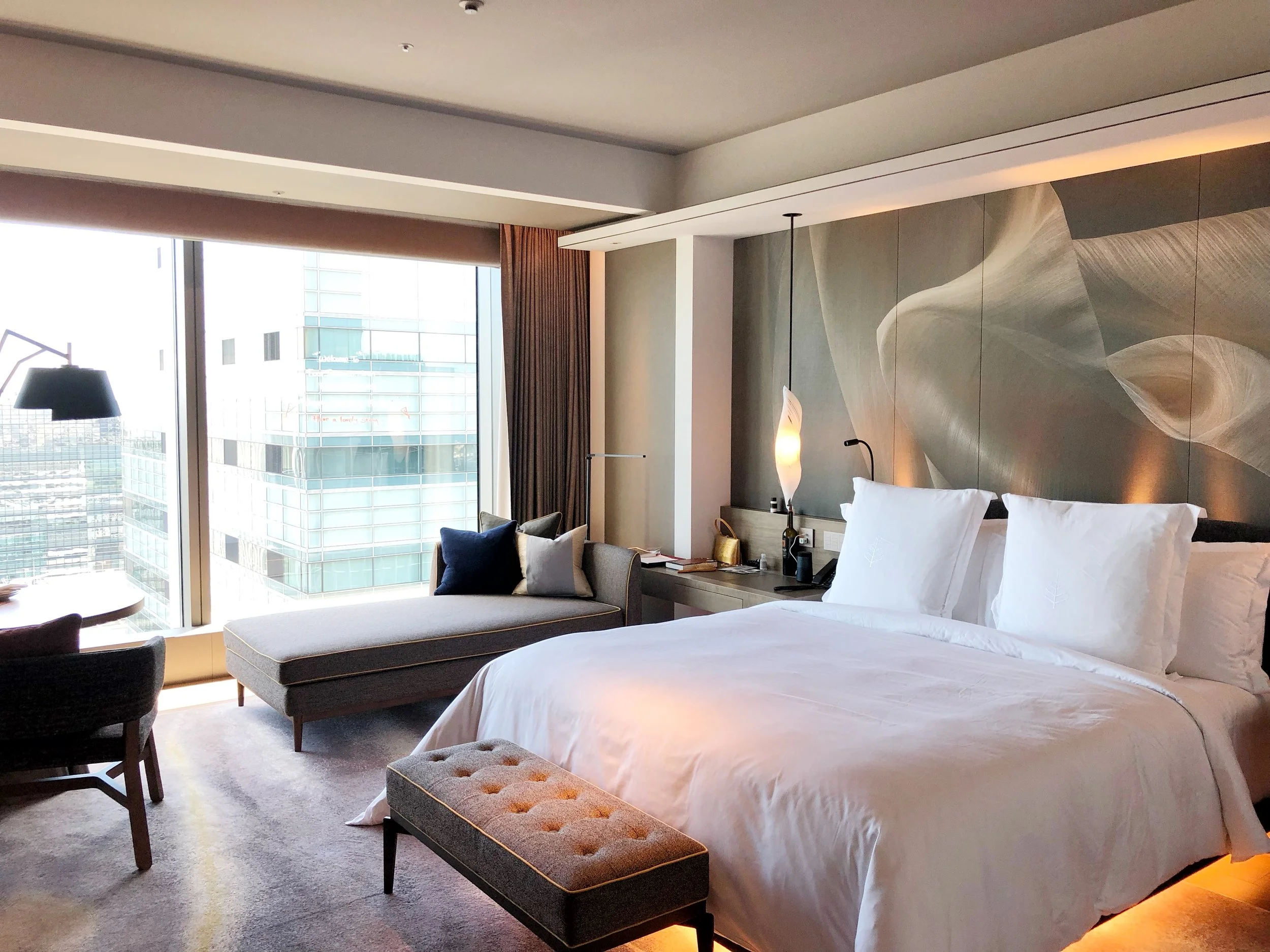
FOUR SEASONS OTEMACHI
review | website | check availability
If you love modern luxury, first class service and hospitality, plus don’t mind a little splurge - Four Seasons Otemachi is a stunning stay in the heart of the posh business district. It’s also home to the one Michelin star “est” restaurant, along with the gorgeous speakeasy bar VIRTU.
The hotel itself is one of only seven, 3 Michelin Key hotels in all of Japan.
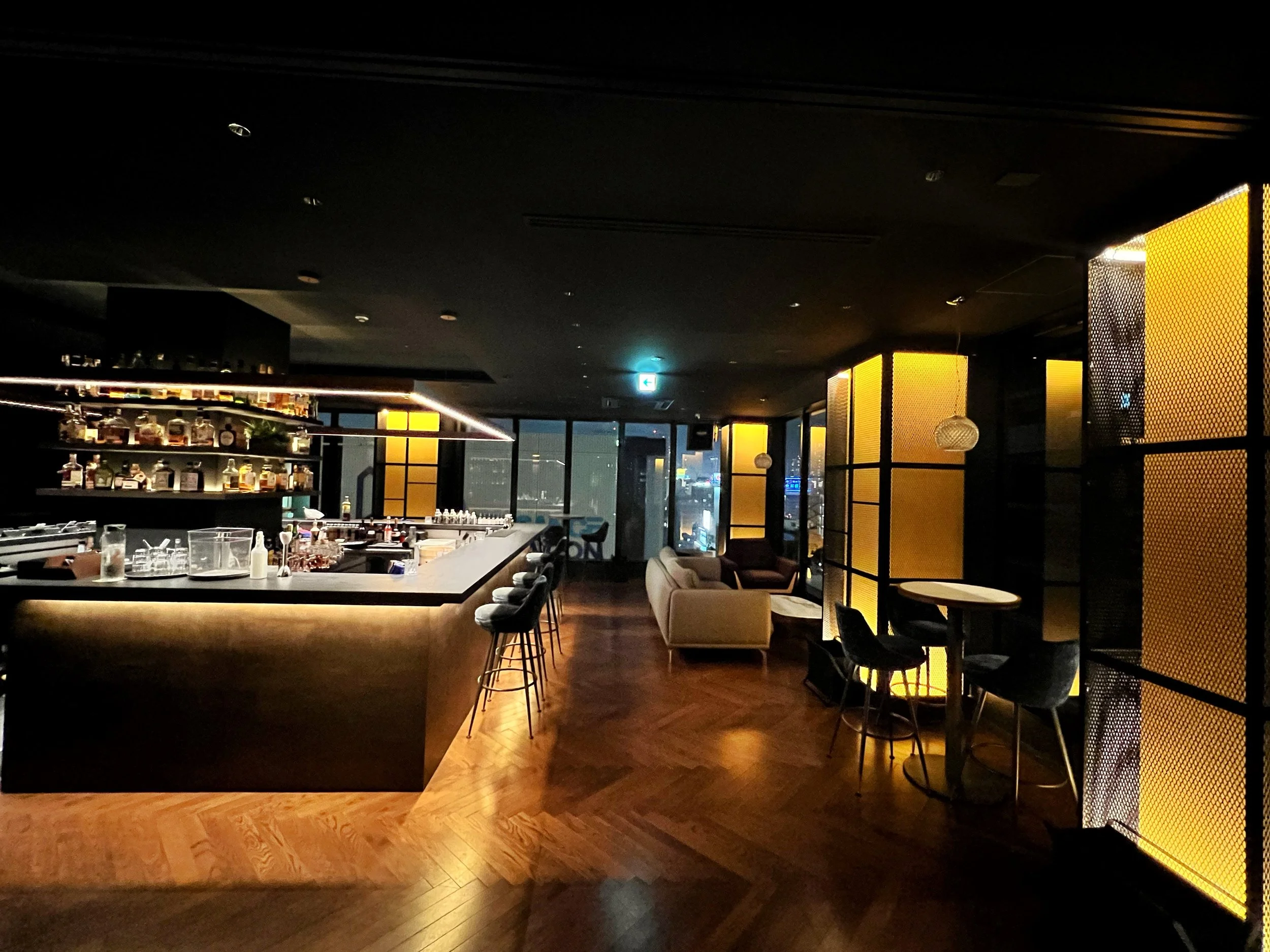
OSAKA
THE LIVELY OSAKA HONMACHI
review | website | check availability
The Lively Hotels are a great modern, designer, boutique hotel brand (in Tokyo & Fukuoka too - all of which I’ve stayed in). Osaka’s one is located in the centre of Osaka’s popular Chuo ward - midway between Osaka Castle & the crazy chaos of Dotonbori. It’s happy hour of free craft beer in the lobby from 6pm - 7pm is a perfect little pre-dinner drink. Otherwise there’s a great rooftop bar and outside terrace where you can enjoy Osaka night views. Rooms are quite spacious, modern, design style - the most popular rooms are the projector rooms.
OSAKA
INTERGATE OSAKA UMEDA
review | website | check availability
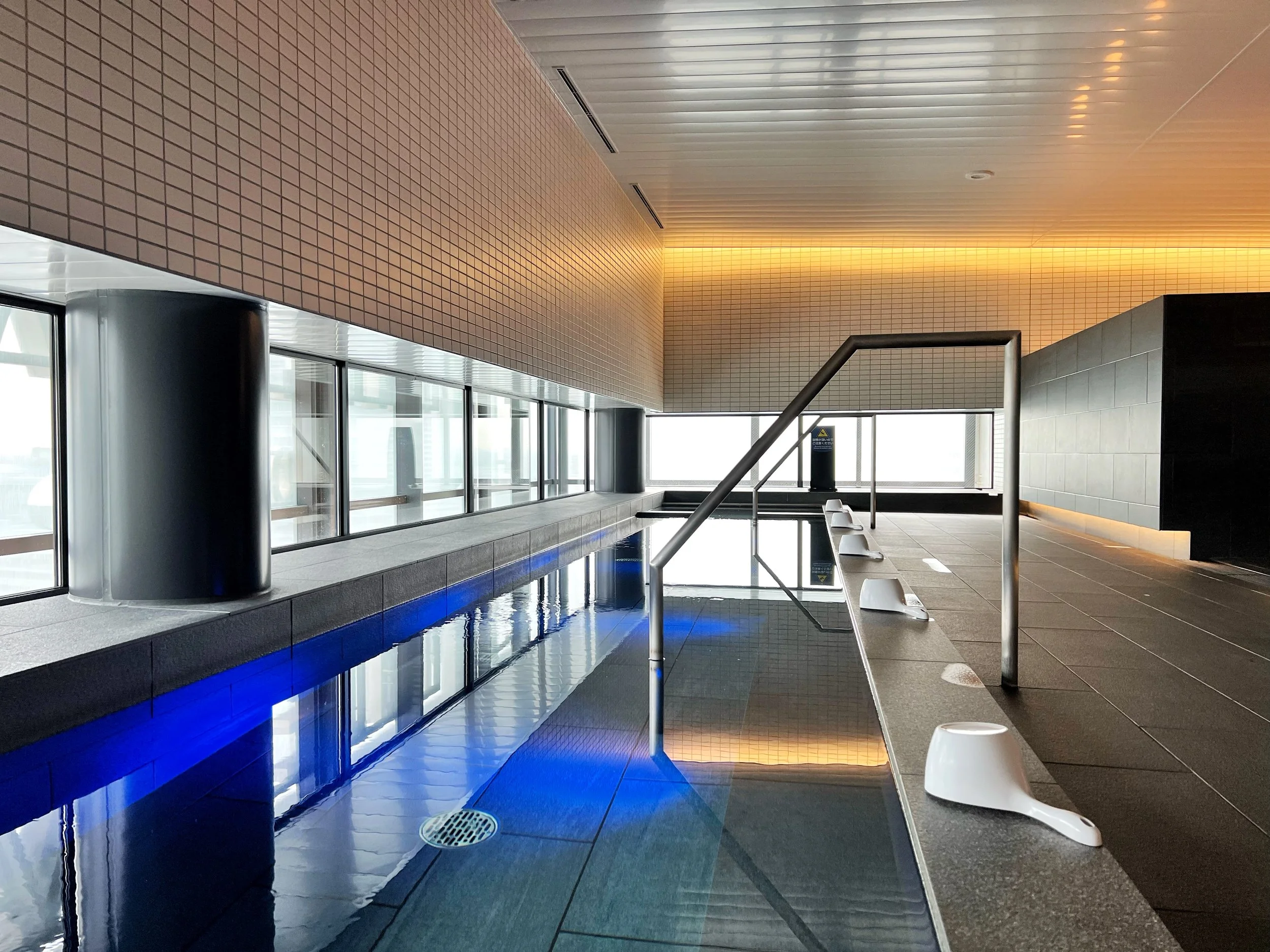
A short walk from JR Osaka station (not Shin-Osaka). Hotel Intergate is a popular upscale “mid-value” Japanese hotel chain (with affordable prices) which can be found around the country. Think modern rooms (some quite spacious), comfortable lounges, complimentary snacks/drinks (depending on location) and often very centrally located.
The Osaka branch also had a delightful public bath (like a traditional sento, this is not onsen water!) which is great to soak away in after a long day exploring. Rooms have ensuite bathrooms as well, if public bathing is not your thing.
TRAVEL TO KYOTO
Kyoto is a city I adore, and one I return to regularly, often at least yearly and if not then multiple times in another year. As such there are several places (with more to come) I’ve written about here. Here I list some of my absolute favourites. Generally I prefer Kyoto over Osaka, so if I were flying into Tokyo, I’d personally prefer to base myself in Kyoto then daytrip to Osaka depending on what I want to do. However each to their own.
PS. I would book shinkansen tickets in advance especially if you’re travelling during peak busy times and/or are on a tight schedule. Yes you can buy on the day, but some of those ticket lines are insane! (plus I hate waiting)

KYOTO
SHIJO BETTEI KYOTO
review | website | private onsen | check availability
This luxurious modern onsen hotel is the sister property to the more casual Soraniwa Terrace Kyoto. Here, every room has a private open air onsen, yet you can still enjoy the public onsen baths, the rooftop terrace bar with onsen footbath along with the guests of the sister property. It’s a bit of a splurge but very worth it, if you want to be in the heart of Kyoto and perhaps can’t fit in an onsen ryokan somewhere else.

KYOTO
TOGETSUTEI
Arashiyama Onsen
review | website | private onsen | check availability
This onsen ryokan is perfect for anyone wanting to base themselves for a quieter stay in Kyoto. Though the area gets busy during peak daytimes with the bamboo forest and main shopping area. The mornings, late afternoons & early evenings are so peaceful. Rooms here are a gorgeous mix of traditional and modern Japan design aesthetics. There is a large reservable private onsen (for a fee) for guests to enjoy, a relaxing indoor public onsen, plus 1 room has its own private onsen. Otherwise you can relax in spacious rooms, some with large open air baths (not onsen).

KYOTO
KYOISUKE MACHIYA: OTONARI
review | website | check availability
One of my favourite types of accommodation to stay in, is a renovated traditional Machiya. Former homes of artisans & merchants have been saved from demolition by turning them into boutique stays. Kyoisuke only has three machiya properties, each beautifully decorated with antiques, taisho-roman furnishings giving an artistic, vintage atmosphere with all the modern comforts. I love their open air pottery baths. These homes are perfect for families, friends/couples who want a bit more space, separate bedrooms and perhaps want to cook for themselves on some nights.

KYOTO
MACHIYA JAPAN: SUMIHOTARU HONAKA
review | website | check availability
I love Machiya Japan properties and have stayed with them in Kyoto, Kanazawa & Takayama. Each machiya home is different, yet familiar - beautifully celebrating local traditional crafts and techniques. Some are smaller, some larger, some more luxurious - but there is something for everyone. Again good for larger groups, families, people who want more space and the feeling of home. I still have so many to write up about.
TOKYO/OSAKA/KYOTO AUTUMN SPOTS
There are many countless beautiful Autumn spots to visit between Tokyo, Osaka & Kyoto with numerous travel blogs extolling various locations — so I won’t fill this guide with information that can be easily googled. My one piece of advice is simply wander… there’s so many lovely local spots where you will see trees changing their colours. It may be one tree at a time or it may be several.
My absolute favourite places in Tokyo are Inokashira Koen Park in Kichijoji, and Showa Kinen Park in Tachikawa. Outside of Tokyo - Saitama’s Tove Jansson Children’s Park is gorgeous!
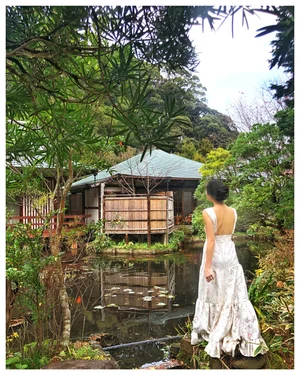
For Kyoto I prefer to simply wander especially in Arashiyama area (photo below) or in Kyoto Gyoen (national park) and Maruyama Park. Osaka; my favourite place above all is the stunning Katsuoji Temple filled with hundreds and thousands of Daruma dolls scattered around.

ALTERNATE OPTION: KYUSHU REGION
If you’re someone returning to Japan for the 2nd/3rd/4th etc trip and you’ve done the Golden Route extensively — then I’d instead head elsewhere — perhaps to Chugoku, Shikoku or even Kyushu region. The further south you travel, the later Autumn/Fall leaves are predicted to turn, and the possible falling of snow too (generally in the mountains). Down south, its important to remember its not heavy snowfall, generally a light dusting or build up that lasts a few days at most.
It’s best to fly to these other regions. Generally domestic flights are popular from Tokyo’s Haneda Airport or Osaka’s Itami Airport (ITM not Kansai International Airport KIX).
KUMAMOTO
KUROKAWA ONSEN TOWN
review | website | check availability
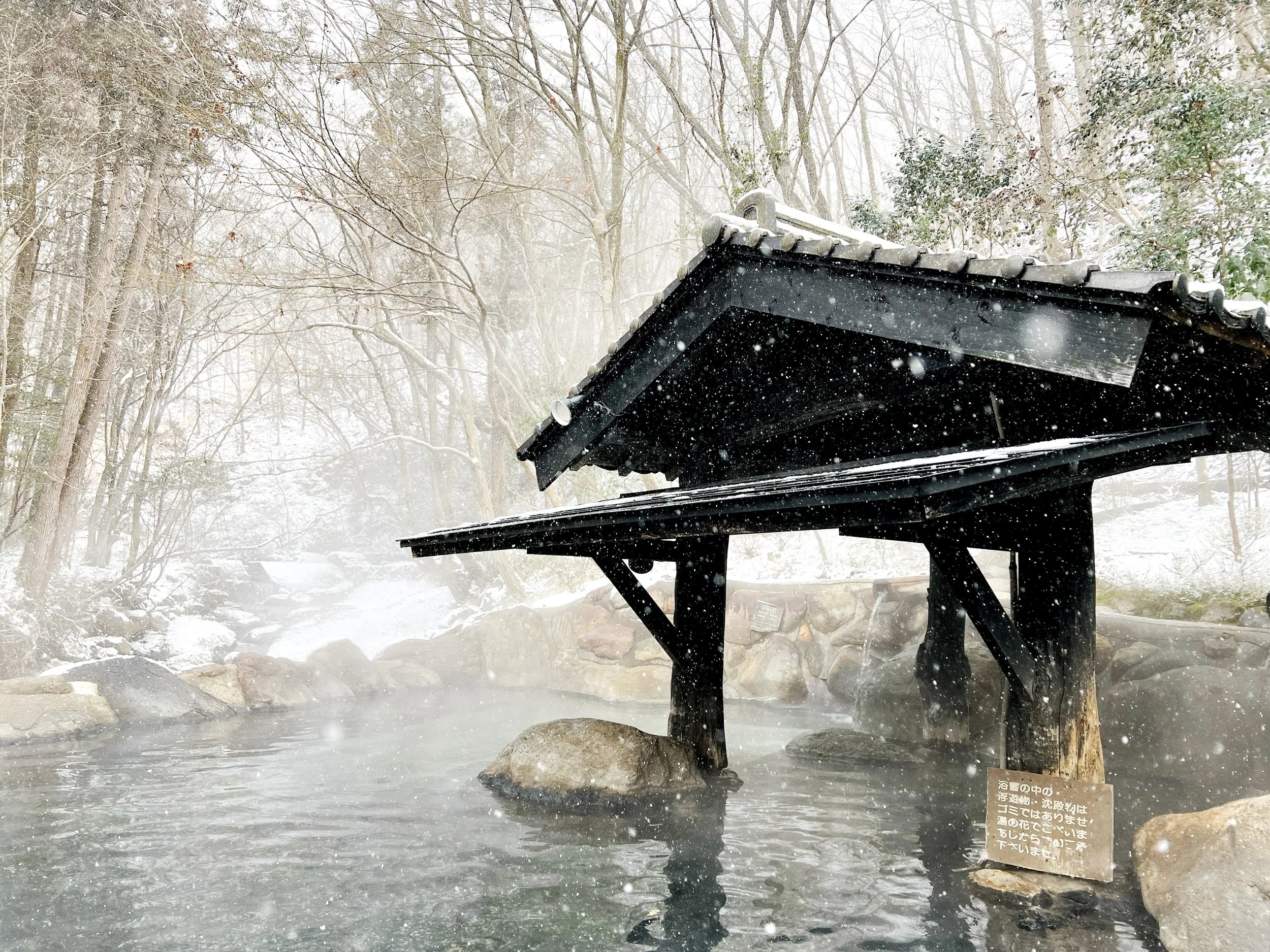
Kurokawa is one of my favourite onsen towns. It’s famous for its numerous outdoor “rotenburo” open air onsen where visitors can enjoy daytripping through the onsen ryokan’s numerous onsen baths, by purchasing a special “tegata” pass which gives you access to any three public onsen or paying the regular admission.
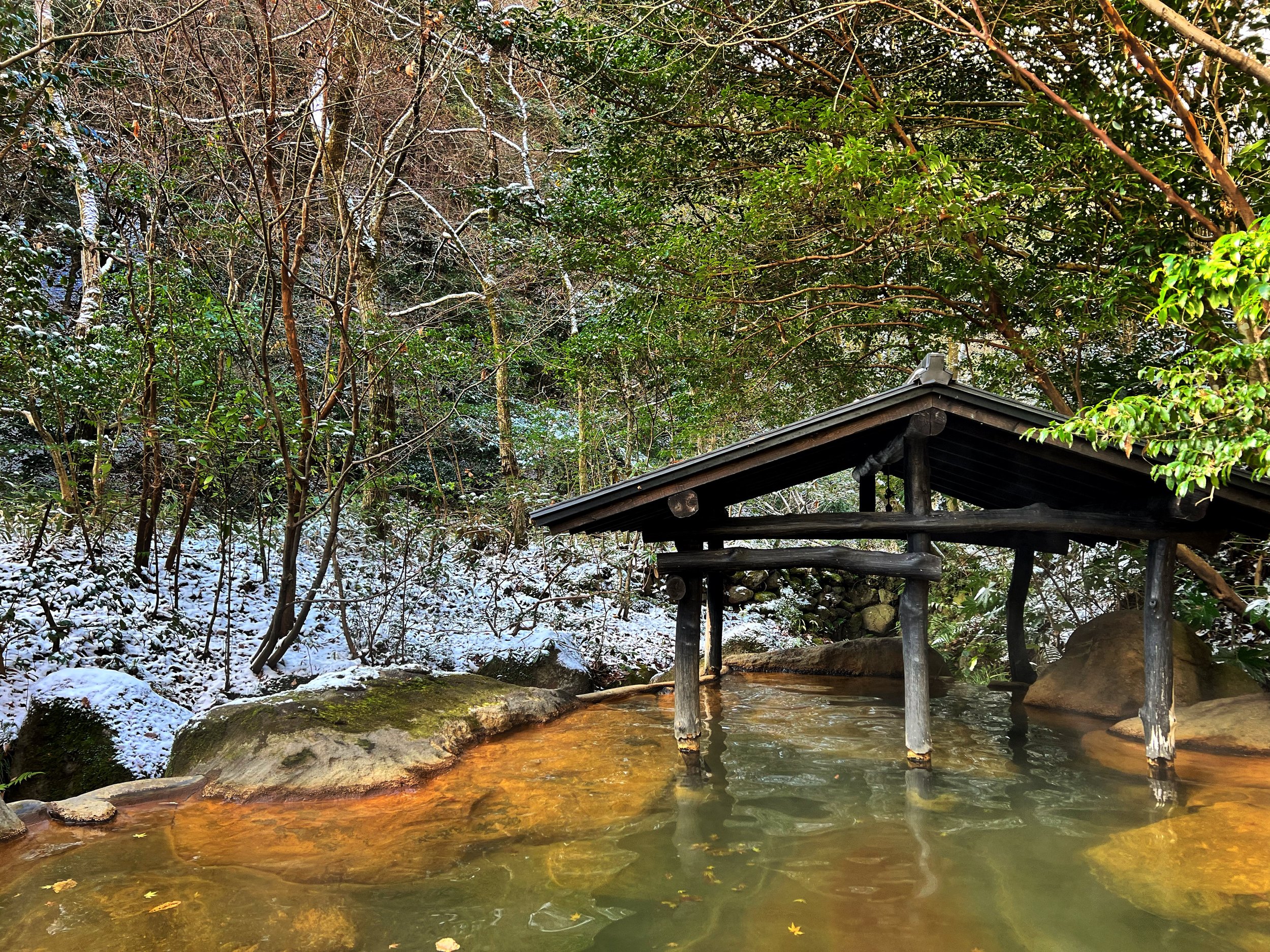
It’s a beautiful quaint town in the mountain forest where by town ordinance all the onsen ryokan are constructed in more traditional style rather than modern concrete monstrosities. Here I saw autumn & winter in one trip. I have been a few times to Kurokawa in different seasons.
KUMAMOTO
SANGA RYOKAN
review | website | private onsen | check availability
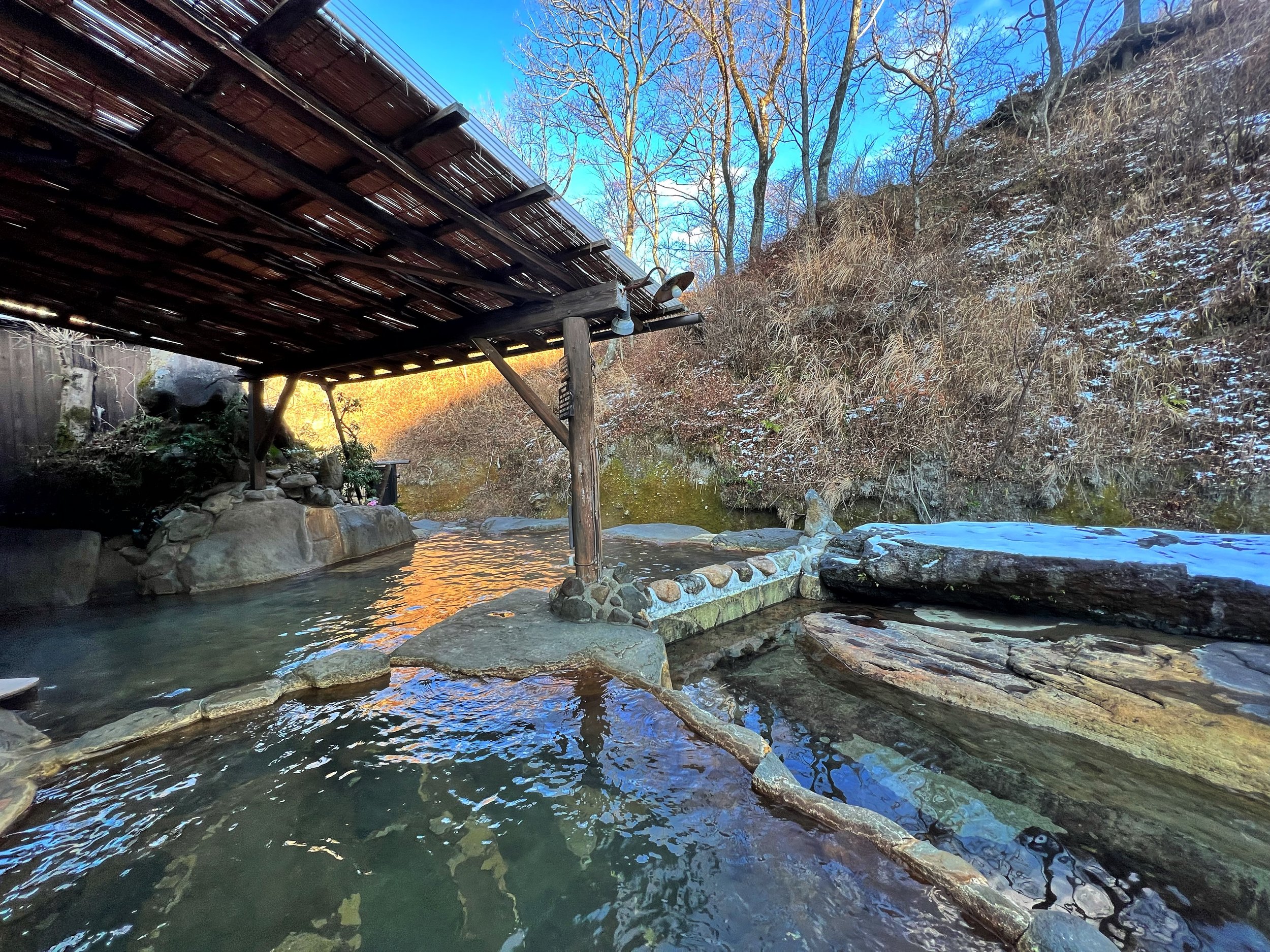
Sanga Ryokan is one of the best places to stay, a little on the edge of town - its quieter - its traditional sukiya architecture is beautiful. There are rooms/villas with private onsen but they also have freely reservable private onsen for staying guests which we enjoyed. We used this as our central base to explore Kurokawa onsen for a couple nights — so went for a cheaper room but greatly enjoyed the reservable private onsen.
KUMAMOTO
HOZANTEI
review | website | private onsen | check availability
Love Hozantei as a romantic getaway. Its further up the mountain, so its not as accessible walking wise to the main Kurokawa town (I mean you can ~40min walk but most drive the distance). So we stayed there purely to relax and not leave the premises since we spent the earlier 2 nights at Sanga Ryokan. Here is where we splurged on a room with private outdoor onsen right by the river.
TIME FOR SNOW
TAKE A SHINKANSEN/FLY TO TOHOKU REGION
Generally speaking, if I’m travelling from Tokyo, I will take a shinkansen and begin my travels heading up the Tohoku region — starting from the lower prefectures of Miyagi, Yamagata, Fukushima etc — then train further up to Akita, Aomori or Iwate. Perhaps one winter I will do the Tohoku prefectures that fall on the “right hand side” of the map and another winter I will do the ‘left hand side.” This is to ensure travel runs more smoothly with connections, train times — especially if there’s heavy snowfall.
I’d say its ambitious to do all 6 prefectures in 1 week. I’d advise 2 -3 prefectures at most in 7-8 days (unless of course you’re here for the all the winter months!)
If I want to do the upper prefectures of Tohoku only - specifically Aomori - then I may choose to fly or take the shinkansen depending on my travel time and especially if I’m continuing on to Hokkaido.
This list only shares an onsen ryokan from each prefecture of Tohoku. If you want the full list either visit the corresponding prefecture link on this website (via the DISCOVER tab) or head to “my favourite snowy winter onsen ryokan.“ Tohoku is the region where you can still find many traditional mixed “konyoku” onsen baths.

AKITA
TSURU NO YU
review | website | private onsen | mixed onsen | check availability
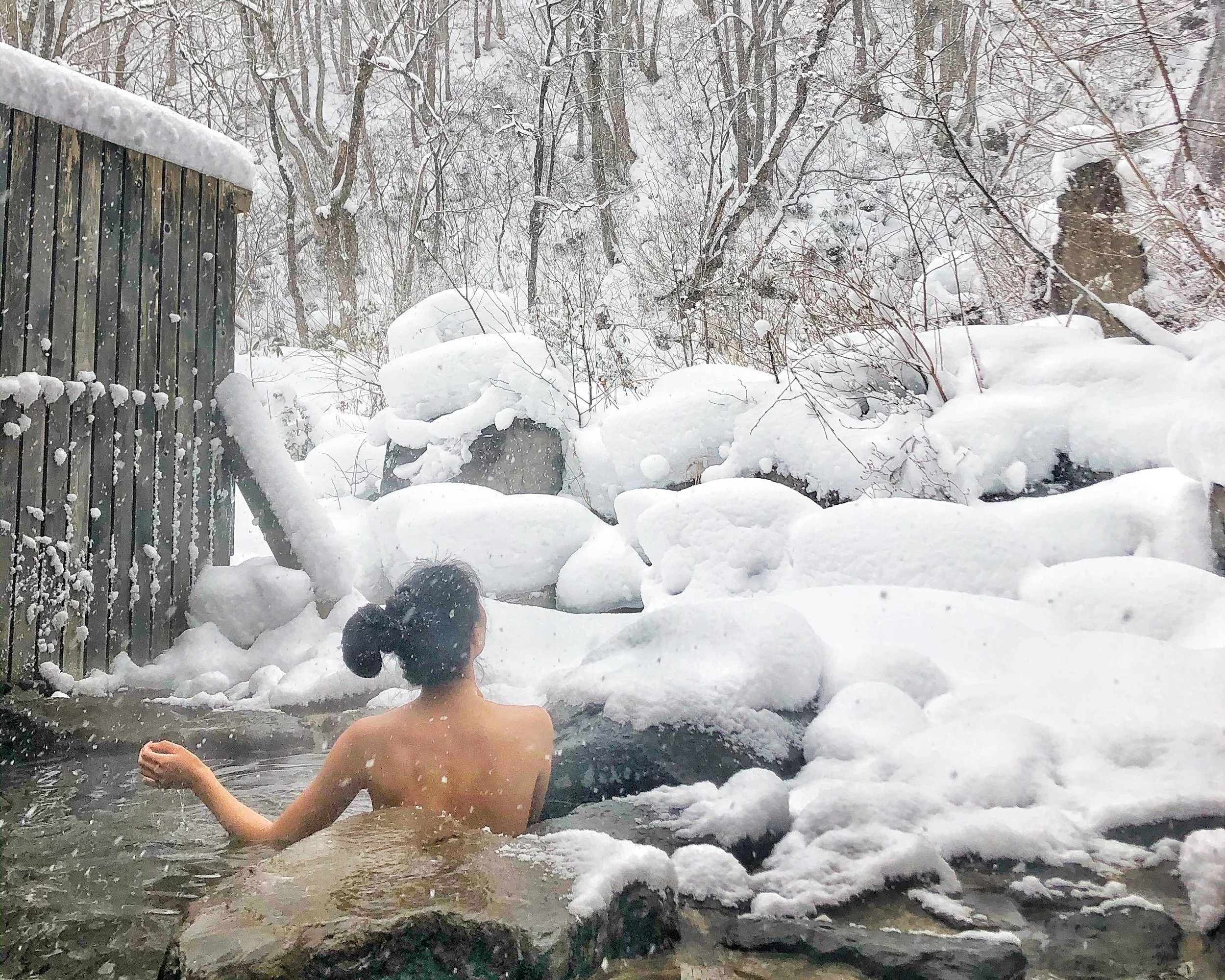
One of Japan’s most stunning traditional “mixed” onsen (no towels, no swimsuits allowed) is found in Akita. The milky blue onsen waters of Tsuru no Yu hide the body (until you have to exit). Woman have a private corridor to enter & exit from which effectively shields them from view the whole them.
It is a traditional, rustic inn, so if you’re someone who needs a stay to be modern, no imperfections, no bugs (you’re in the mountains, in nature for crissakes!) this may not be for you.
AOMORI
AONI ONSEN
review | website | mixed onsen | check availability
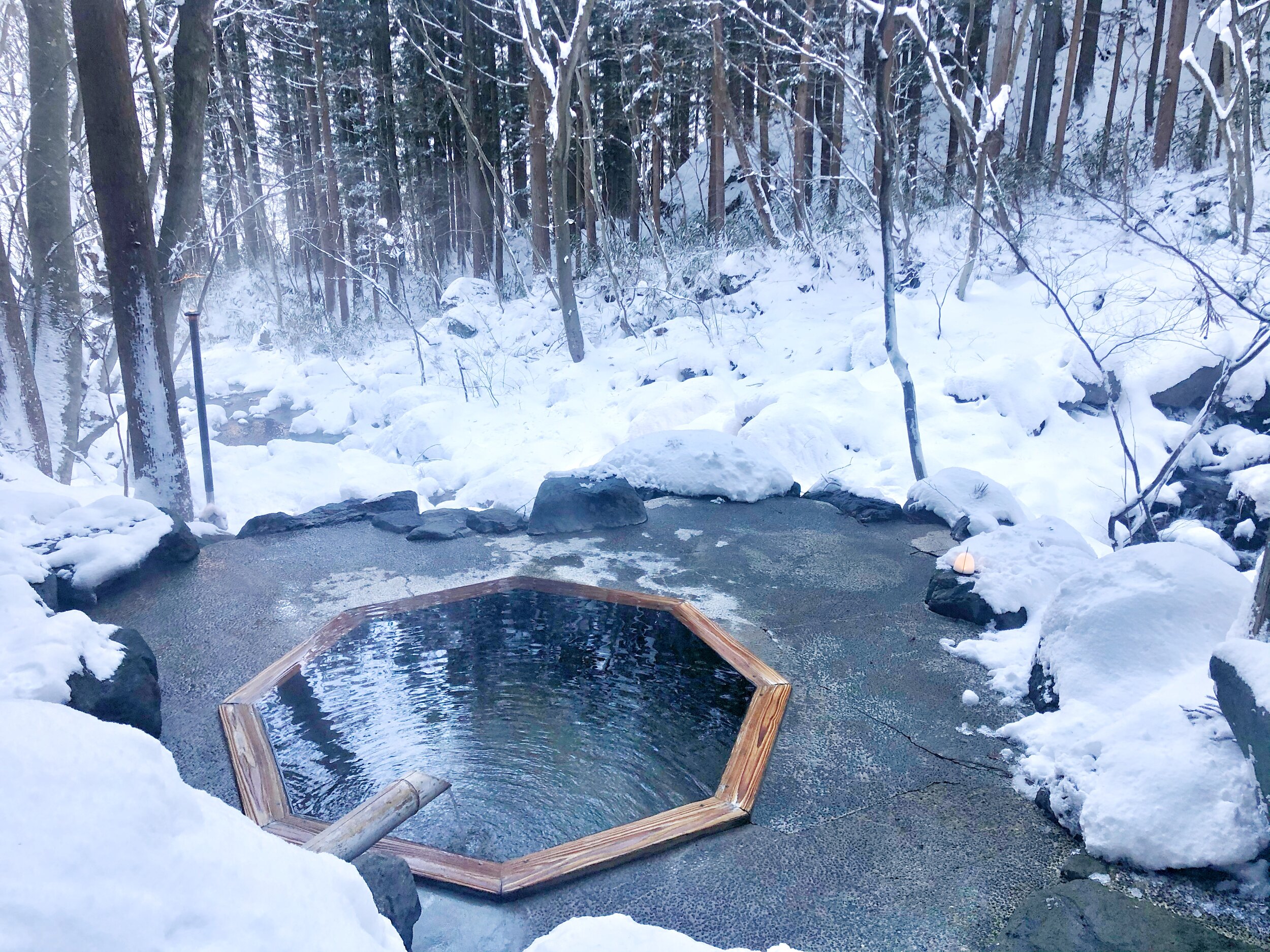
Deep in the mountain valley, Aoni Onsen runs on simple oil (kerosene) lamps. Electricity is only used in the kitchen & the lobby. There is no signal here - so you will be completely off the grid. There are 4 onsen baths to enjoy, with a popular mixed outdoor onsen.
Like Tsuru no Yu, this is a rustic, traditional inn — so if you’re someone who can’t cope with imperfections, without modern furnishings, or the occasional insect - this is not the place for you.
FUKUSHIMA
TSUCHIYU BETTEI SATONOYU
review | website | private onsen | check availability
For those wanting a bit of luxury and modern Japanese design aesthetics that celebrate the traditional - then Tsuchiyu Bettei Satonoyu is for you. There is no public onsen - instead guests can reserve a time slot at their three private onsen upon check in.
All the rooms have pure onsen water flowing into the indoor hinoki bathtubs - however only one villa has its own private outdoor onsen. A stay here is perfect for a special occasion.
IWATE
OSAWA ONSEN SANSUIKAKU
review | website | private onsen | mixed onsen | check availability
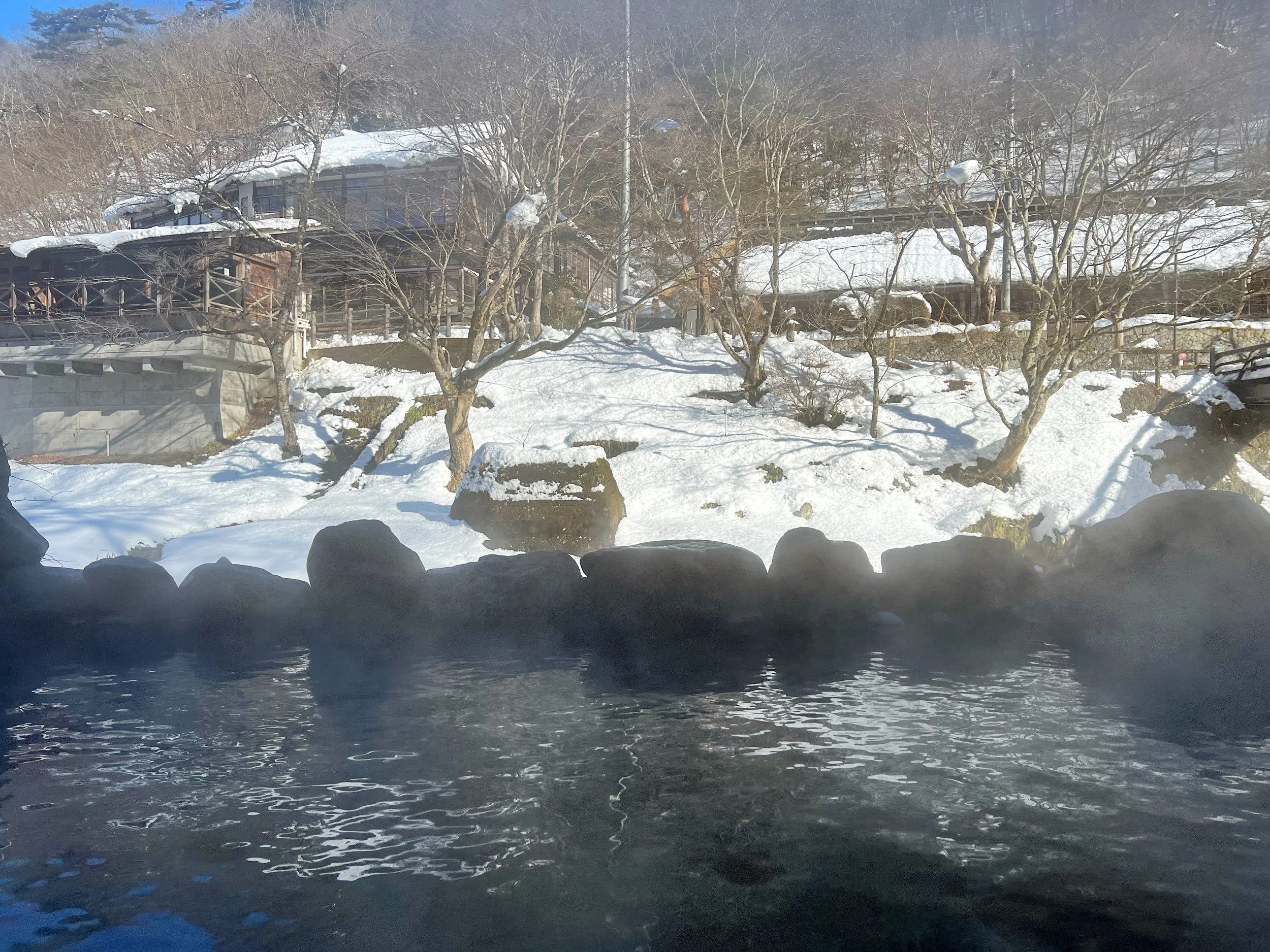
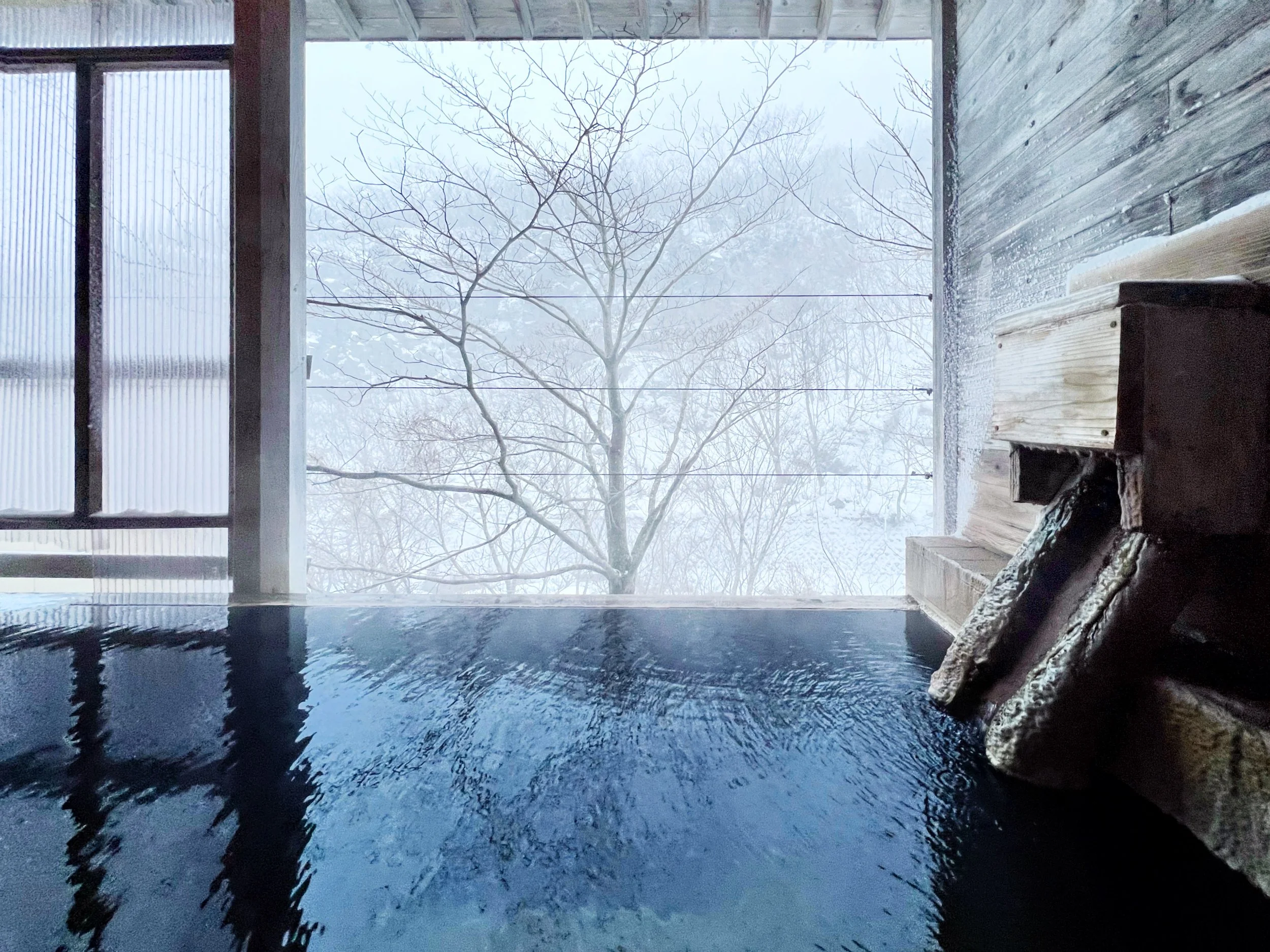
Osawa Onsen is a famous Toji Inn. There are 3 buildings of various comfort levels. The original building is the historic toji-inn where guests can still prepare their own meals in the kitchens like the old ways & spend the night in very simple tatami rooms.
The other two buildings have rooms of differing comforts, from more modern & spacious - to those with their own ensuites. The most famous bath is the mixed open-air onsen bath which overlooks the river. It is always very busy.
MIYAGI
GAGA ONSEN
review | website | private onsen | check availability
Located in a secluded mountain gorge, Gaga Onsen stands alone and is another famous Toji Inn. Meals here are simple healthy home cooked meals filled with local seasonal produce. Its acknowledged as one of Japan's top three efficacious hot springs for stomach and bowel diseases, chronic digestive disorders, and constipation. Drinking the spring water is permitted and historically practiced on-site
There is a mixed open air onsen that over looks the river, however it’s generally closed in winter because the snowfall is so heavy, so access is dangerous.

YAMAGATA
TAKIMIKAN
review | website | check availability
Takimikan is one of the most beautiful places to stay in Ginzan Onsen. A little away from the main street of onsen ryokan, up the mountains - its one of only two onsen ryokans that have a full outdoor onsen bath. Its views of the mountainscape is breathtaking. It’s a short walk to the town (and they have a nightly shuttle bus) but remember a short walk downhill means you have to return uphill! The main building only has 14 rooms - so there’s a lot of chance to enjoy the outdoor onsen by yourself. For winter, booking windows seem to now open 6 months in advance - so be on it - if you want to stay here!
TRAIN/FLY TO HOKKAIDO
Depending on one’s itinerary - I would generally fly to Hokkaido via the main domestic airports (Tokyo/Osaka). Additionally, depending on where I wish to travel in Hokkaido - I may fly to one of their smaller airports rather than Sapporo.
If I’m already in the Tohoku region - I would choose to take the Hokkaido shinkansen (via Shin Aomori station) if I’m already in Aomori Prefecture - as it takes me into Hakodate so I can enjoy a couple nights eating at my fave places in port city (my Japan travels are often determined by onsen and food first) before I travel onwards for some onsen adventures.
LAKE AKAN
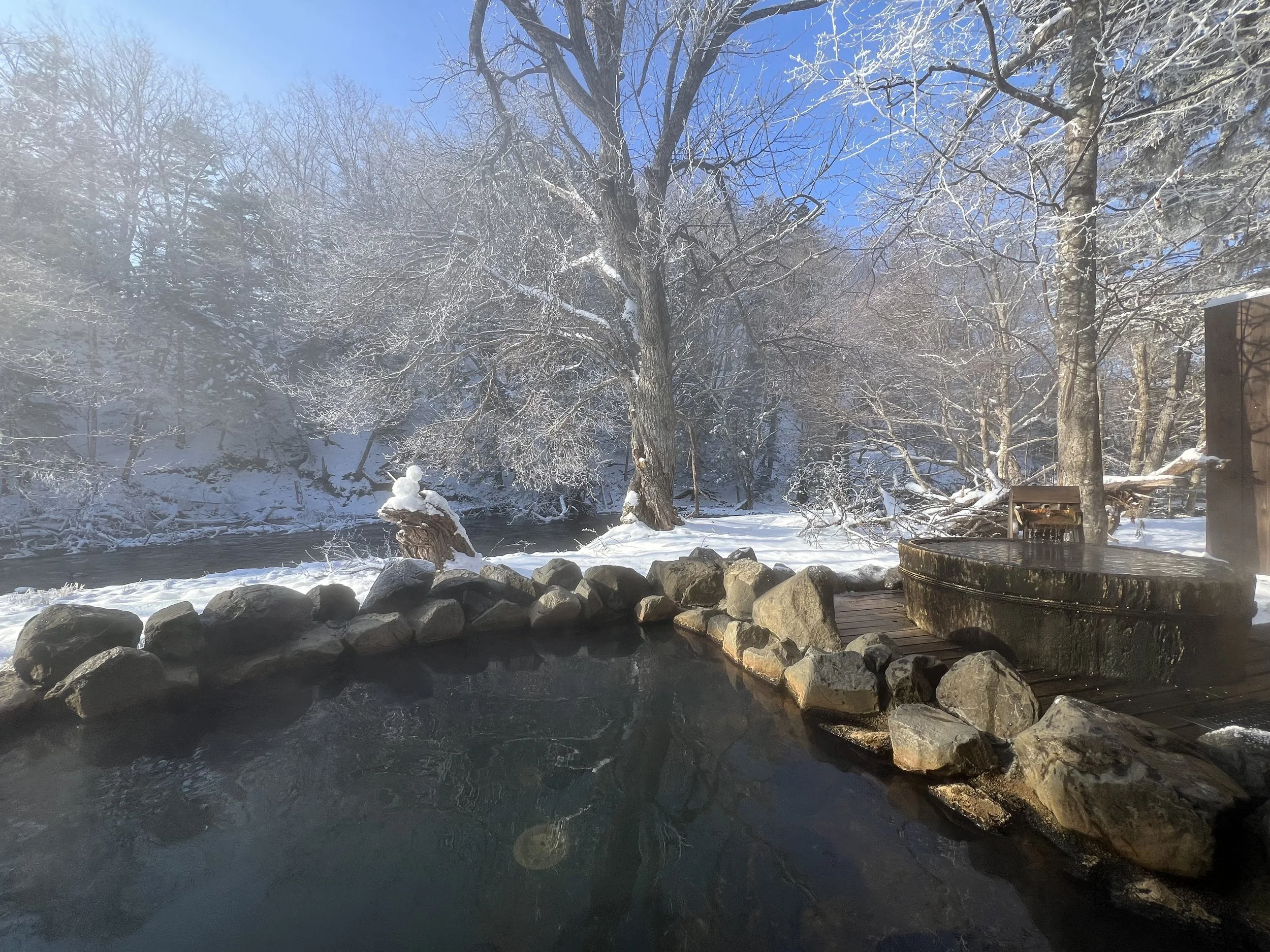
LA VISTA AKANGAWA
review | website | private onsen | check availability
This secluded mountain retreat in Hokkaido is great for those who just want to get away and relax in Hokkaido’s nature. Though a little bigger property than I normally prefer (64 rooms) - there are several rooms with their own private semi-open air onsen at an affordable price per person per night. Additionally the large public open air onsen is lovely and if you’re shy, book the cheapest room & instead enjoy the freely reservable 3 private onsen (for staying guests).
NOBORIBETSU ONSEN
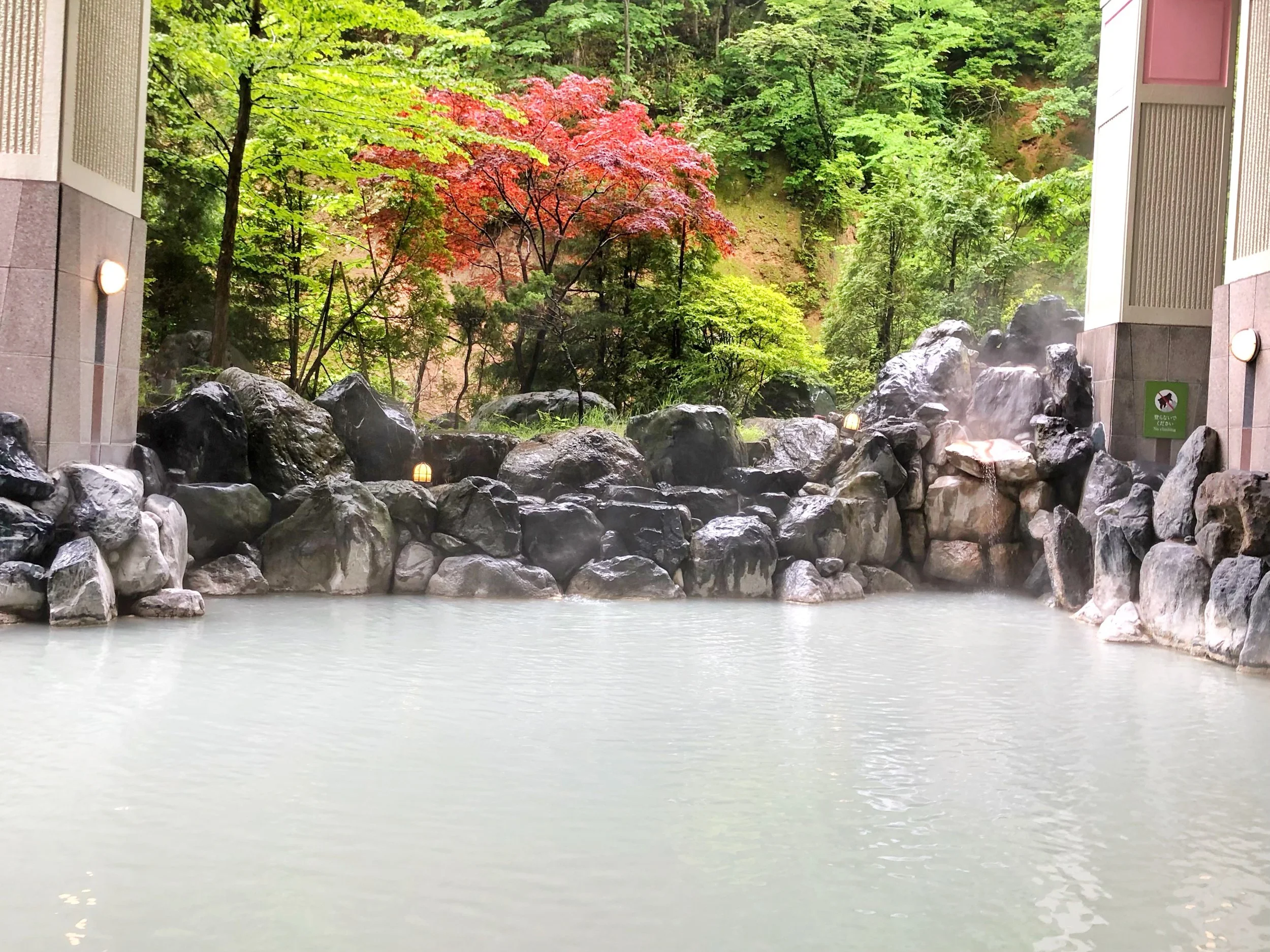
HOTEL MAHOROBA
review | website | private onsen | check availability
This massive onsen hotel is the largest I’ve ever stayed in (and probably will be the only time I do so) — 398 rooms. The reason I chose this one is because it was our base to explore Noboribetsu Onsen so we were going out and exploring - so didn’t need a fancy luxurious accommodation. There are rooms with private onsen available. The main draw of staying here during a quiet time - was because the property has 31 public onsen baths to enjoy! One of the largest in Japan. It even has an onsen slide! Kids will love it.
LAKE TOYA
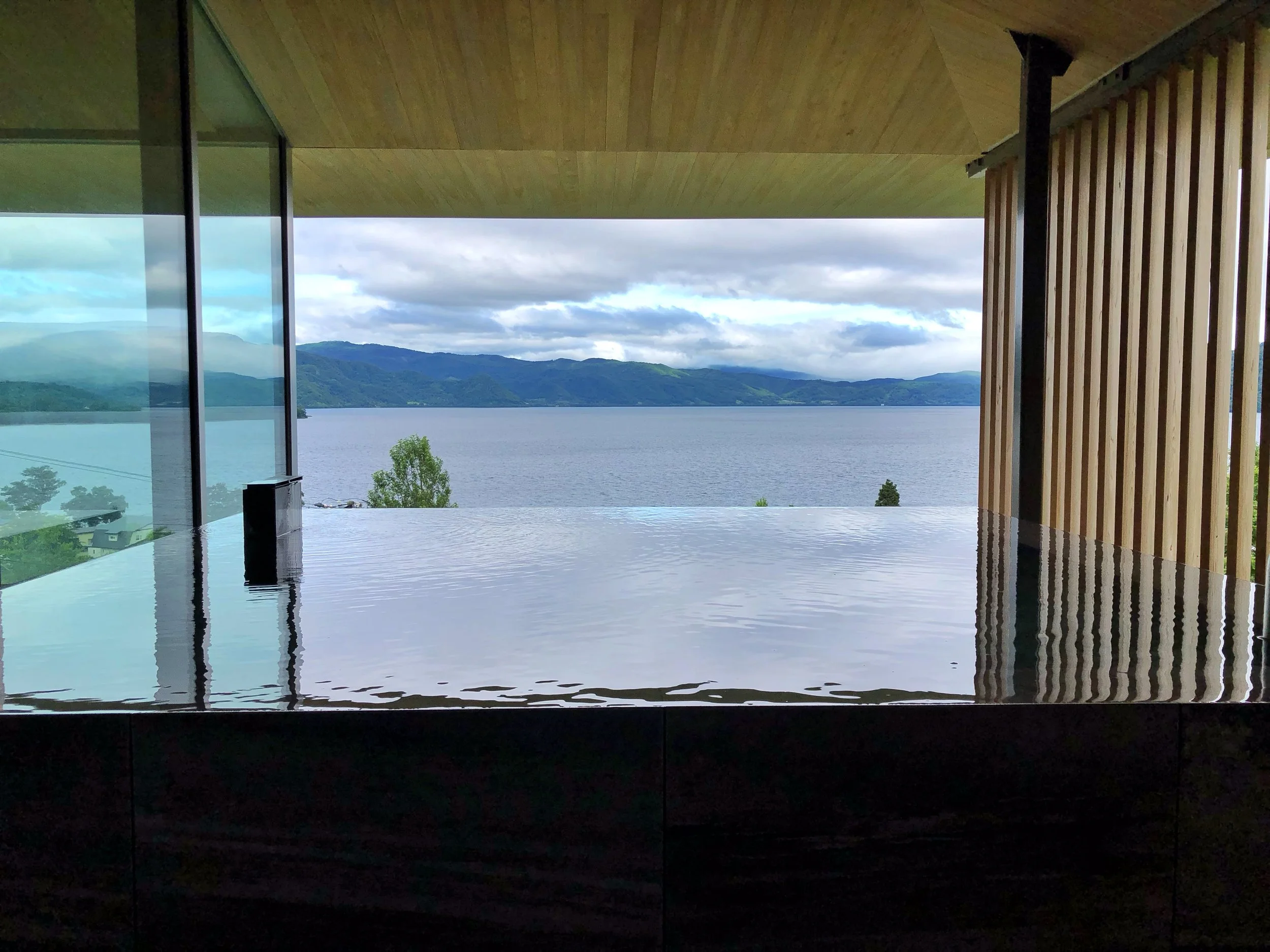
WE HOTEL TOYA
review | website | check availability
Designed by Kengo Kuma, architect fans will love this design onsen hotel. The rooms are spacious with clean lines, beautiful wooden touches and wide expansive windows with views of Lake Toya. Important to note, the open air baths in the room are not onsen water. It uses regular heated tap water. Onsen can only be found in the public indoor and open air onsen baths.
It’s a great peaceful stay for those needing a respite.
ALTERNATE OPTION:
NAGANO, NIIGATA & THE JAPANESE ALPS
If you’ve already visited Hokkaido or you’re a bit time constrained - then I’d advise to head into the mountain prefectures near Tokyo. Niigata Prefecture is known as snow country. Niigata and Nagano are the 2nd and 5th snowiest regions in Japan. They beat Hokkaido who sits in 8th place, for the average annual snowfall depths.
For these regions, especially if you wish to move around — it is recommended you hire a car (with snow tires & 4WD!! this is a must!!). For most foreign licences you will be required to apply for an International Drivers Permit - they will not let you have the car otherwise).
If you’re simply going for a few nights and staying in one location, then generally you can reach a station/bus stop with public transport and a lot of the onsen ryokan will have a complimentary shuttle service (often needs to be reserved in advance!).
If you’re driving in the heavy snow, do be careful, exercise caution - its better to go slow and steady because it can be extremely dangerous. I drive regularly in the snow during the winter (first time I drove in Japan properly was the heaviest snowfall recorded one year — and this was after over a decade of not driving regularly — I don’t drive in Tokyo, so otherwise it was only back home in Melbourne) - and I would rather still pull to the side, and let drivers going too fast, overtake me. They are the drivers that will have accidents.
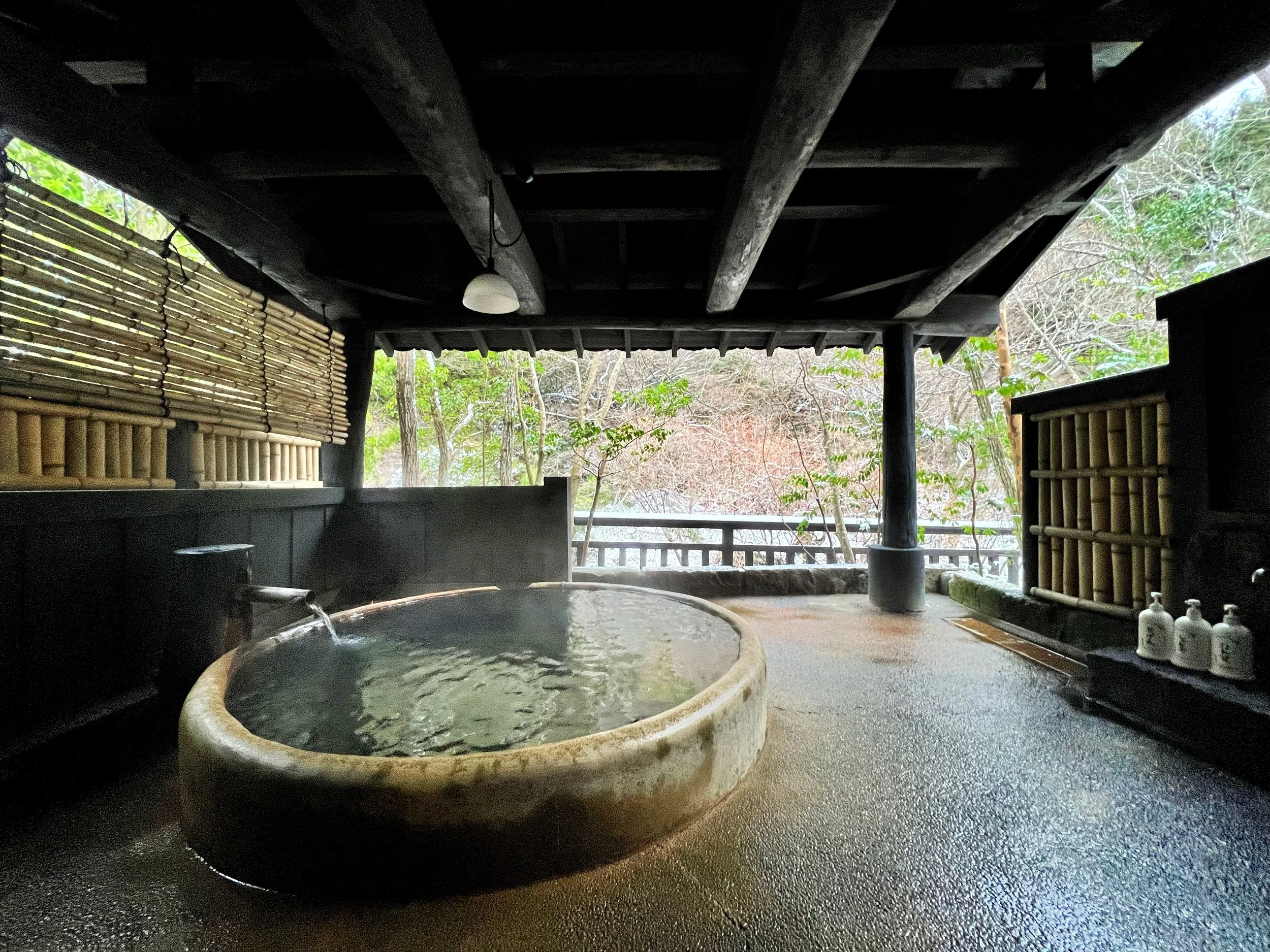
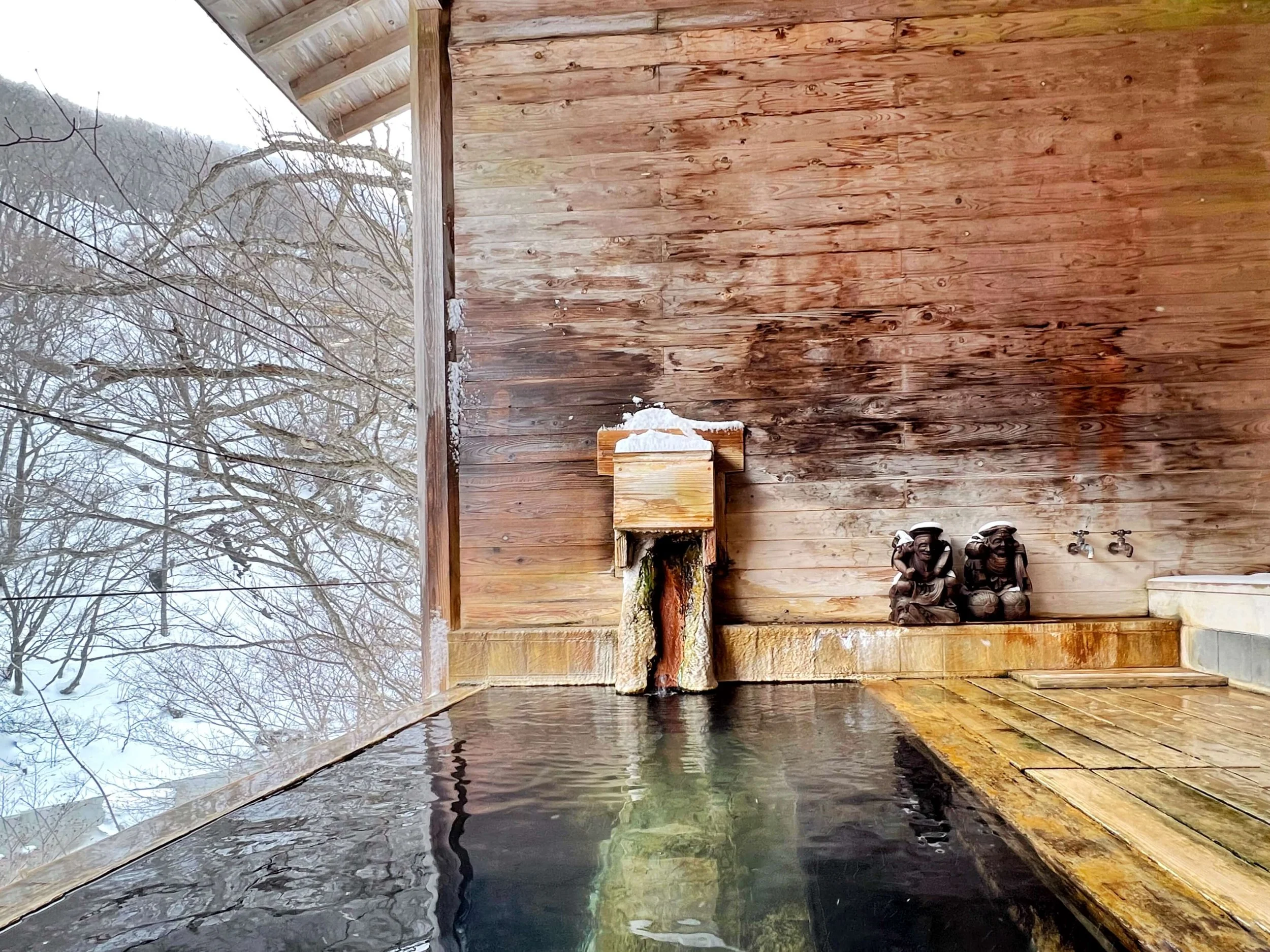
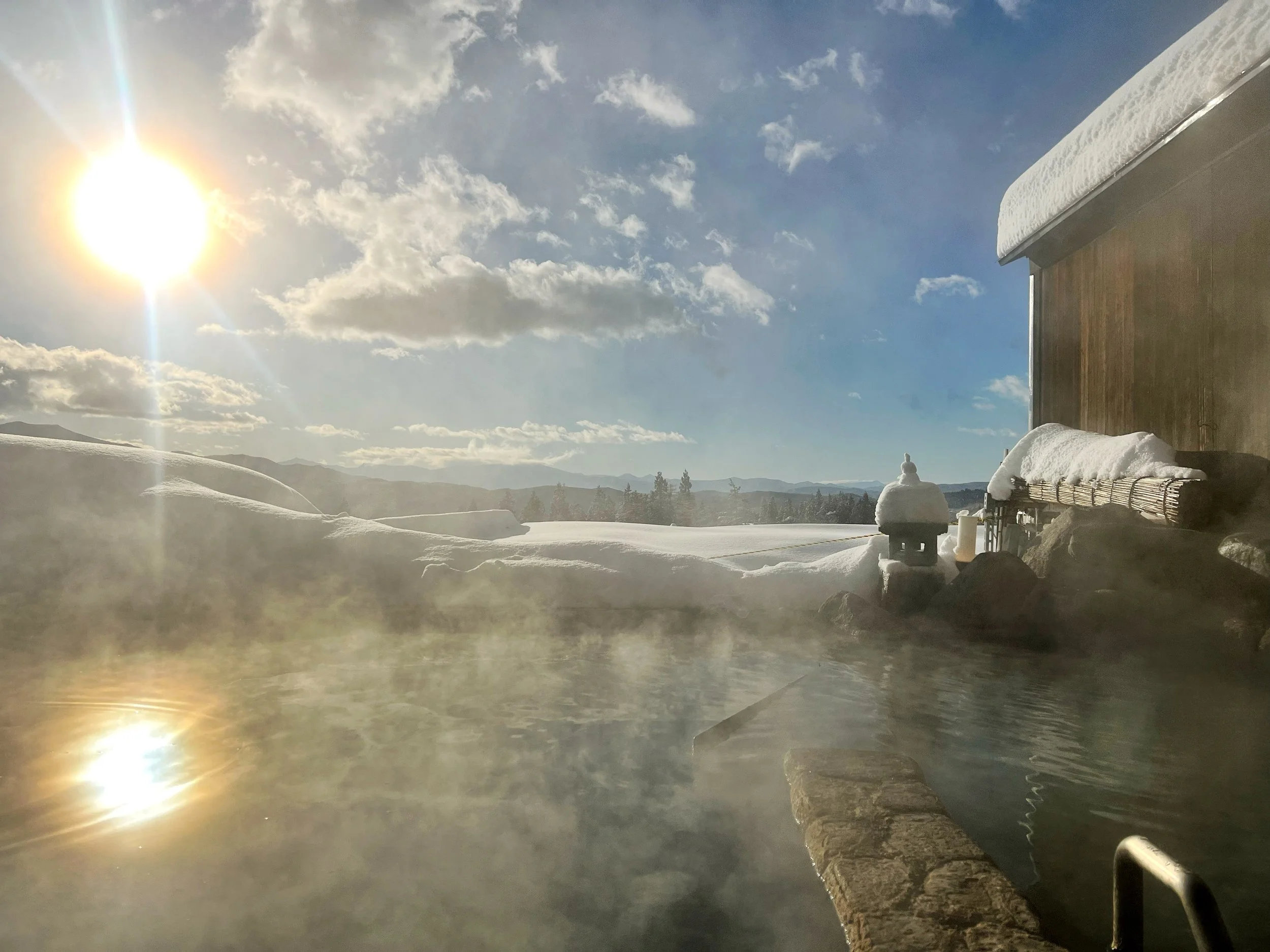
Also to put in perspective — the type of snowfall to expect — the photos below of the four onsen properties — Kiyotsukan & Hotel Taiko were experienced around Christmas time. Rankeisou & Ryugon were both visited around the end of the first week of December (also in a so so snow year) — then it dumped the following week! I was a bit gutted. Remember to check out my “favourite snowy winter onsen” for the full list, or check out each prefecture in the “discover” tab.

NIIGATA
KIYOTSUKAN
review | website | private onsen | check availability
This simple, cozy mountain inn is famous for its medicinal indoor onsen with its healing waters but I fell in love with its gorgeous open air private onsen overlooking the mountains and the rushing river.
It’s only available to staying guests. The first time is complimentary and afterwards you pay a small nominal fee to enjoy it again.

NIIGATA
RANKEISOU
review | website | private onsen | check availability
An iconic onsen toji-inn that stands alone right by the river. It’s historic and especially loved. One of my favourite places to return too, I hope to visit in Autumn next. Its public onsen baths are now private for staying guests. One can simply reserve a time first and then during the evening - its first come, first served to take the wooden key and enjoy the onsen for a time.
The traditional kaiseki is exceptional.

NIIGATA
ryugon
review | website | private onsen | check availability
A stay here is perfect for those who love traditional Japanese sukiya architecture paired with luxurious design elements and modern comforts. Several of the stand alone villas/houses have their own private outdoor onsen to enjoy - mine even had in additional, a private 10-meter long pool to cool off from the sauna/onsen - though the chilly winter air was fine to do that for me.
NIIGATA
HOTEL TAIKO
review | website | private onsen | check availability
The onsen town of Akakura Onsen is extremely popular during the winter seasons for skiers and snowboarders (expect a lot of Aussie/Kiwi & international accents to be heard) — one of the most popular places to stay in Hotel Taiko which has a lovely mid-sized indoor and outdoor onsen for both staying guests and day trippers (time restrictions). If you’re someone like me who doesn’t really do snowsports - I generally had the onsen all to myself for a lot of the time.
FIND AVAILABILITY, PRICING & OTHER OPTIONS ON THE INTERACTIVE MAP BELOW
onsen ryokan = purple hotel icon | onsen towns = blue leaf icon
MY PERSONAL WINTER ONSEN TRAVEL TIPS
snowfall in Japan (especially up North & in the mountainous regions) can be extremely heavy and cause disruption, so its important to consider
stay min 2 nights so you can have a leisurely time relaxing & in case there are delays
give yourself buffer time for delays and transport connection times, rushing will be stressful
make sure you know your travel routes (especially if travelling remote), book your tickets when possible in advance
find out if there are any shuttle pick up services (normally from the closest bus stops/bus stations)
check with the onsen ryokan booked in advance, the public transport winter timetable (it can be different from the rest of the year & if you’re travelling the remote - Google Maps may not be updated with the very, very local bus timetables)
try staying at an onsen ryokan with less than 20 rooms (under 10-15 rooms is my favourite) - its more intimate & if there’s a public onsen, you have higher chance of enjoying it all to yourselves!
WHAT ELSE SHOULD BE CONSIDERED?
Not sure how a stay at an onsen ryokan goes?
Read the indepth explanation of a night’s stay - from check in to check out.
First time onsen-ning? Feeling nervous?
Our complete onsen etiquette guide will have you bathing like a local
Still trying to decide if an onsen ryokan stay is worth it?
Read my breakdown of why an onsen ryokan stay should be on your Japan itinerary.
Ready to be inspired for your next onsen adventure?
Take a look at my favourite traditional onsen ryokan stays in Japan
Looking to experience onsen ryokan just outside the Golden Route?
These are perfect for returning travellers