Onsen Etiquette Guide
THE DO’S & DON’TS FOR JAPAN’S HOT SPRINGS
A Step-by-Step Guide
I love that so many people are interested in experiencing a stay at an onsen ryokan & bathing in an onsen on their trips to Japan. Bathing in an onsen, especially a public onsen can be rather intimidating for your first time. So I’ve written this ultimate onsen etiquette guide for you all so you can feel prepared & comfortable to enjoy your first onsen experience. Knowing all the dos & don’ts so no cultural faux pas is made.
Remember to read our personal “Travel TIps & Advice” to enjoy your onsen stay, learn about Japanese Kaiseki so you know what to expect at your meals and discover our favourite traditional onsen ryokan stays.
Please Note: This article contains some affiliate links. If you make a reservation through one of these links,
I will receive a small commission at no additional cost to you. Every property and destination featured on this website has been personally experienced by the writer, and are their personal thoughts and opinions.
#1: Undress Completely
When you enter the changing area, remove all clothing including underwear and place them neatly in the cubicle/tray provided.
NO clothing, underwear, swimsuit is to be worn within the onsen itself. The water of the onsen is considered divine, a gift from the gods. Do no desecrate the waters by wearing clothing which may hold chemicals/dyes which can contaminate the purity of the onsen quality
A few onsen allow the wearing of towels/swimsuits - but this is a rarity and not the norm.
#2: Remove Any Jewellery
Remember to remove ALL jewellery worn around the neck, fingers and wrists (small earrings are fine - as one does not place one’s head under the onsen water).
The impurities of the metals can once again contaminate the purity of the onsen quality, and onsen water holds many different minerals which could discolour your jewellery.
#3: Wash Your Body Completely
First with your little towel, head to the “washing area” where the showerheads, little stools, mirrors and buckets can be found. Wash your body completely and thoroughly.
Wash your hair here.
Most onsen will provide shampoo, conditioner & body soap. If you’re picky - remember to bring your own in a little waterproof bag or small basket.
Rustic, wild onsen may not have a washing area - if so - do step #5.
#4: All Long Hair Must Be Tied Up Completely
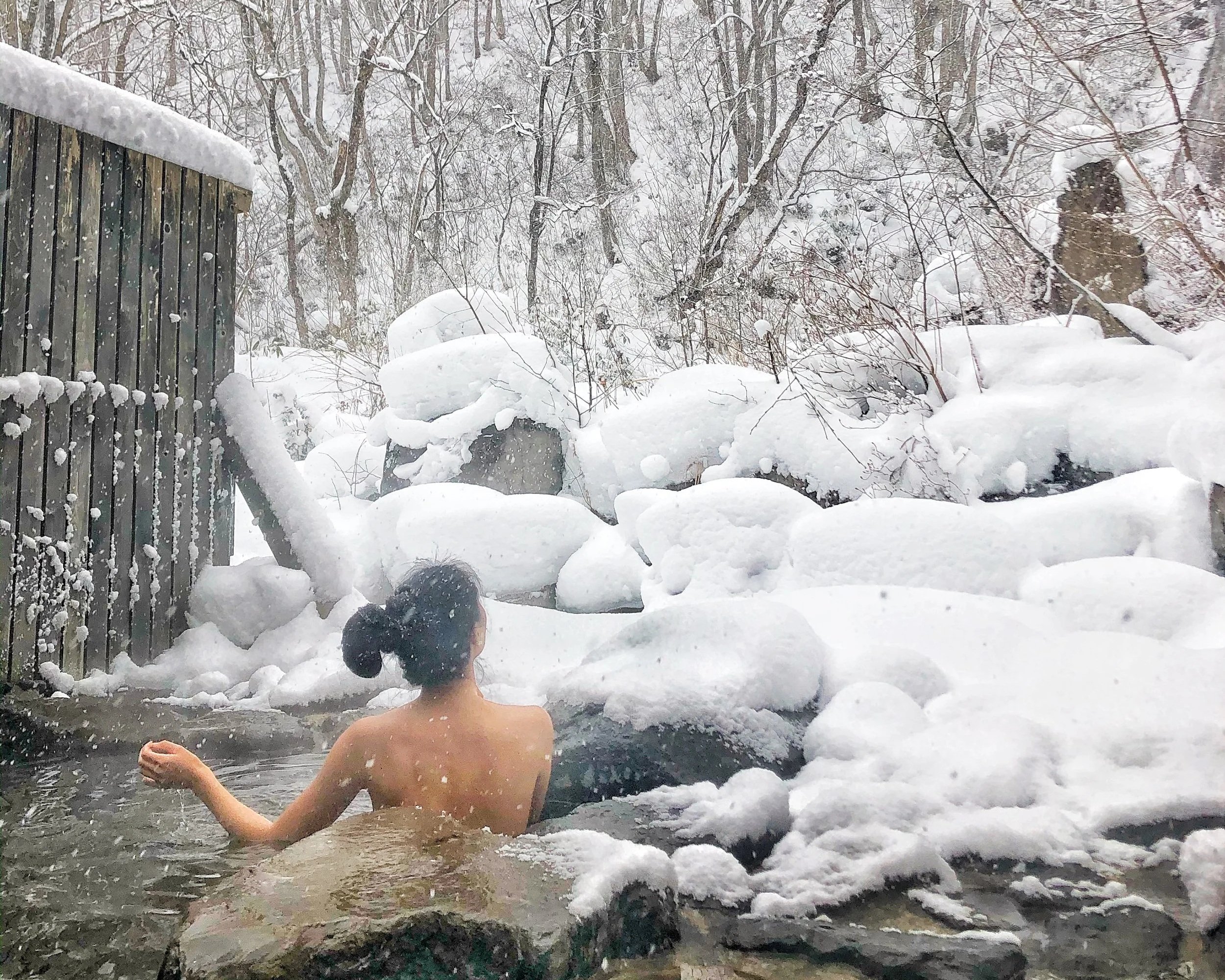
After washing, ensure any long hair is tied up completely.
If your hair falls below your shoulders - it must be tied up.
Head hair should not enter the onsen, as its considered unclean, disrespectful and offensive to the onsen water’s purity.Additionally the minerals and differing pH values of onsen may be to harsh for your hair.
#5: Pour Onsen Water 3x Over The Body
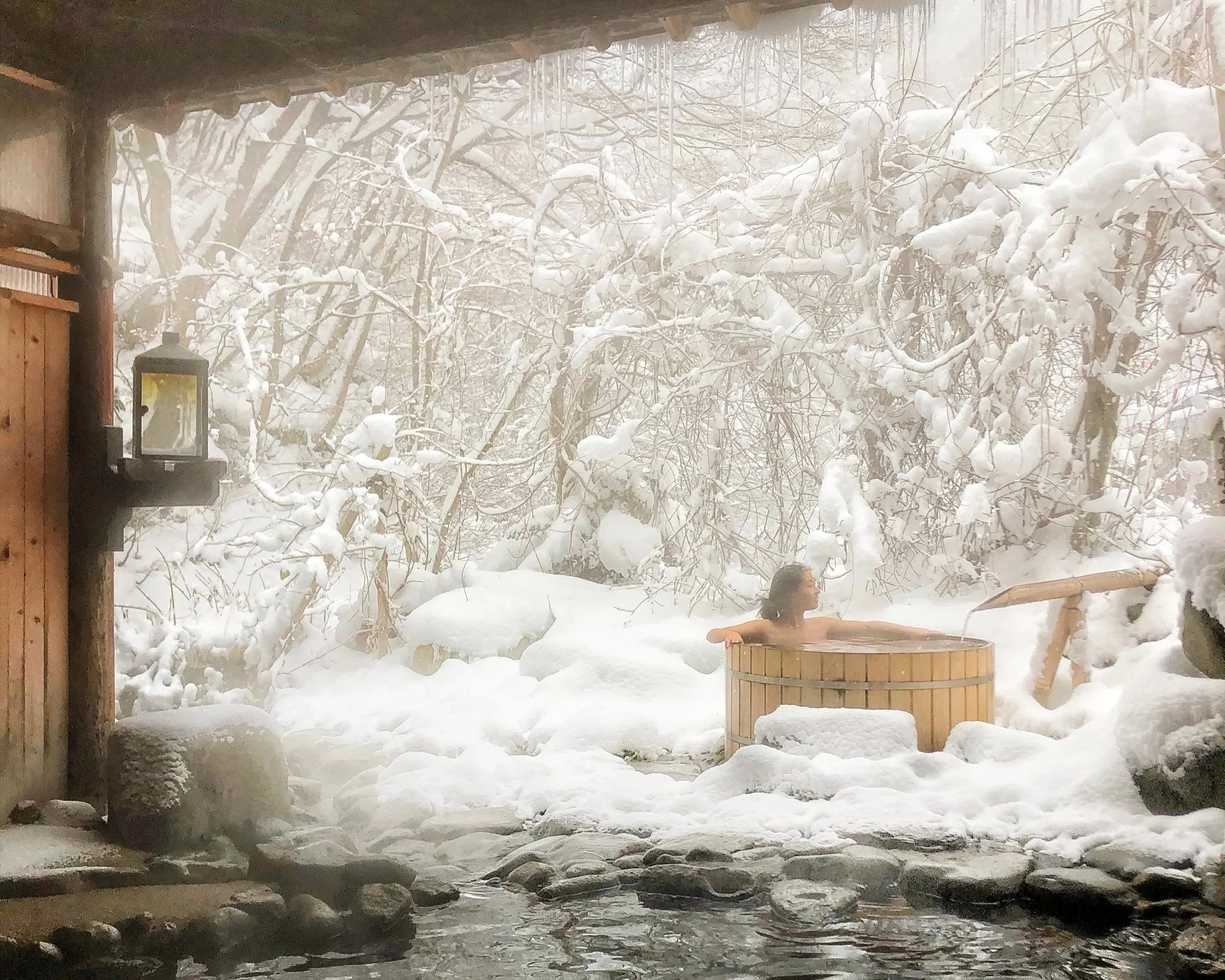
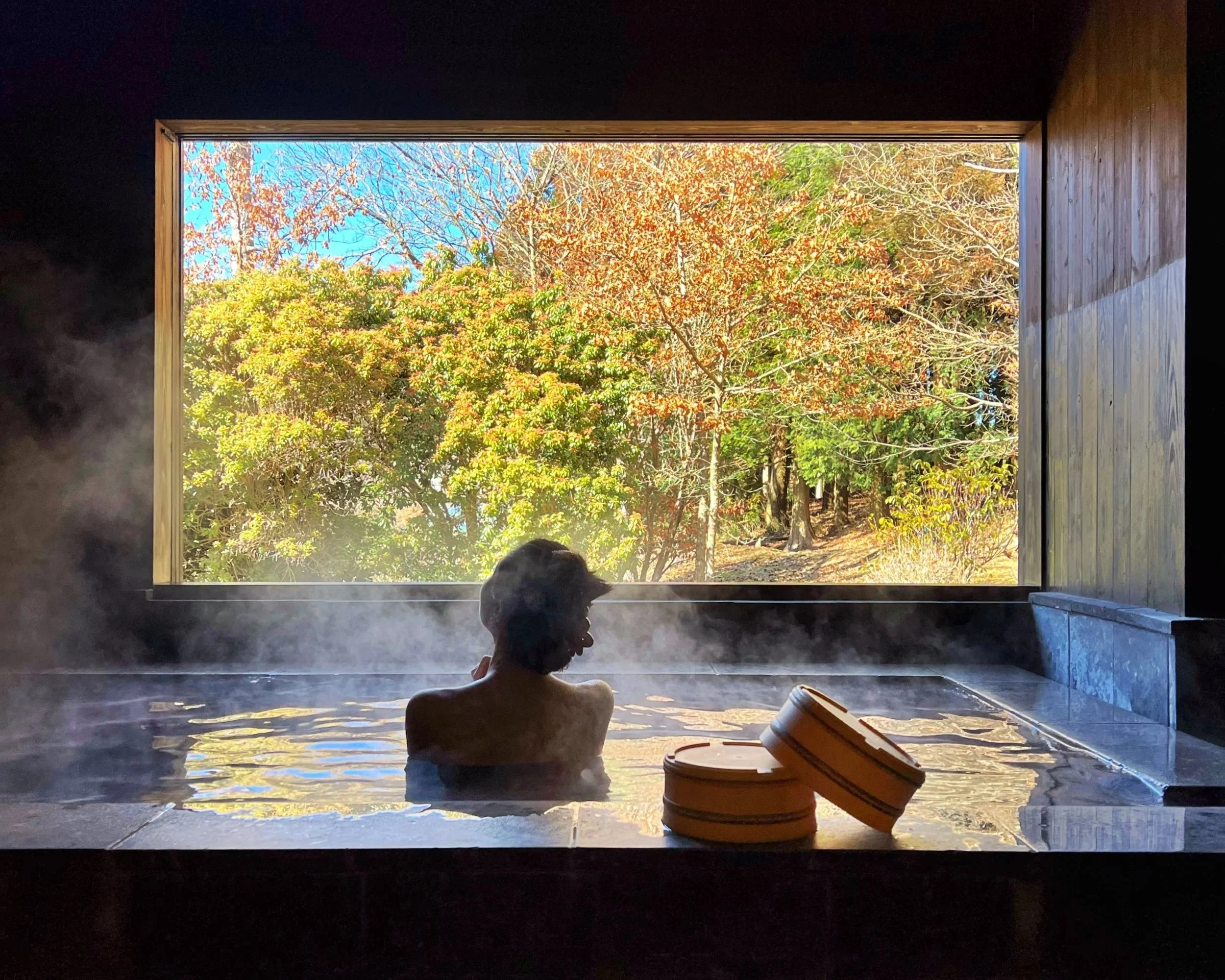
Within the onsen/wash area, one can generally find a small round wooden bucket (or a plastic version) called the Yu-oke.
Using the Yu-oke, fill it with onsen water before entering the bath and pour it over your body 3 times. This is the traditional way to cleanse/purify the body before entering the onsen.
It also helps to acclimatise your body to the onsen temperature.
If there is no washing area, use the Yu-oke for this step before entering the onsen.
It shows not only good manners but understanding the spiritual cleansing tradition.
#6. One’s Head & Towels Do Not Enter The Onsen
Make sure you leave your larger body towel in the changing room with your clothes.
I tend to use the big towel to cover the tray holding my clothes and bags.
Bring the small towel into the onsen area with you (as you will use this to wipe down your body before exiting the onsen area when finished). Keep it folded neatly to the side/place it on your head or twist it to wear around your head like a headband when you’re using the onsen.
Towels should not enter the onsen at all, as its considered unclean and disrespectful.
Some onsen will allow towels/provide towels only for mixed onsen bathing “konyoku”. Please note this is still a rarity not a norm. It is entirely up to each individual onsen
#7: Babies, Toddlers & Children Welcome
many onsen are child-friendly
some onsen may have age restrictions - dependent on the property (please confirm with them)
Even for babies - no nappies allowed
If your children are not fully toilet trained, please take them to the toilet beforehand & keep an eagle eye on them.
REMEMBER! THE ONSEN IS NOT A POOL!
no toys
no swimming
no waterplay
no running
no loud voices/screaming - its a place of relaxation
no heads under the water
please ensure you keep an eye on your kids at all times and prepare your child accordingly to be respectful and considerate.
IF NEEDED
boys under 7 years old - can enter the female public onsen with their mother
girls under 7 years old - can enter the male public onsen with their father
#8: No Tattoos Allowed (for many onsen)
Due to historical/cultural context - tattoos are generally taboo and not allowed.
Please be respectful to Japan’s cultural restrictions even if it’s different to yours
some places are tattoo friendly (check with each onsen)
small tattoos can be covered with skin-coloured bandages
large tattoos - find tattoo friendly/private onsen
if you’re at all concerned about being disrespectful, only go for private onsen
#9: Stay Hydrated
The onsen heat and temperature can lead to dehydration
Remember to take little moments of rest. There are sometimes rest chairs/benches in the onsen area, especially if its a day onsen facility. Otherwise sit at the edge of the bath with only your legs in the onsen.
Most changing rooms have water fountains (or outside the changing room)
If not, keep a small bottle of water with your clothes & main towel
In more casual day onsen facilities, you may find a row of metal shelves inside the onsen area (or just outside it) where people have left their showering products (that they wish to use later) along with their water bottles. It’s ok to leave your water bottle and showering products there.
#10: Wipe Yourself Down
As a sign of good manners and consideration to others, wipe your body down before exiting the onsen to the changing area with your small towel.
No one wants pools of onsen water in the changing room
Nor having any potential of accidents with someone slipping.
Other Don’ts
Don’t Be Intoxicated/Drunk
Again commonsense, but don’t enter the onsen intoxicated/drunk.
The heat and temperature can overwhelm you, and accidents can happen with a wet floor and not being in complete control of your facilities
Don’t Use The Wash/Onsen Area as a Toilet!
Please go to the toilet before entering the onsen.
There is normally a toilet in the changing area.
No Photos/Videos
For a public onsen, no photos or videos are allowed unless permission has been granted prior
If it’s a private onsen - it’s fine to take photos/videos
(private onsen are where you will see my photos/videos of me reading - having tea or drinks by the wayside)
Don’t Wash Your Clothing
The onsen is not a laundry, do not be washing any type of clothing in its waters
Don’t Talk Loudly
An onsen is a place of relaxation and contemplation. For some it’s a place of spiritual enlightment.
Please be considerate of others if you’re visiting with a friend and having a chat.
Think whispers and low voices.
No Food/Drink in the Onsen
Commonsense, but its not a place for eating or drinking.
Hydration is important, keep a bottle of water with your clothes and towel if no water fountain is provided in the changing area.
REMEMBER! ONSEN ARE DIVINE
They are considered a blessing of healing from the gods, onsen waters are known as “shinyu” 神湯
They are sacred and spiritual
The floating particles that can be found in onsen are mineral deposits known as “yunohana” 湯の花 aka “onsen flowers”.
Please be respectful and considerate of Japan’s love and care of onsen.