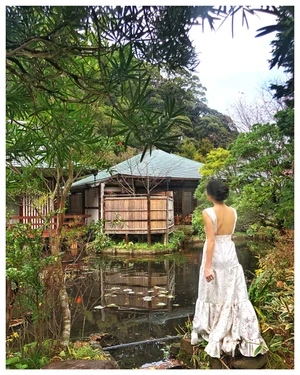
Sumiya Ryokan
A Timeless Traditional Stay in the Heart of Kyoto
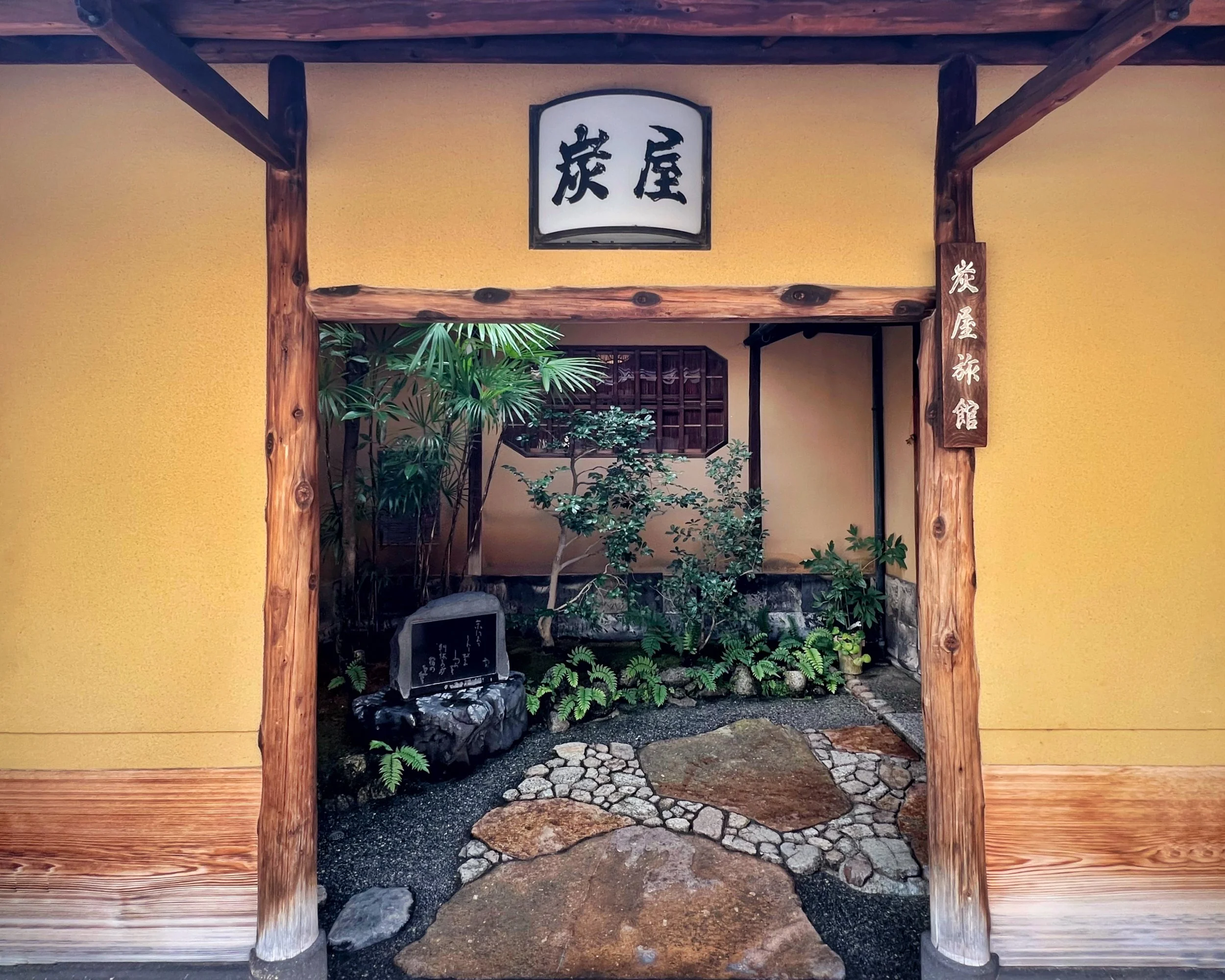
Along the popular central shopping street of Sanjo-dori filled with architecture from the Meiji and Taisho periods, one can find down a quiet street one of Kyoto’s legendary "Big Three" (Gosanke) historic ryokan - Sumiya Ryokan. For over 100 years, Sumiya Ryokan has been a beloved fixture of the neighbourhood. Once a former private residence where the interiors once housed a blacksmith which produced iron products; the family were renowned for hosting friends, artists, creatives to share their love of the community’s culture such as tea gatherings, ikebana and Noh songs.
Over time, these casual gatherings became so regular that Sumiya transitioned into a ryokan inn famed for its tea ceremonies. It’s historic Sukiya-zukuri style architecture has been carefully maintained, restored and renovated over time. Today guests can enjoy a night’s stay in traditional Japanese style rooms which allows them to experience the rich, beauty and history of this family ryokan whilst being immersed in ancient traditions with more modern comforts such as low style beds instead of traditional futons; which allow more ease of movement for elderly and those with limited mobility. The legacy of the family can still be found in the elegant, delicate designs of the iron flowers, cranes and traditional motifs decorating the door pulls and nail covers.
Click Here: Jump to Read “My Personal Thoughts” & “Stay Details”
Please Note: This article contains some affiliate links. If you make a reservation through one of these links,
I will receive a small commission at no additional cost to you. Every property and destination featured on this website has been personally experienced by the writer, and are their personal thoughts and opinions.
Learn Japanese Tea Ceremony in a Historic Setting
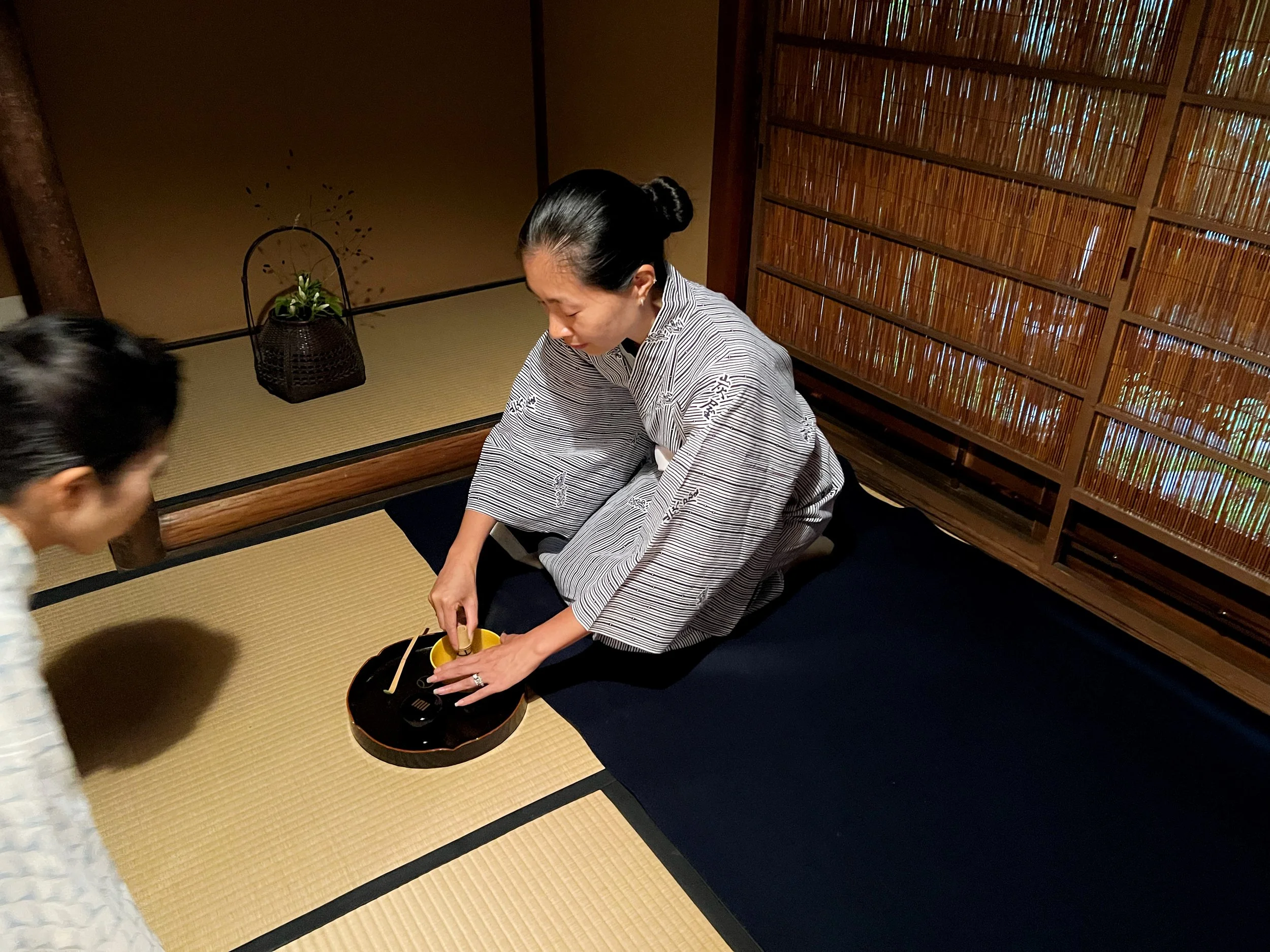
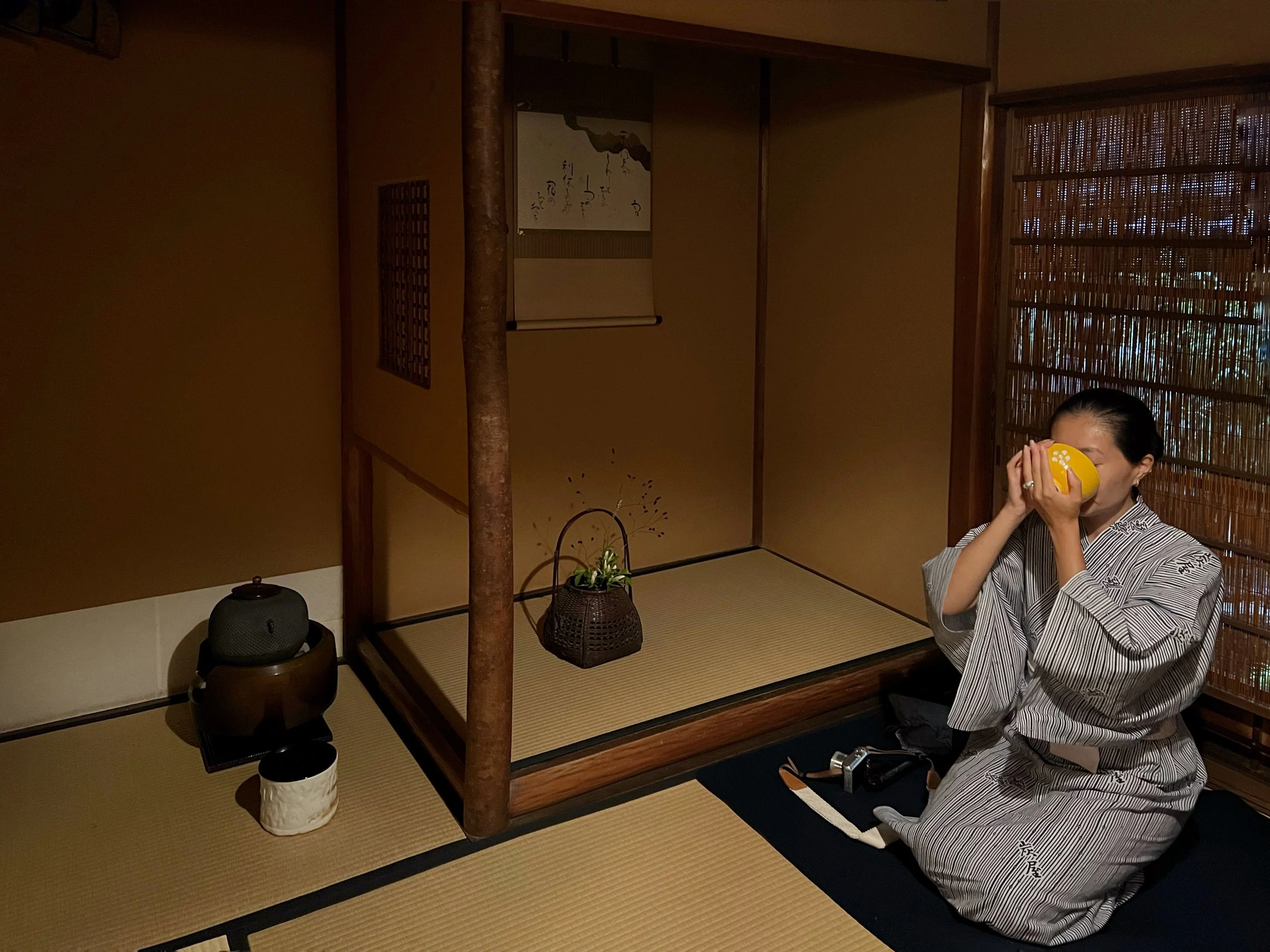
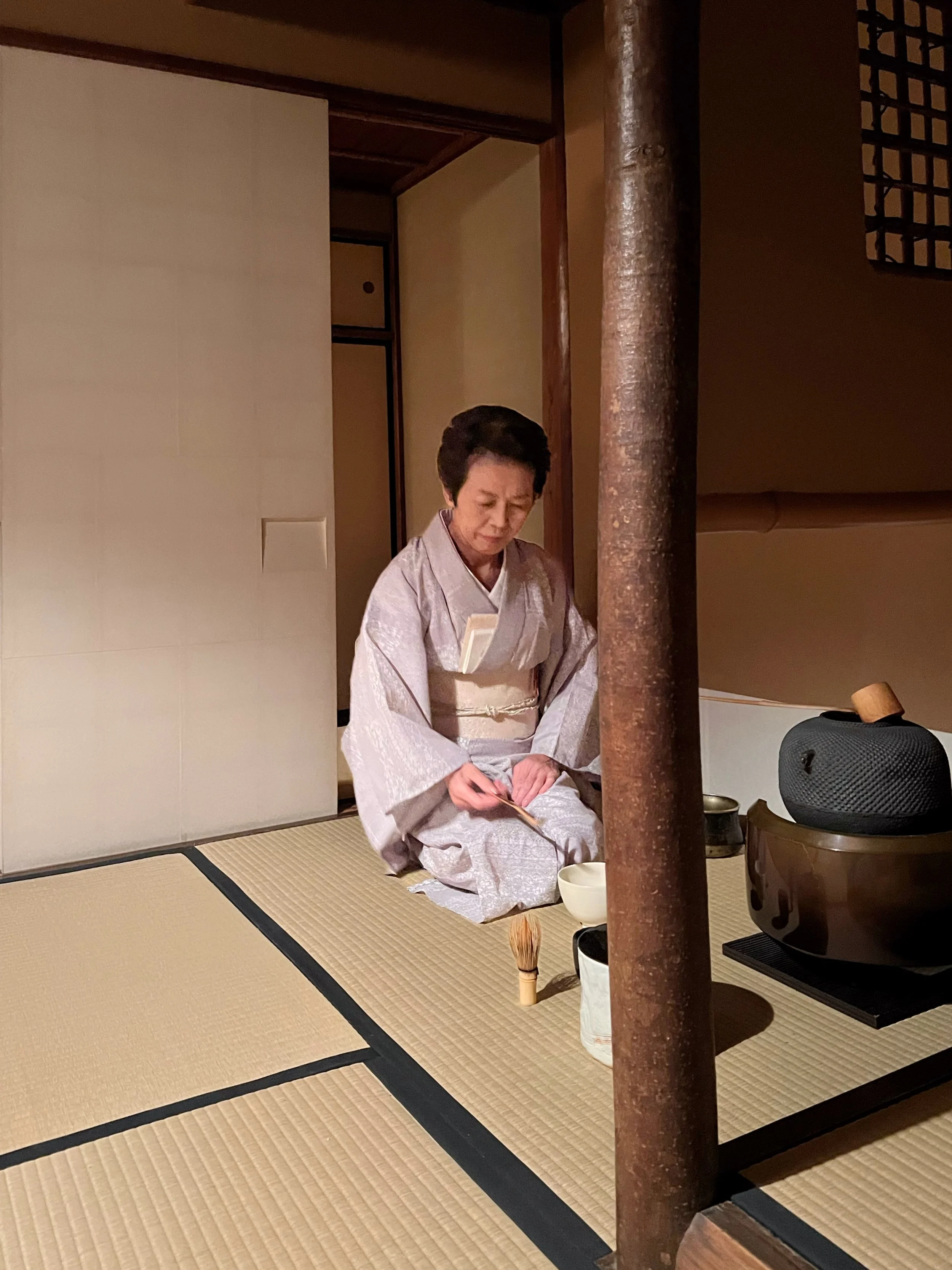
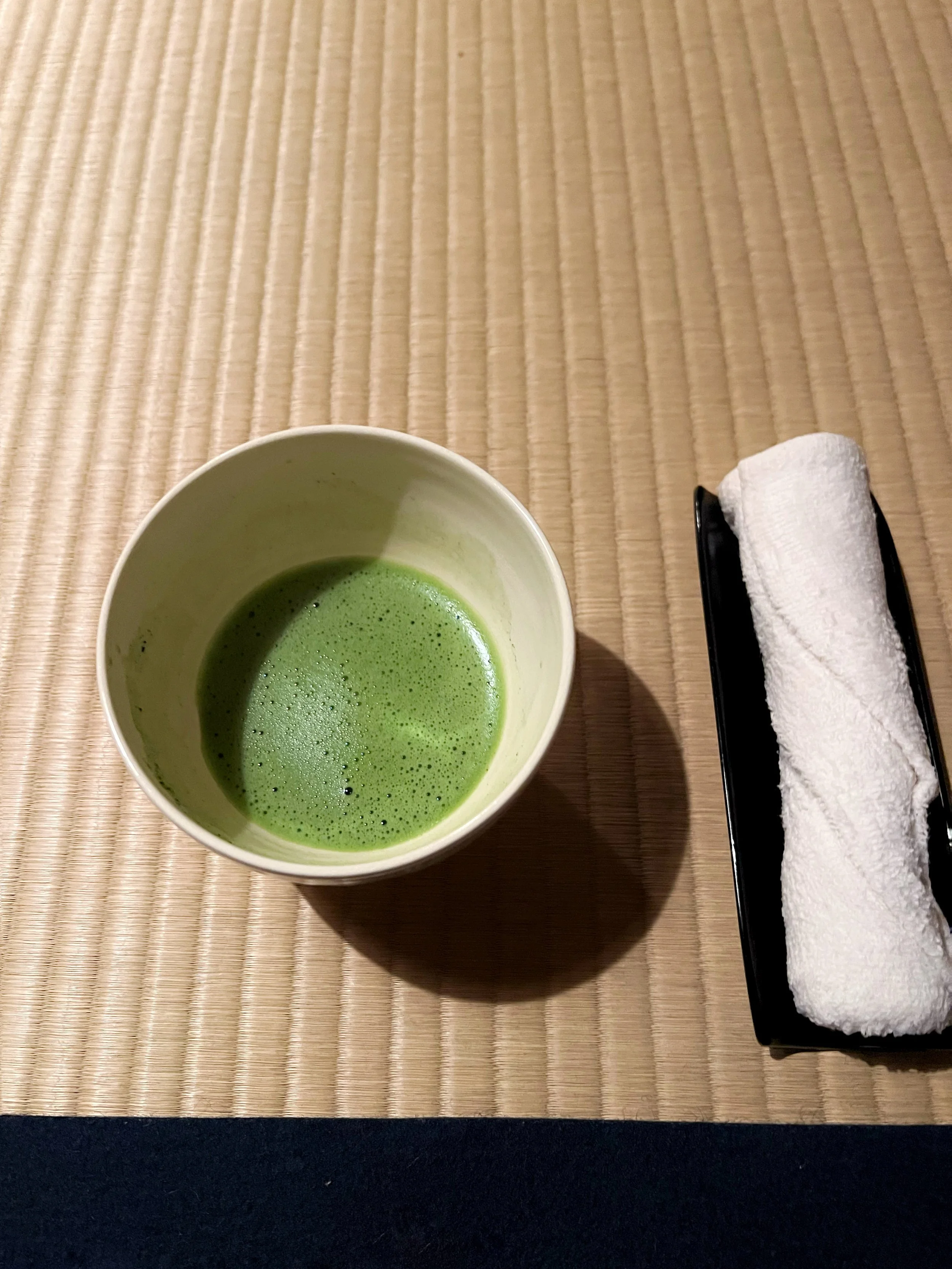
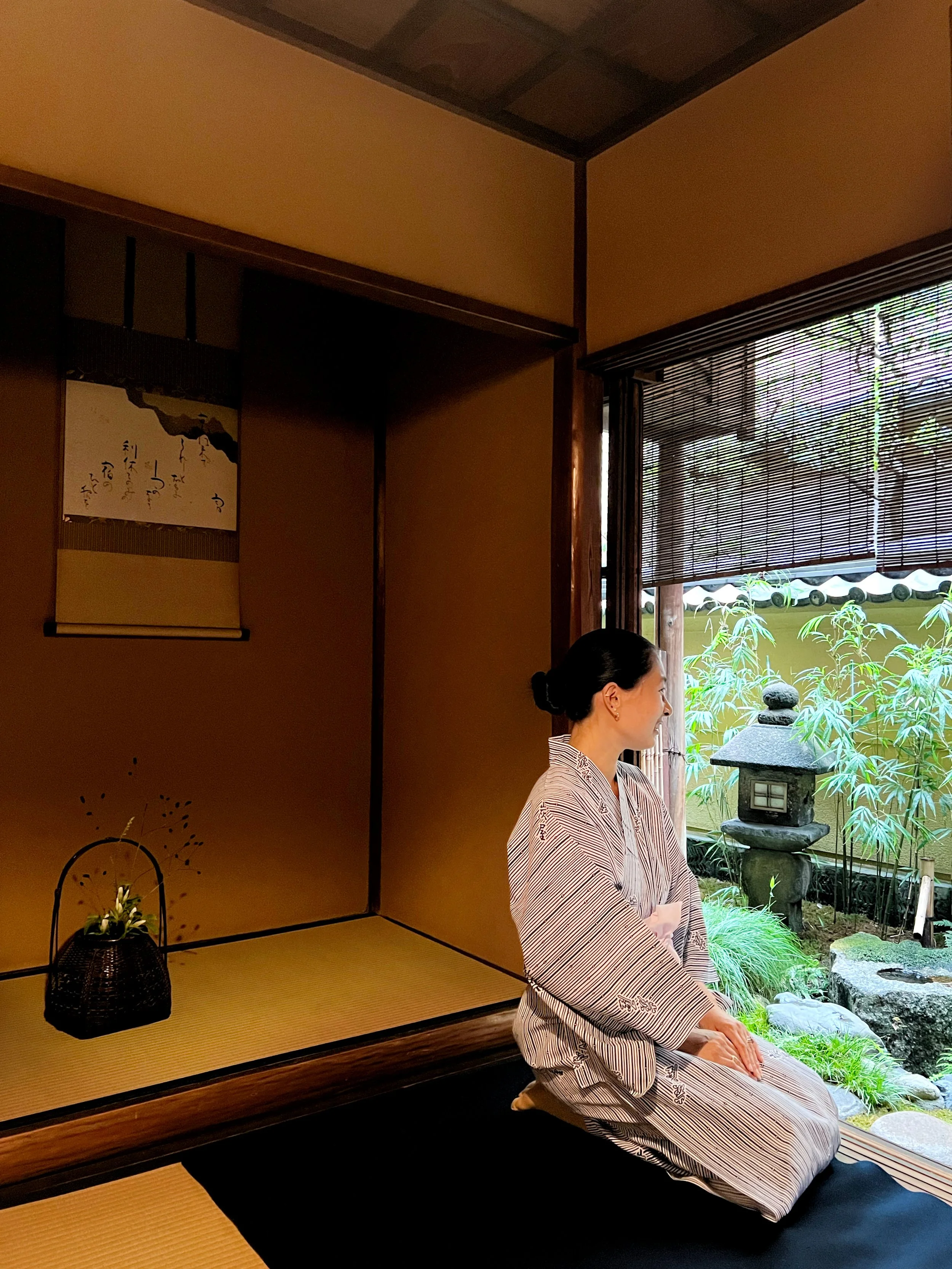
A stay at Sumiya Ryokan allows a guest to not only be in the midst of Central Kyoto (Sanjo is one of my favourite areas) but gives them the opportunity to partake in an intimate tea ceremony with the current Okami head of the family (4th Generation) Hiroko and/or her successor-in-waiting Yumi (Waka-Okami).
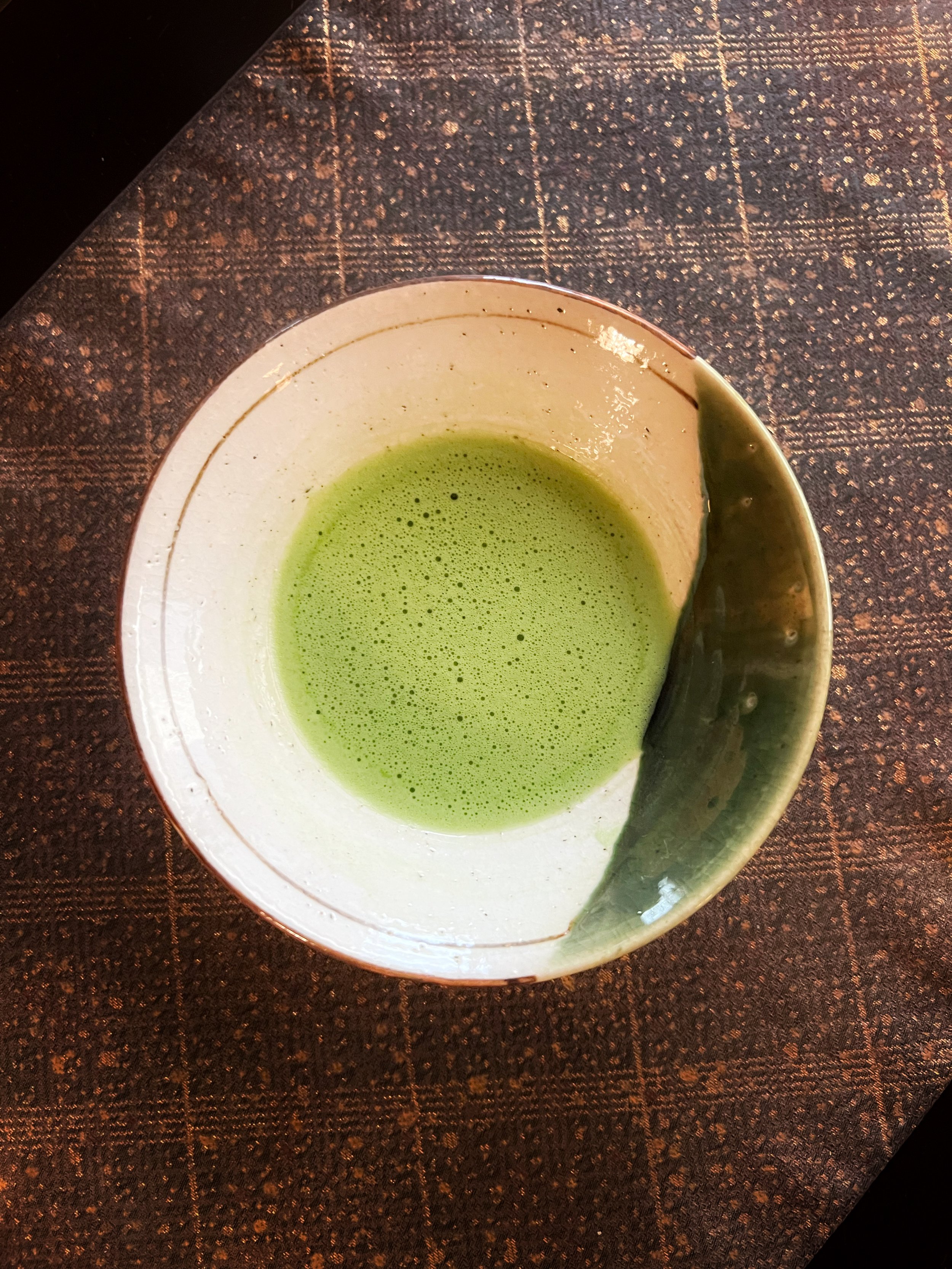
Every movement of every day - the two ladies exude their motto “a hospitality that meets every need” as they gently care and guide every guest who crosses their threshold, and how the tea ceremony has greatly influenced their everyday life. There are 5 tearooms within Sumiya, where guests can experience a private tea ceremony and listen to tales of the ryokan and family’s history from Okami-san.
A Moving Tea Ceremony Experience
The most impressive tearoom is Gyokuto-an which is built in the renowned yojo-daime size (the size of four and three quarter tatami mats) - a size that was specific only to tea ceremony roomsand is rarely seen in modern Japanese architecture. Additionally its interior ceiling (tenjo) featuring alternating rows of Japanese red pine and paulownia boards in the traditional ichimatsu moyo (checkerboard) pattern is a hallmark of extremely rare, elite traditional Japanese craftmenship used in upscale, high specialised rooms and buildings. A craft that is slowly becoming extinct.
I’ve been lucky enough to experience several tea ceremonies in my time living in this gorgeous country, from acclaimed tea masters to the mystical geisha. What makes each of these tea experiences along with Sumiya Ryokan’s truly exceptional is not only the intimacy but the deep rooted history and stories the hosts’ share that cannot be found in a generic tea ceremony experience. To hear the stories and the legacy of Sumiya Ryokan itself from Okami-san is one of those rare once in a lifetime experiences.
Sleep Soundly in Spacious Traditional Japanese Rooms
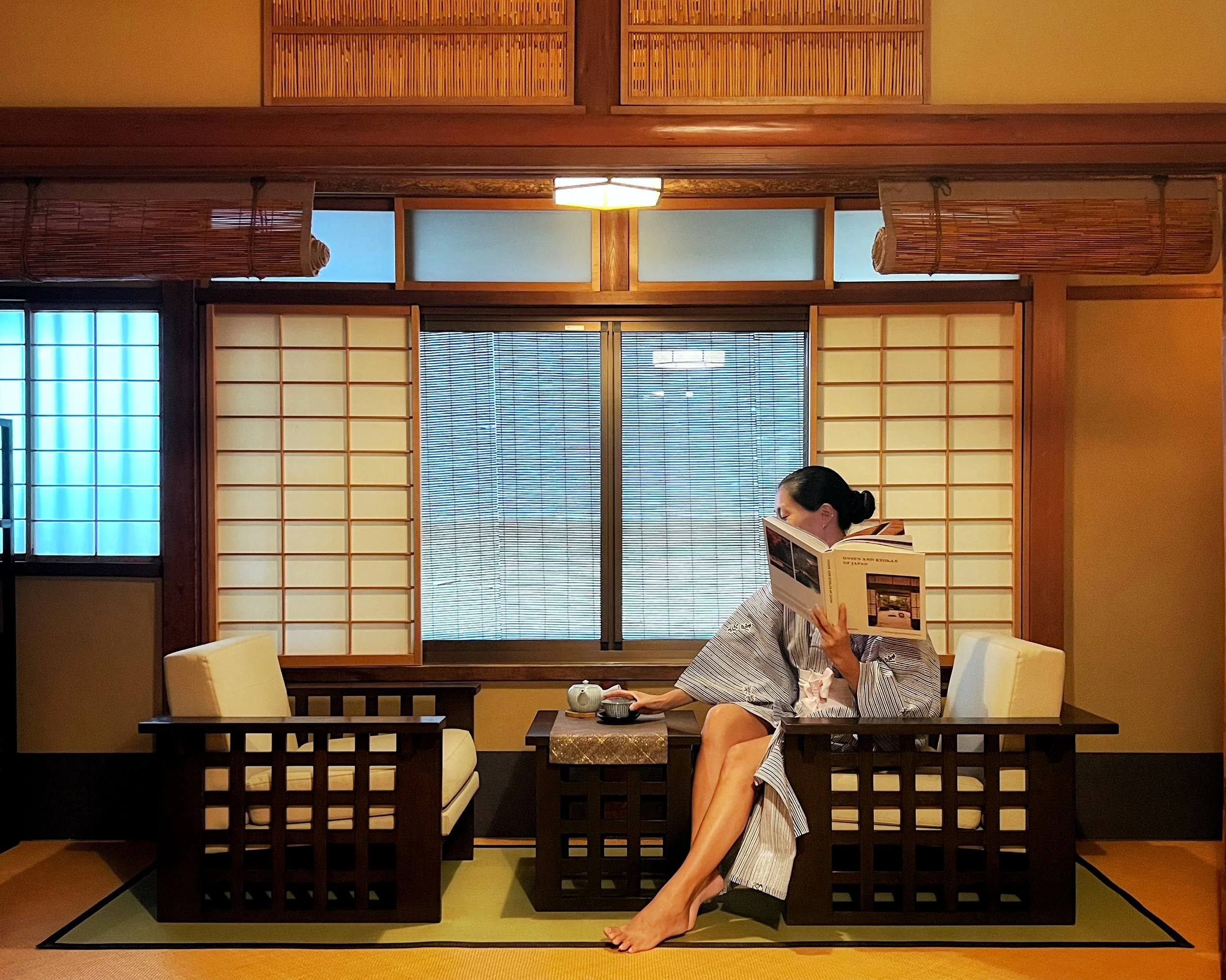
Winding, dimly-lit corridors lead the way to one’s room at Sumiya. Many historic ryokans (and onsen ryokans) are often a maze of winding corridors and pathways — a sign of an old school Japanese omotenashi where once the guest crossed the threshold, their time was sacrosanct and of relaxation, as though they were the only guest staying in the entire place. Private, intimate and peaceful. Only the faint murmurs of voices behind closed sliding doors, give me the indication that perhaps other guests may be staying at Sumiya — but throughout my entire stay there — the only people I saw was Okami-san, Waka-Okami san and a couple of the other staff.
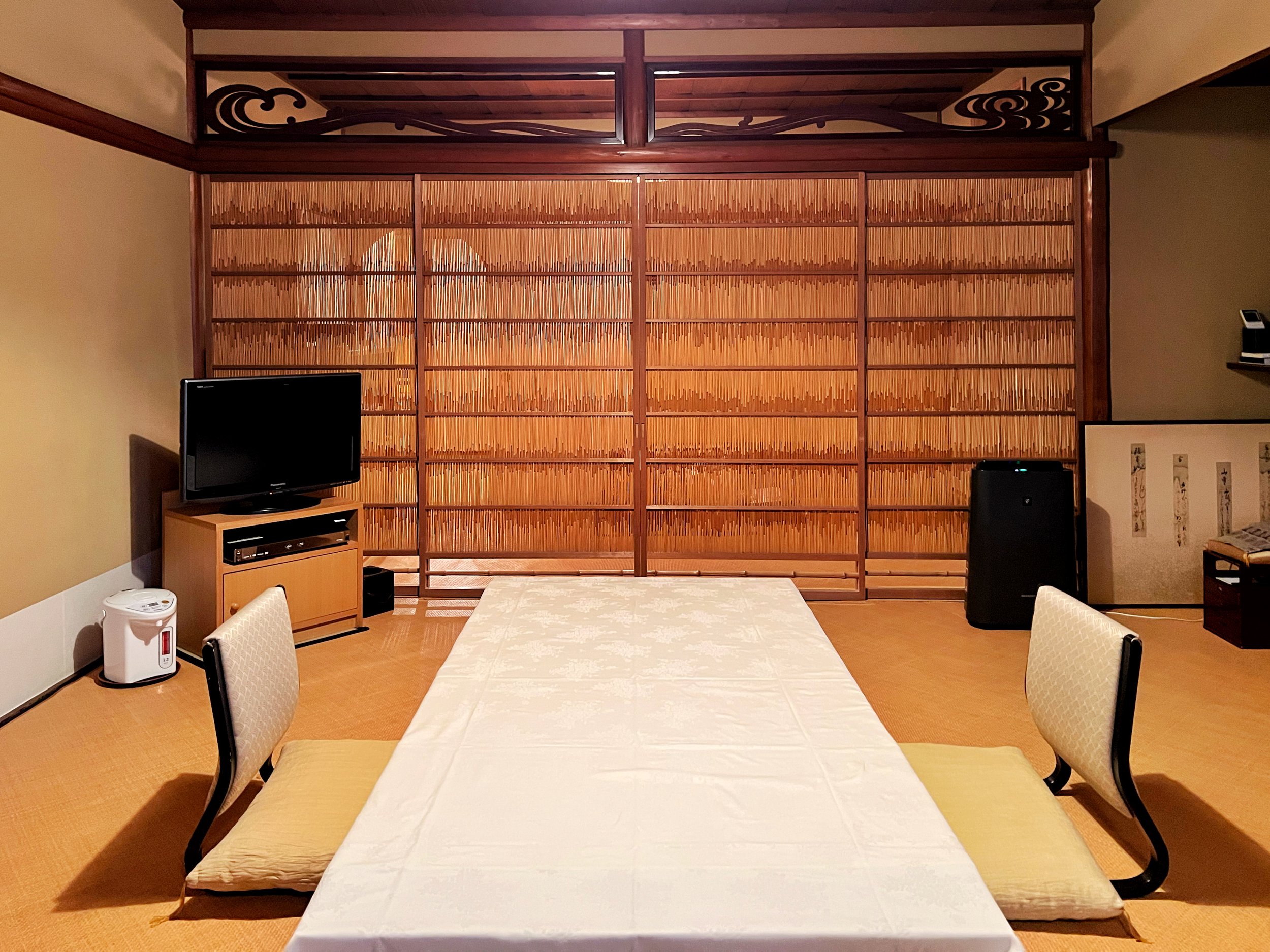
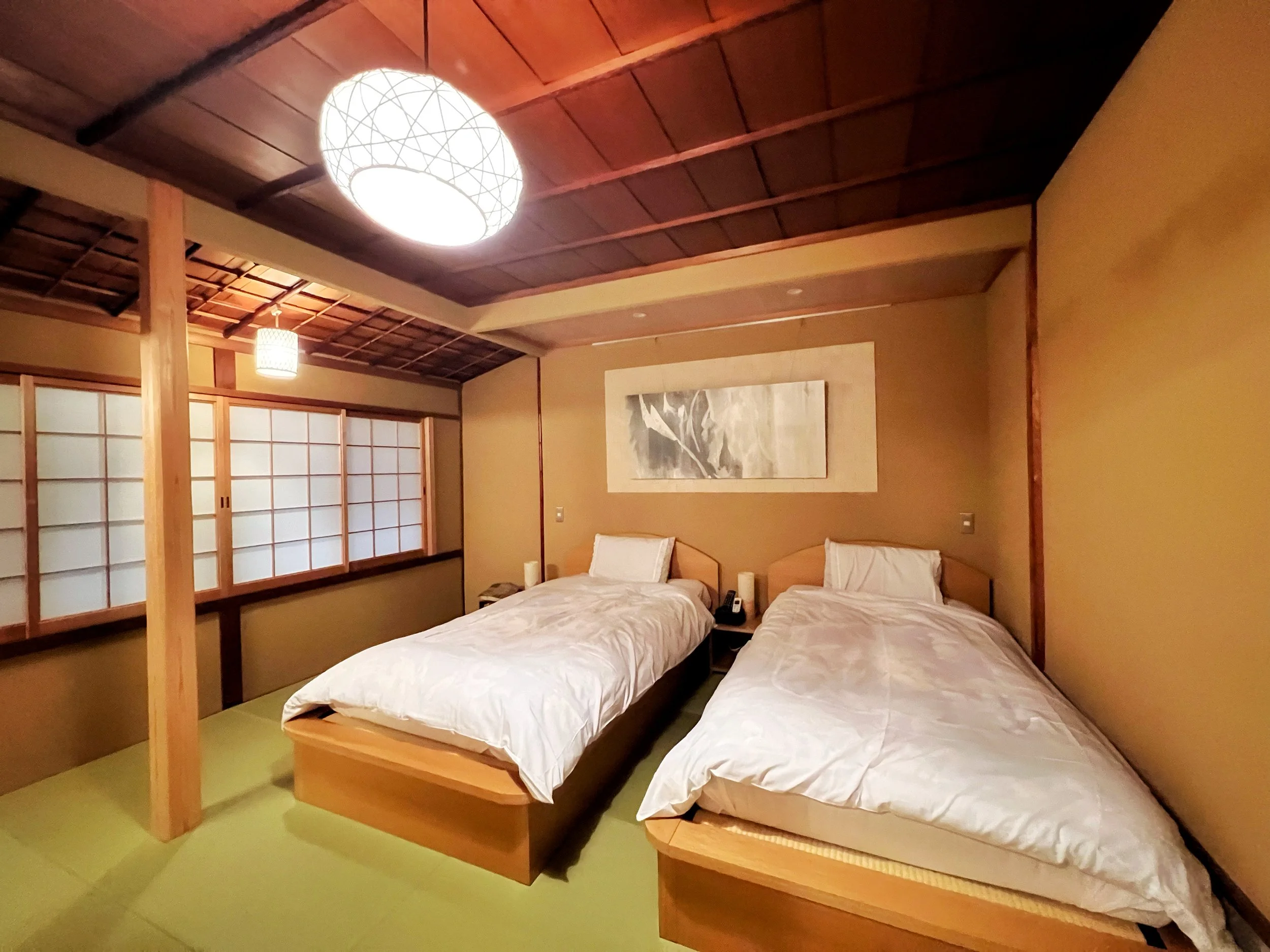
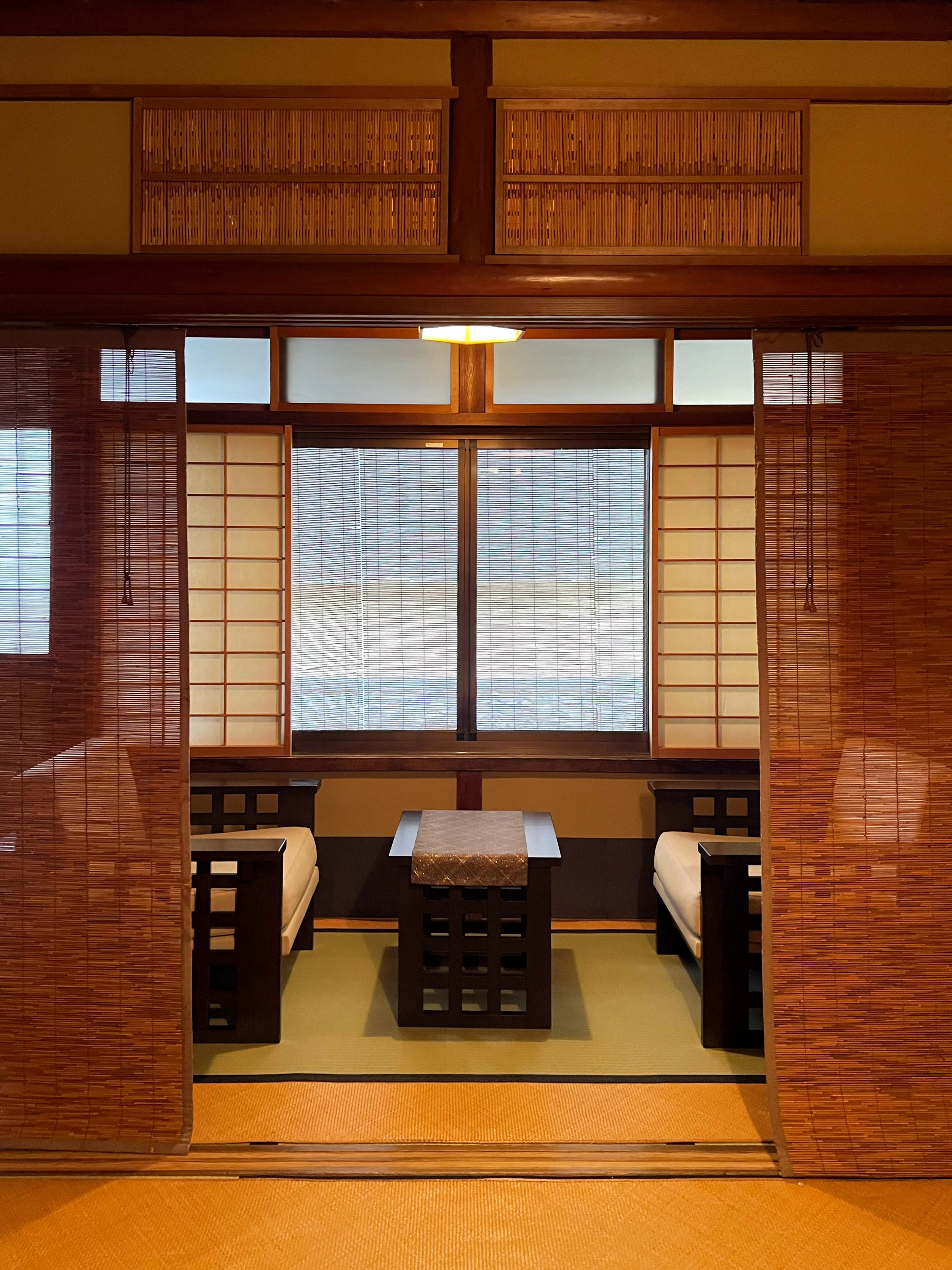
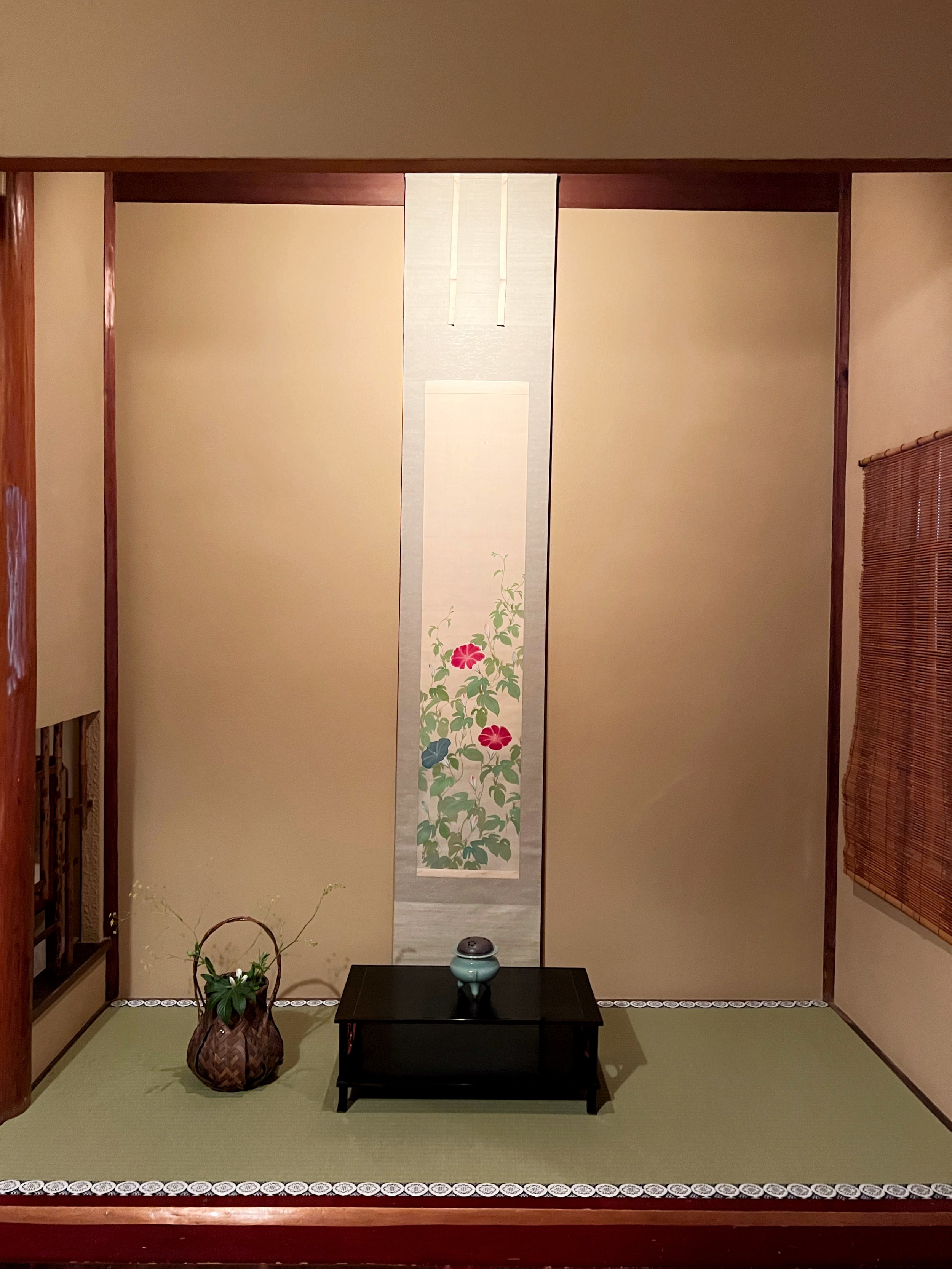
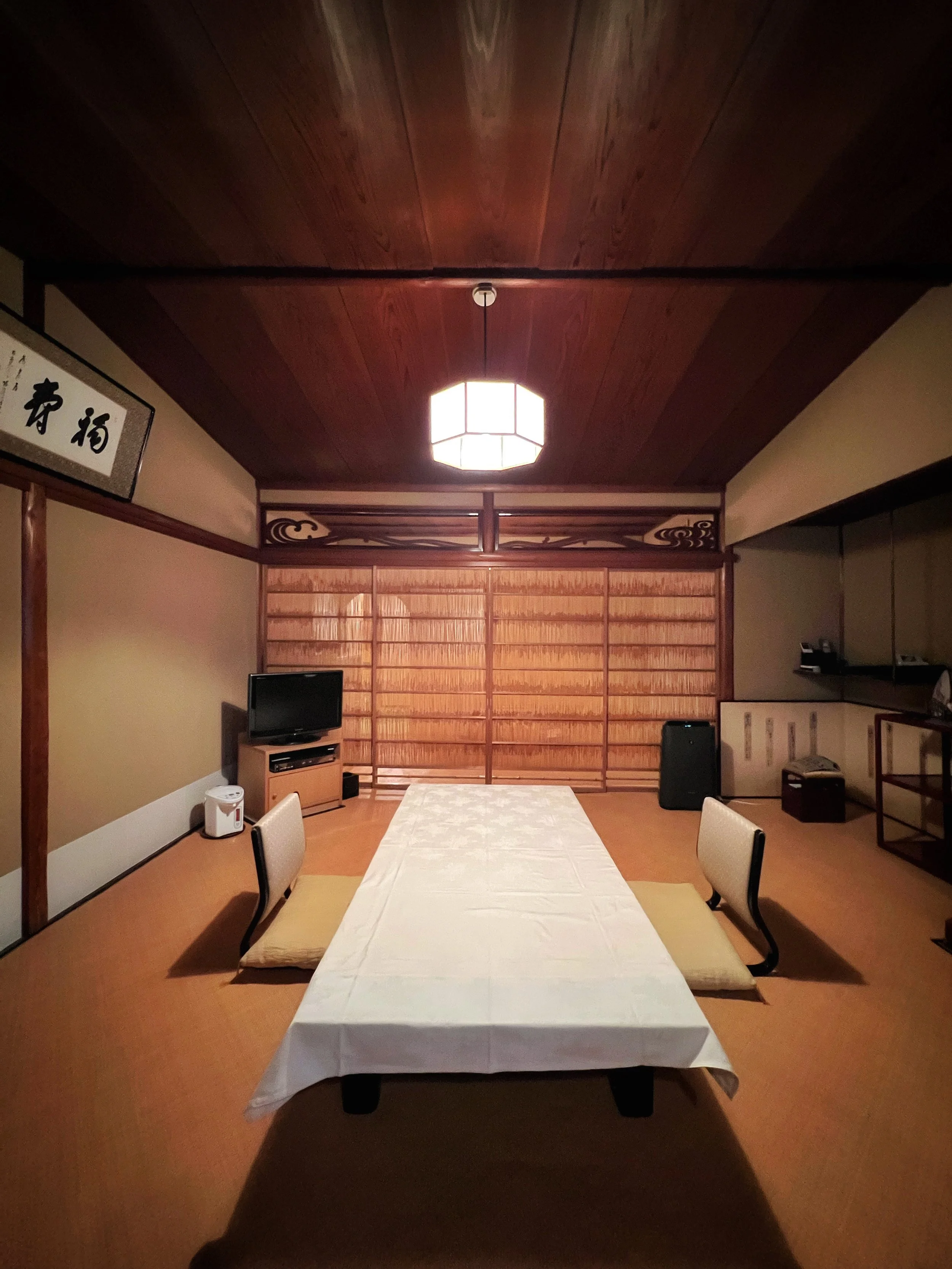
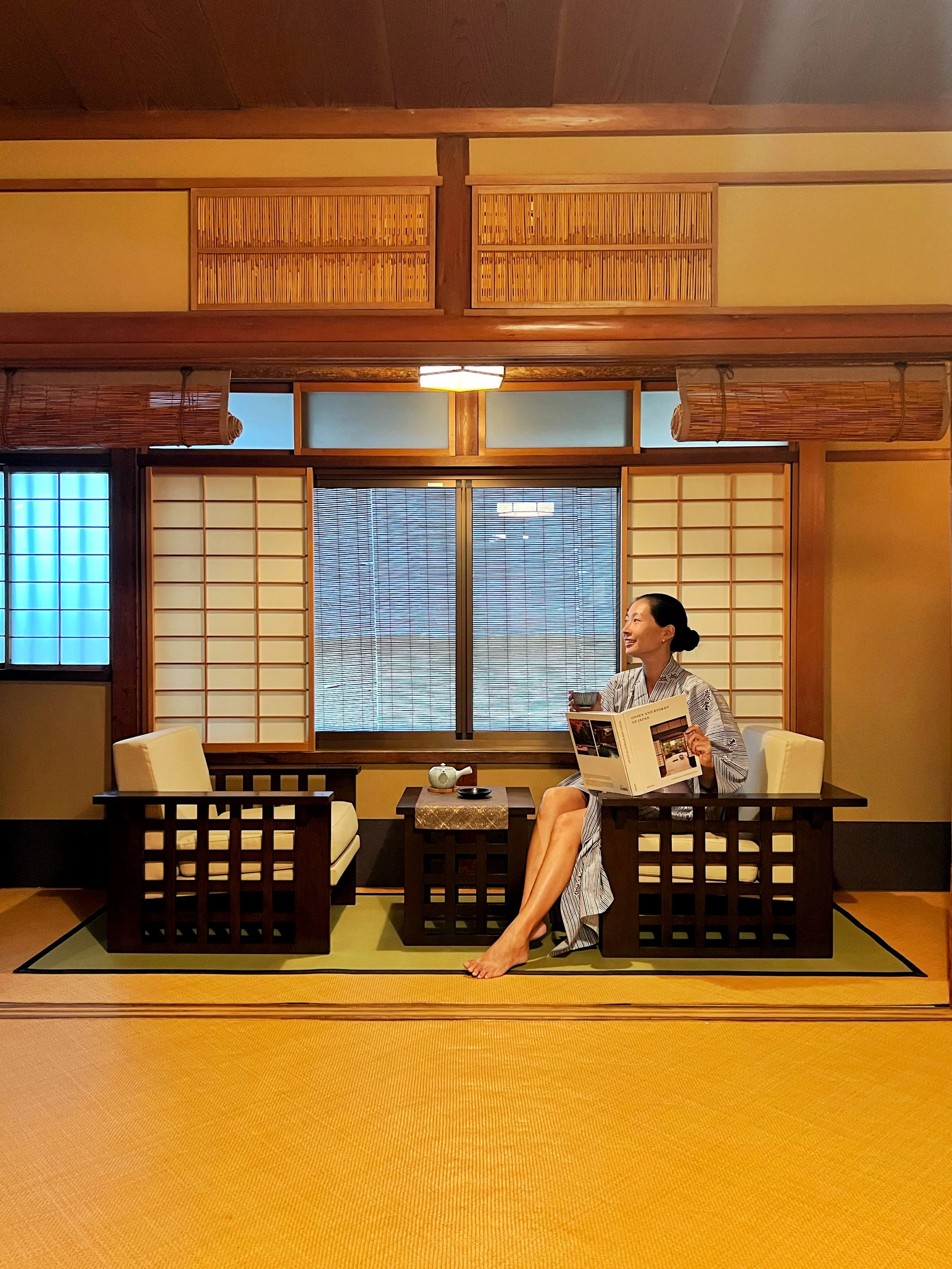
My room at Sumiya was wonderfully spacious, with a traditional sitting room with a chabudai table and zaisu floor chairs, along with a cozy engawa where I spent my time reading and another small tatami space. The bedroom was a separate room where low slung western beds have replaced traditional futons allowing more comfort for guests with limited mobility.
Soak in a Soothing Hinoki Bathtub
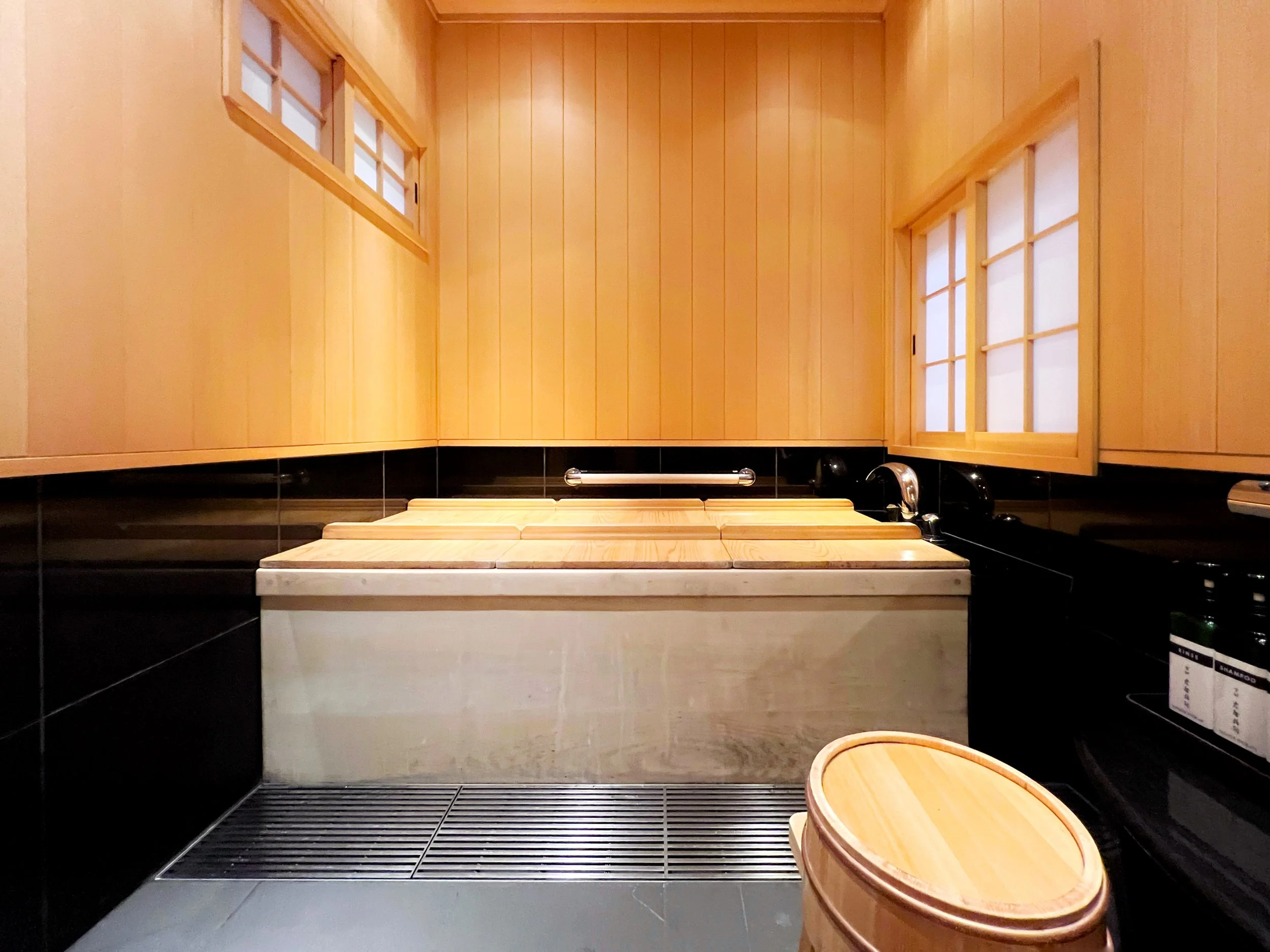
Though not an onsen (remember Sumiya is a traditonal ryokan, not onsen ryokan) - my room also had its own ensuite bathroom with a wonderful wooden Koyamaki (Japanese umbrella pine) bathtub. Though not as well spread as Hinoki (Japanese Cypress) bathtubs - Koyamaki bathtubs can generally be found in high-end ryokans because its extremely water-resistant, resists rot and has a pleasant, invigorating aromatic scent which evokes walking through a forest with a freshness of air and nature. Koyamaki come from Mt Koya in Wakayama where they grow in abundance and is considered a revered, sacred tree. It is known as one of the “Five Sacred Trees of Kiso”.
The wonderful properties of Koyamaki naturally alters the normal tap water in the bathtub, softening it and making it more silky. Due to its strong heat retention, the water in the bathtub stays hot far longer (make sure to put the lid on top!) than a normal ceramic/acrylic bathtub. One of the loveliest omotenashi considerations of Sumiya is that the staff carefully prepare your bath for you in advance, from check in or after exploring - a relaxing bath is ready for you at the optimal temperature.
Enjoy Meals Brimming with the Taste of Kyoto
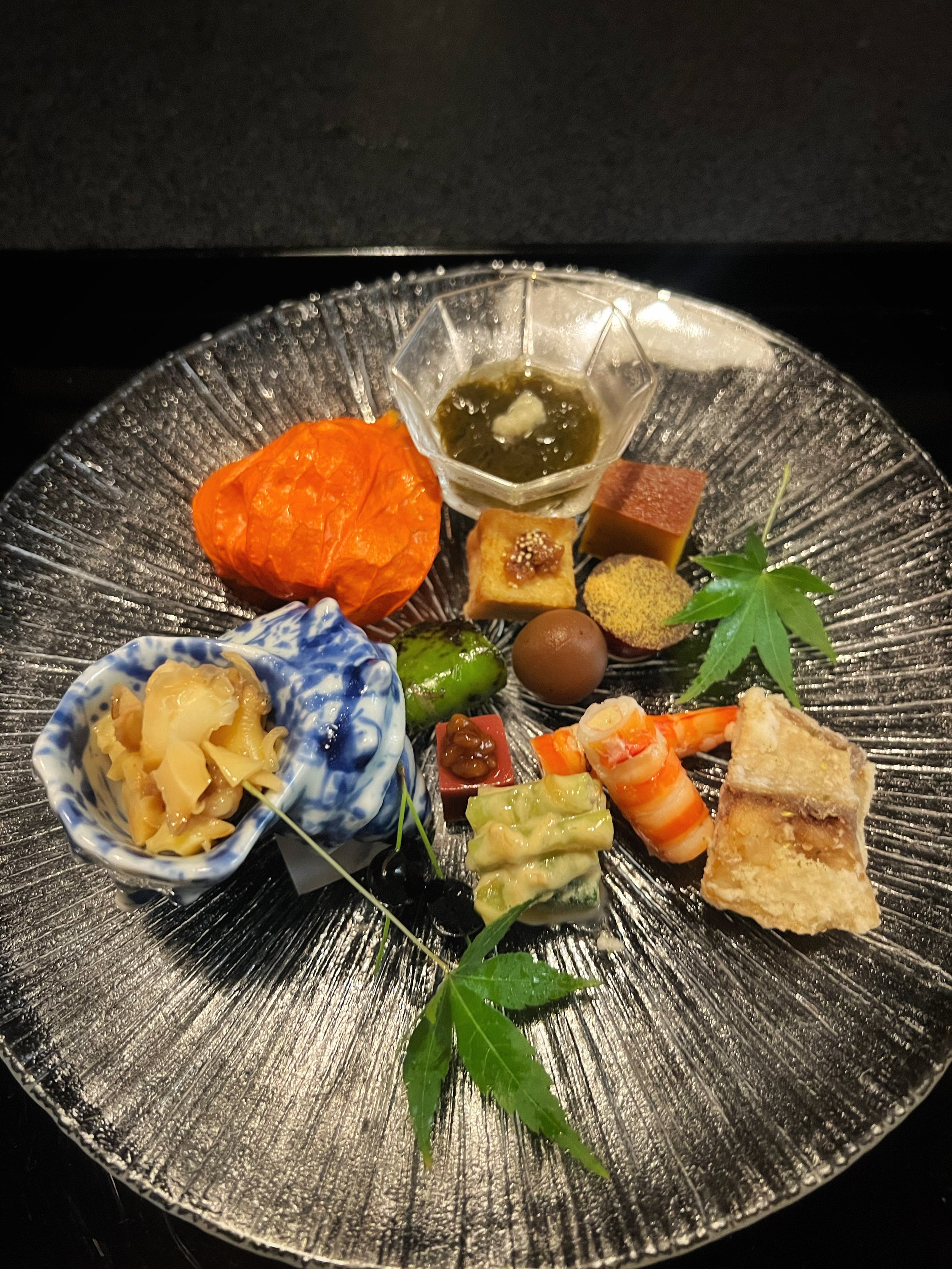
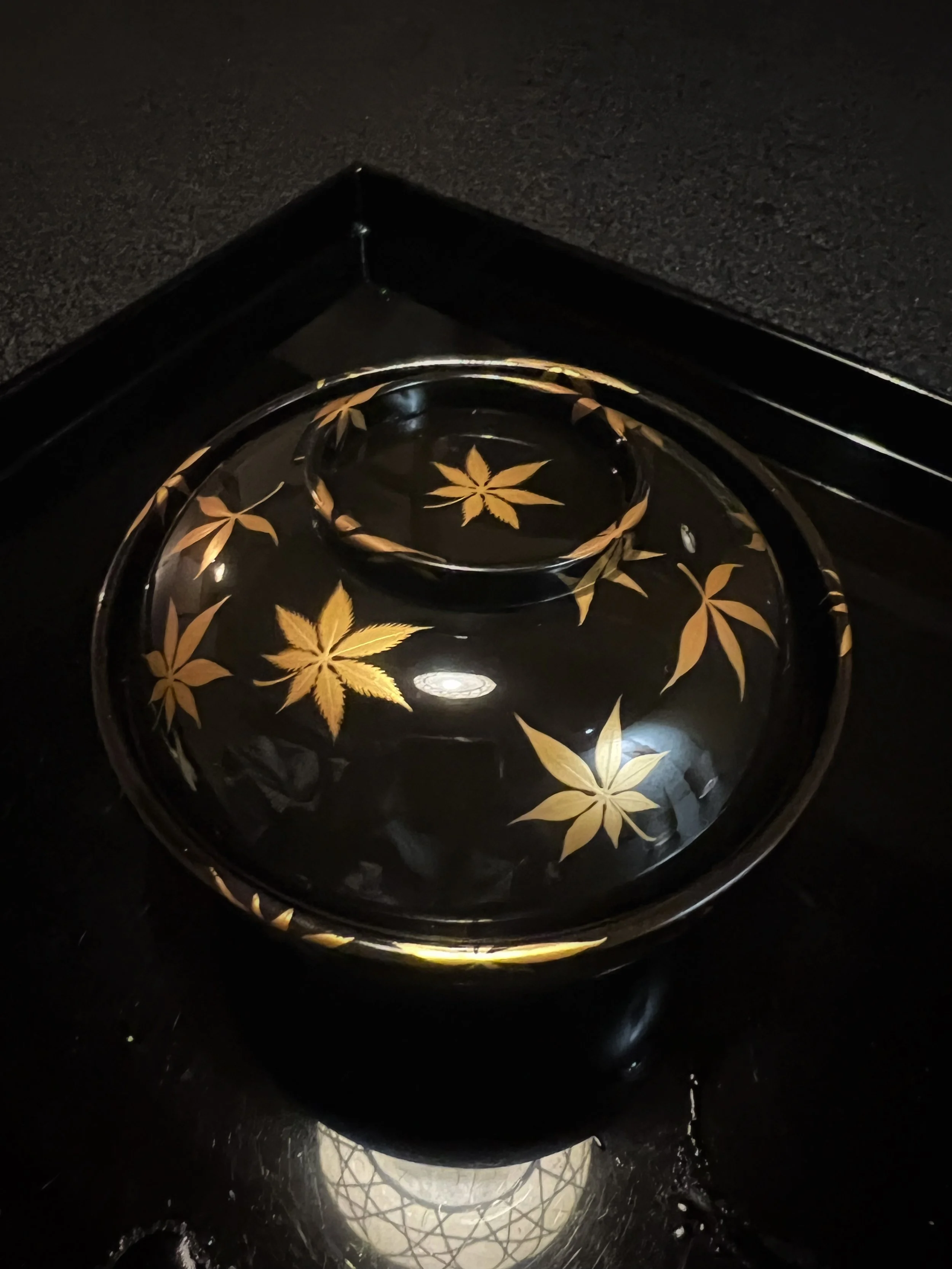
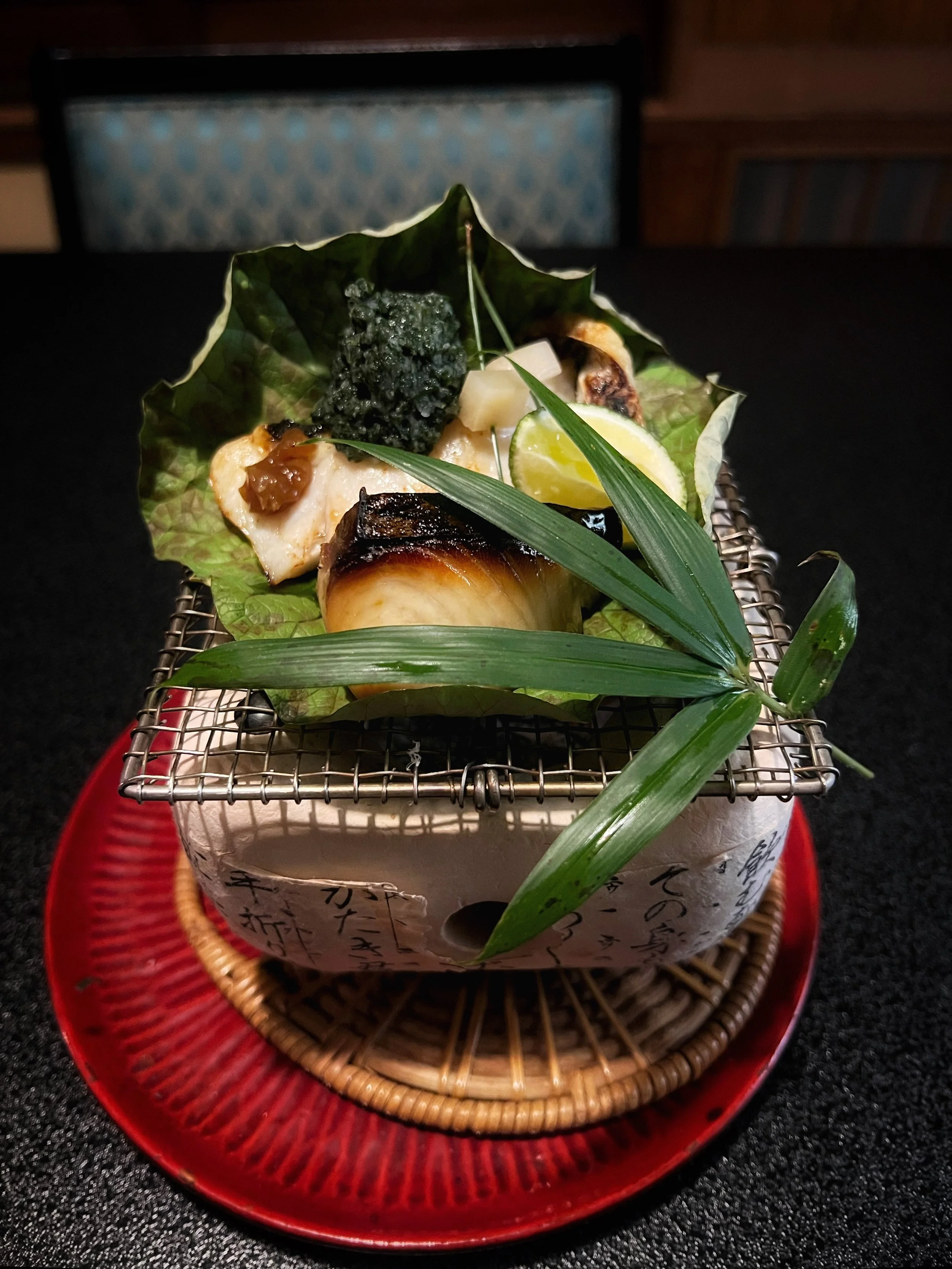
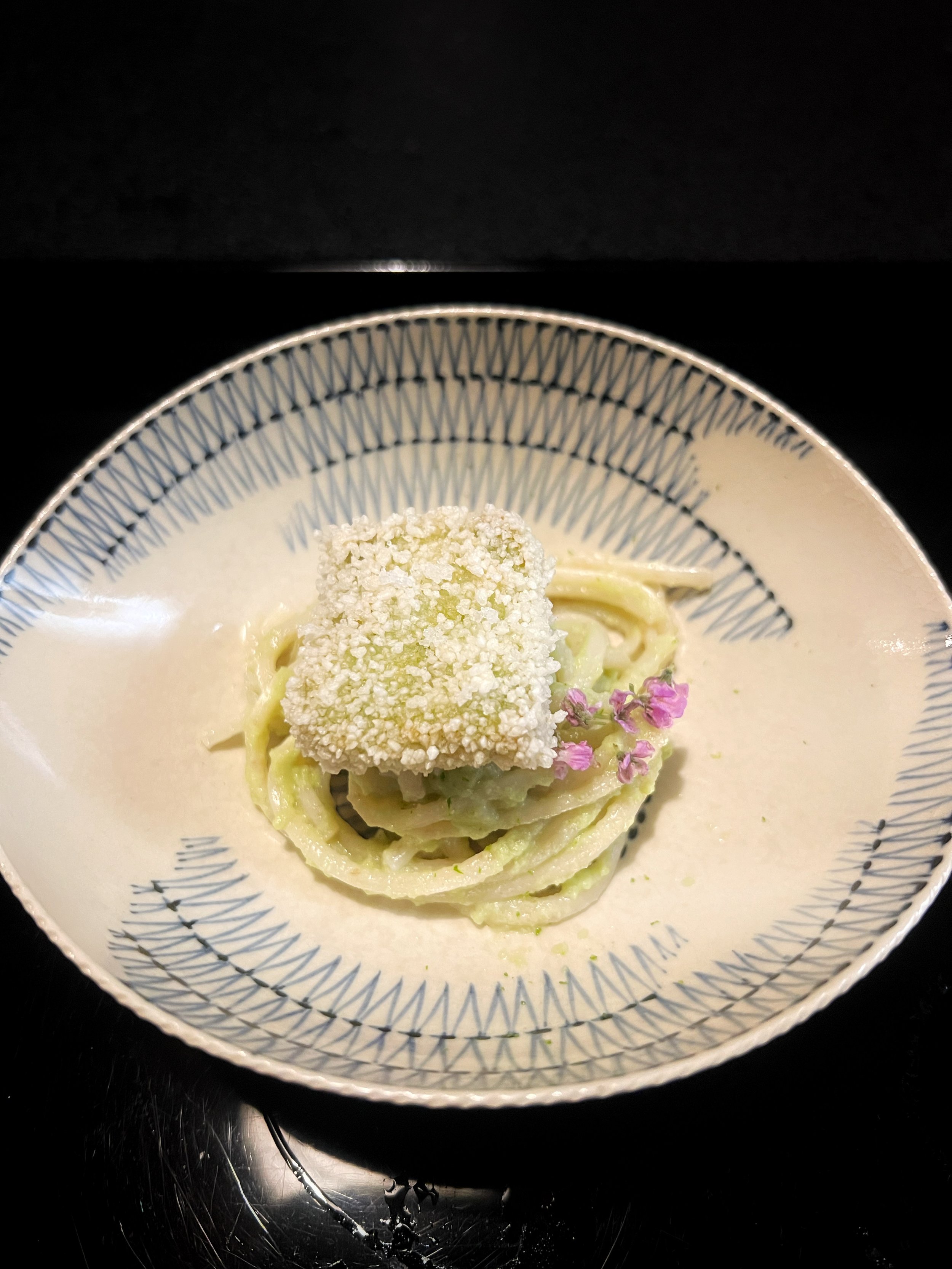
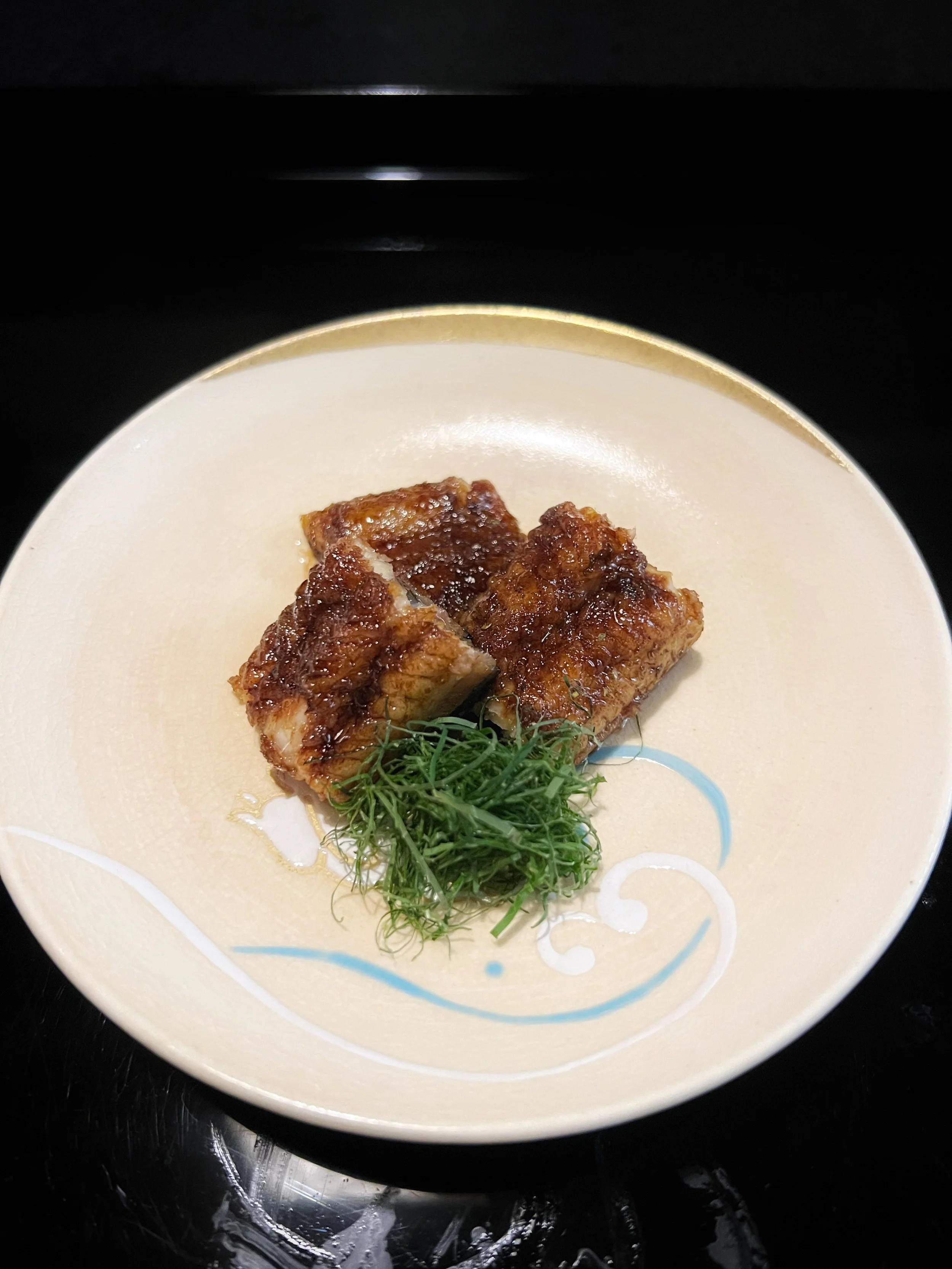
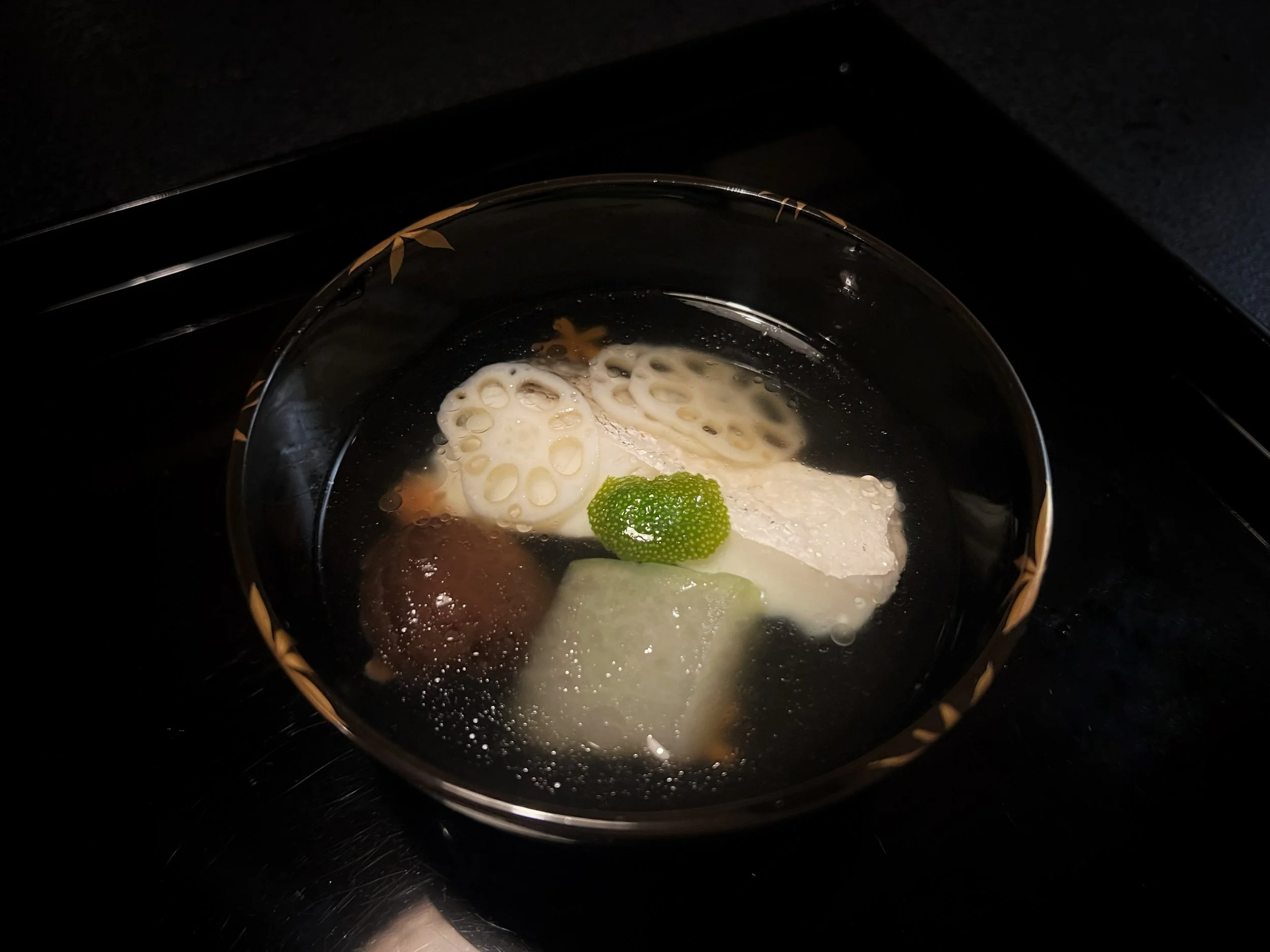
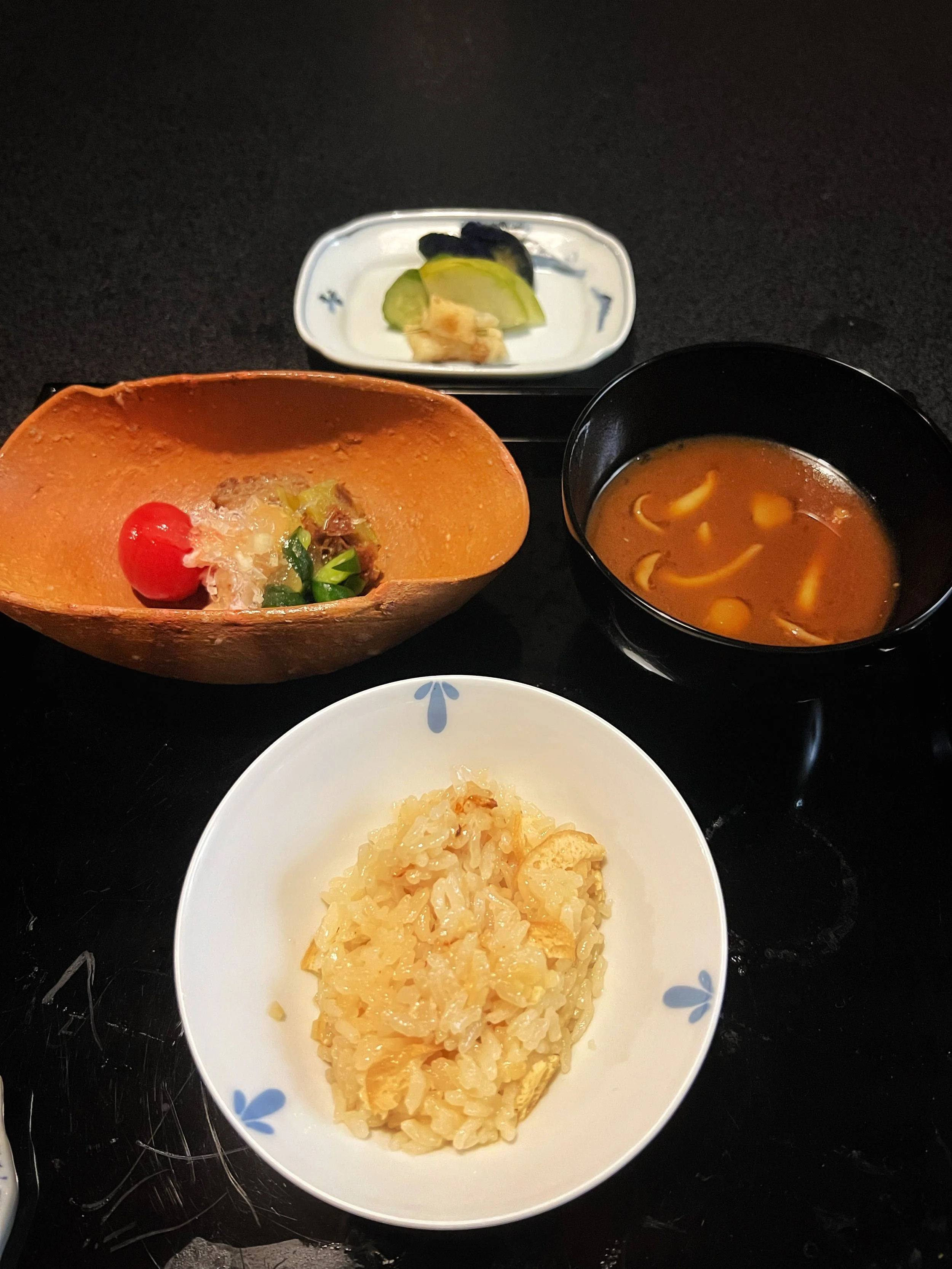
For those who love their food, a kaiseki dinner at Sumiya is divine. Seasonal, delicate, every dish served to you has been carefully thought of and executed to bring forth not only the beauty and flavour of the produce but also takes into account the wondrous celebration and changing of the seasons. The unagi; grilled eel was sublime, a delightful crisp sear on the top, yet it melted in the mouth with just the right brushed amount of sauce on top (grilled eel should never be drenched in sauce). Light, delicate Futamono dishes gently broke up the flavours and cleansed the palate as one moved from dish to dish. Breakfast was equally lovely - I of course chose a traditional Japanese breakfast.
MY PERSONAL THOUGHTS
FOOD
Sublime, as someone who’s eaten Kaiseki in over 100 onsen ryokans/ryokans and various restaurants - one starts to appreciate the nuance of flavours, subtle yet deep that celebrate the produce rather than overshadowing it. There’s a reason why Kyoto kaiseki is so beloved and renowned throughout the country - when you have a stay/find a restaurant that does it well - it’s a beautiful experience. Sumiya Ryokan does it wonderfully well. For me it was a perfect amount, though I could see hubby still feeling a bit peckish after.
ONSEN
N/A: though there is no onsen, the experience of having a Koyamaki bath is a unique one - to see how somehow Japan discovered the special properties of some of their trees that naturally changes the water’s state to make it soothing and silky is something I feel that can only be found in Japan. As a country that can tell the difference between various types of rice, its a country that pays close attention to a water’s quality as well and something I’ve started to discern as well. The water was so smooth and luxurious against my sensitive skin that I felt as though I was almost having an onsen.
ROOM AMBIANCE
For those who’ve dreamed about staying a night or two in a traditional Japanese accommodation, if you’re headed to Kyoto then Sumiya should be on your list — though not overt in its luxury — it’s simple, clean lines and subtle touches are truly evocative of a luxurious Japan past. You will be quite literally sleeping in a piece of Japanese history.
VENUE AMBIANCE
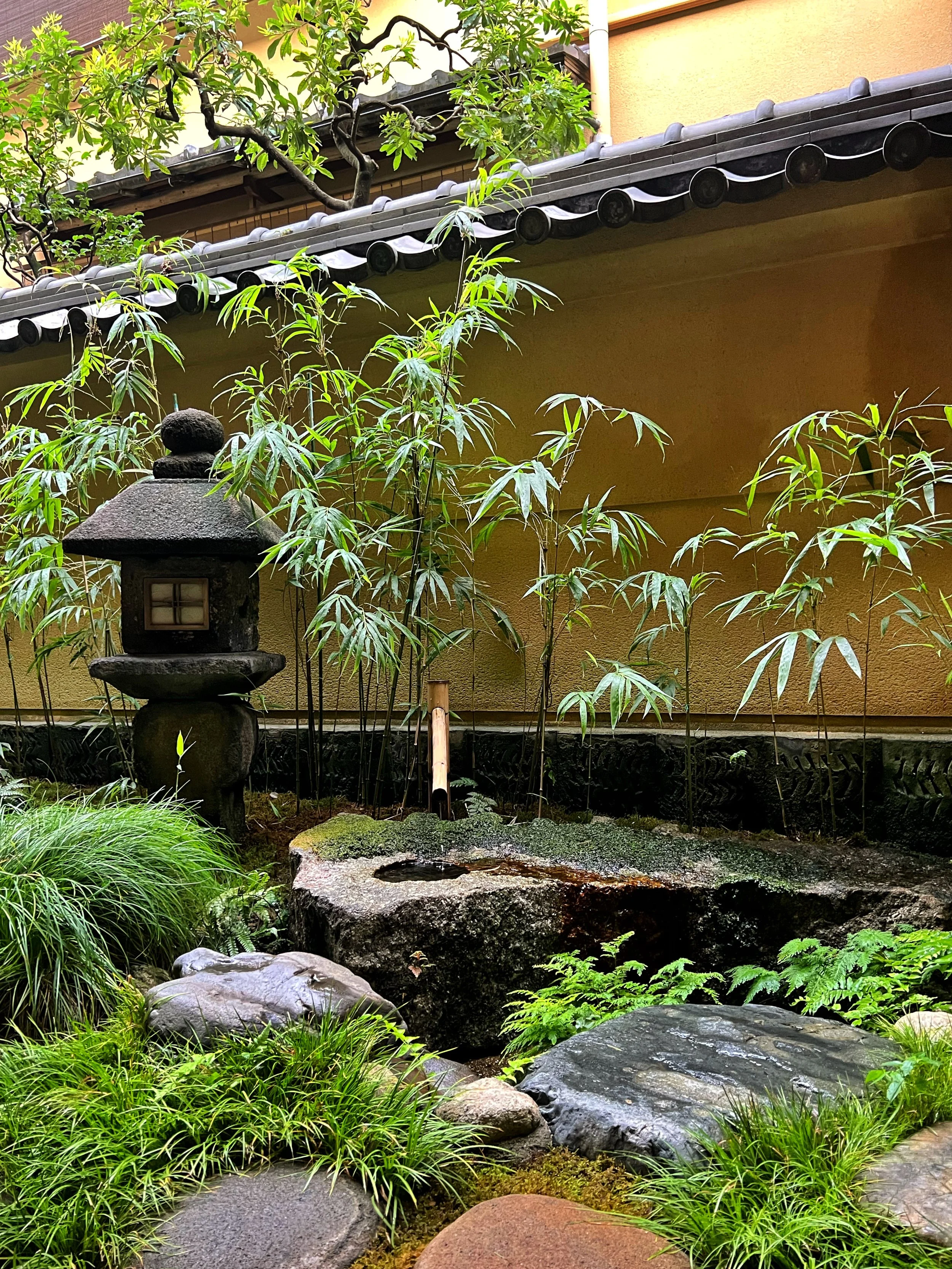
It’s not just the rooms, the entire property of Sumiya is a step back towards an ancient Japan past, with sliding shoji doors, cozy corridors, historical tea rooms, quiet alcoves and windows leading to views of the changing seasons. Just be aware in some places to duck your head, because door heights can be low.
SURROUNDING AREA
It’s proximity to Sanjo-dori makes Sumiya a great place for sightseeing and exploring. Sanjo-dori has always been one of my favourite areas to stay and wander around and even since the first time I visited Kyoto over two decades ago — though some things have changed, many are still the same. Its where I based myself the first time visiting Kyoto. It’s also a great location to see how Japan’s eras changed the landscape, from Edo period buildings to romantic Taisho Roman architecture — these historical buildings are now filled with sweet boutiques and cafes to explore.
SUMIYA RYOKAN FACTS (at time of stay) CHECK AVAILABILITY
COST: starting from ~50,000JPY per person per night (with breakfast only)
MEALS INCLUDED: Breakfast & Dinner (depending on plan)
CHECK IN/CHECK OUT TIME: 1500 / 1030 or 1100
PAYMENT: Cash or Credit
ROOMS: 22
ENGLISH SPEAKING STAFF: Some
WEBSITE: SUMIYA
ENGLISH RESERVATIONS: WABUNKA (this is who Sumiya has partnered with officially)
IG: @SUMIYARYOKAN
IF FULLY BOOKED — EXPLORE OTHER OPTIONS BELOW
OTHER PLACES TO STAY/THINGS TO DO
Mimaru Suites Kyoto Shijo - family friendly suites in one of my favourite neighbourhoods
Candeo Hotels Kyoto Karasuma Rokkaku - a beautiful 100year old machiya combined with modern hotel with rooftop public bath
Togetsutei- enjoy a stay in this traditional onsen ryokan near the famed Arashiyama Bamboo Forest
Shijo Bettei Kyoto - splurge on this modern onsen ryokan hotel in the heart of the city. Every room has its own private open air onsen
Cafe Bibliotic Hello! - have a quiet respite in this charming cafe restaurant surrounded by books housed within a renovated machiya
TRAVEL FURTHER
Kinosaki Onsen - download our free ebook guide to this tattoo friendly onsen town
Ishikawa Prefecture - jump on the Thunderbird Express train to Tsuruga Station then Hokuriku Shinkanasen to reach beautiful Kanazawa.
Shizuoka Prefecture- a gem of a prefecture with some of the best seafood and amazing onsen