Check In, Check Out Guide
WHAT TO EXPECT FROM A TRADITIONAL ONSEN RYOKAN
You’ve Booked Your Flight to Japan,
The hotels are reserved, the activities are sorted out – you’re confident you will be fine figuring out the train system and you’re excited because you will be staying at an onsen ryokan for a night (or two - I always recommend two) to fully immerse yourself in one of Japan’s best cultural experiences of omotenashi and soaking in the relaxing onsen baths. Yet you have no real idea what to expect.
Read on to discover what a stay in a traditional (or modern) onsen ryokan is generally like from someone who’s visited hundreds. Yes this will be a detailed read.
Please Note: This article contains some affiliate links. If you make a reservation through one of these links,
I will receive a small commission at no additional cost to you. Every property and destination featured on this website has been personally experienced by the writer, and are their personal thoughts and opinions.
Check in Generally Starts at 3pm.
(A rare select few will have check in earlier or later - property dependent).
You may have figured out your own way there or have come via a shuttle bus transfer run by the property itself from the nearest train station/bus stop.
*always check if there is a specific shuttle bus transfer timetable via the property’s website or email them.
I personally like to arrive ~30mins before the designated check in time so I can enjoy my time at the onsen ryokan to the fullest (read all my personal onsen travel tips here)
Have Your Passports Ready
For all international visitors, all Japan accommodation properties require you to show your passport – a photocopy will be taken and your passport returned.
At this point of check in - the staff will ask or inform you what time your dinner will be served (some will also ask/inform what time breakfast will be).
If your onsen ryokan offers a reservable private onsen complimentary for staying guests - this is when you will generally reserve a time for your first session.
Subsequent sessions may incur a fee, or is dependent on availability after all guests have enjoyed at least one complimentary session.
*remember this is property dependent - not all onsen ryokan offer this.
Enjoy a Welcome Drink and/or Local Treat
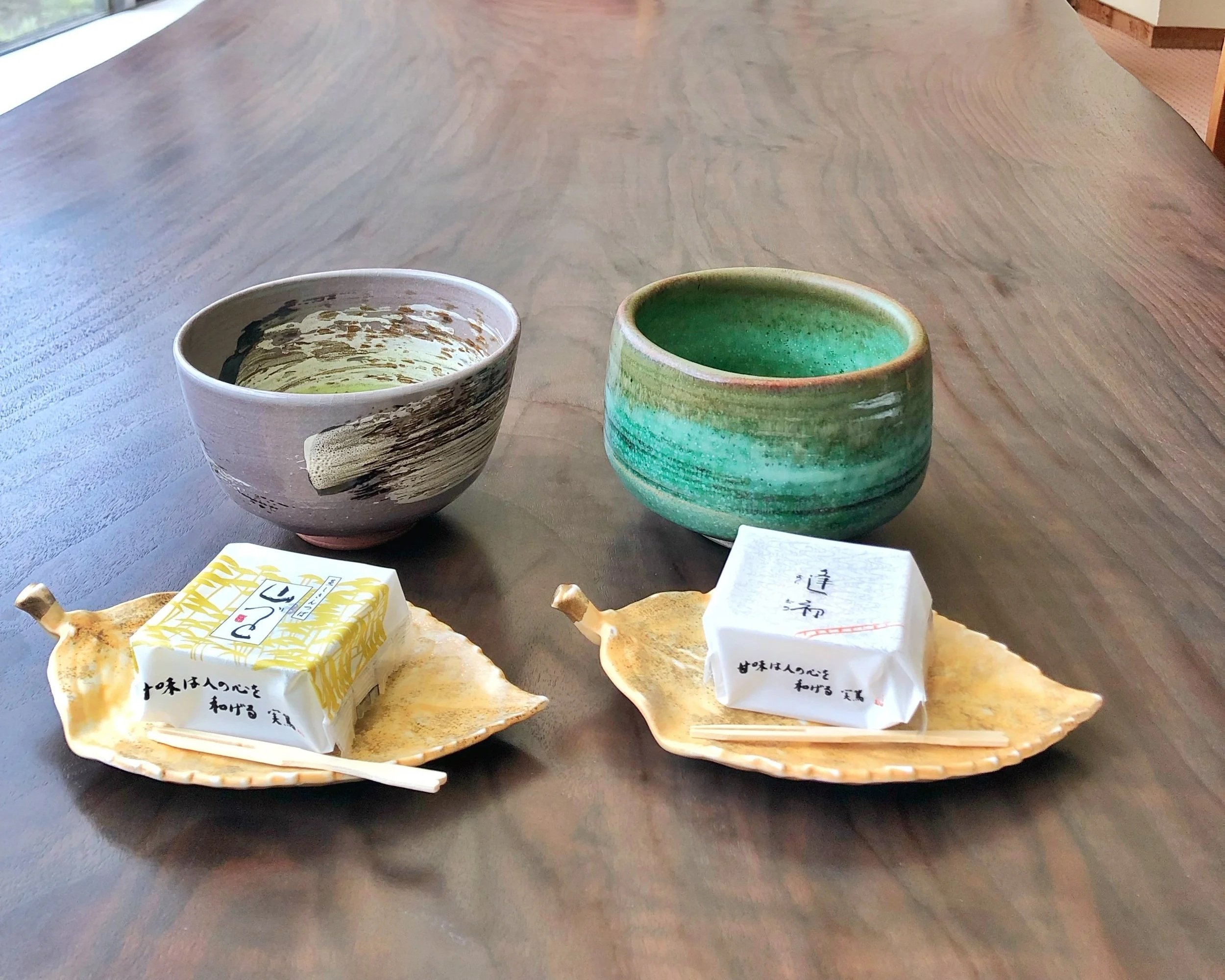
During this time (especially in fancier or more expensive onsen ryokan) - guests will often be served a welcome drink (generally tea/ local juice) along with a local sweet or savoury treat whilst they await their turn to check in (especially if there are many guests waiting to check in - this is why I always arrive earlier).
Simpler, rustic, more traditional onsen toji inns probably won’t do this.
Choose a Yukata
Depending on the onsen ryokan - some properties will have a display of cotton yukata at check in - where you can choose from several pretty patterns to wear one or two, along with selecting a casual obi.
Others may offer even fancier cotton yukata and more formal obi (especially if the onsen area you’re staying is famous for guests and locals walking around in their onsen ryokan’s yukata - think like Kinosaki Onsen). This normally incurs an extra fee.If there is no cotton yukata display at check in - then your yukata can be found in your room - generally either within the traditional wardrobe/drawers/dresser.
SIZE GUIDE:
Below 155cm height: S
155 - 165cm height: M (the size I wear)
165 - 175cm height: L
175cm height & above: LL (you may have to ask for this at the front desk, not every property carries this size - if not available - just wear L. This is the size my husband wears if available. He’s roughly 6ft 1)
Sometimes if you book through the onsen ryokan’s website directly - they may ask for your height in cm. This is why - so they can ensure the right size yukata is awaiting you in your room.
Move to Your Room
Generally a staff member will then show you to your room, offering to help carry your luggage. For a lot of fancier onsen ryokan, your luggage may be taken from you whilst you wait to check in and enjoy your welcome drink. Your luggage will be awaiting you already in your room.
If you happen to arrive far earlier than check in time - a lot of properties are happy to hold your luggage till check in time (whilst you sightsee) and when you check in, more often than not your luggage will already be in your room.
Always check with the property beforehand if they can keep your luggage for you.
For a simpler, rustic onsen ryokan – you will probably have to carry your luggage yourself to your room and find your way independently (depending on how busy they are).
I’ve done this in Aoni Onsen and Tsuru no Yu for example.
6. What to Expect in Your Room
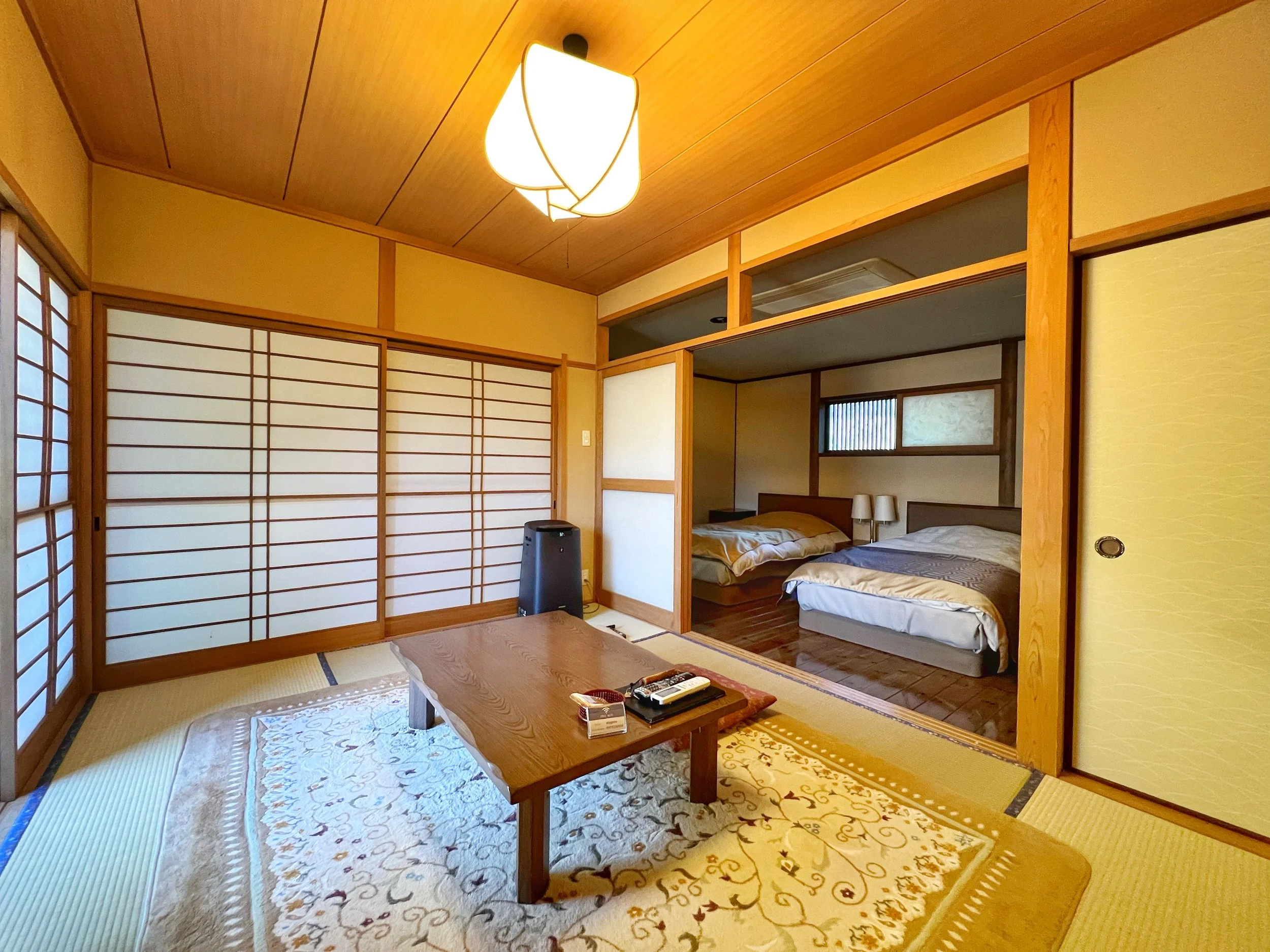
The simplest basic tatami room in an onsen ryokan is generally between 6 - 8 tatami mats (roughly 10 - 15 square meters). This is counted separately from a bathroom/toilet ensuite or if there is a traditional engawa (small inner corridor/seating area).
There will often be a traditional Japanese wardrobe where one can hang clothes and where one will find their yukata, outer kimono jacket, tabi socks and towels. Often there is a simple plastic/cotton drawstring bag which will have a disposable toothbrush and toothpaste set, hairbrush and your small onsen towel with the name of the onsen ryokan on it (which you can also take home as a souvenir).
A traditional small alcove known as a tokonuma displays either ikebana or perhaps a piece of pottery and a hanging scroll/artwork.
Centered in the tatami room is a low wooden table known as a chabudai (卓袱台) with low zaisu seats (座椅子) and/or zabuton cushions (座布団) placed beside them or nearby
Upon the table you will often find a local/regional sweet for you to enjoy.
For most properties, a round/square wooden box will also sit upon the table. Inside one will find green tea, teacups and a tea pot.
An electric kettle may be placed upon a low tray in the room/near the tea box or by the small fridge (if you have one).
There will also be a pot of cold drinking water (or this may be given in the time when they set up your futon).
Traditionally when you head to dinner, the staff will come in and move the chabudai to the side and lay out your futons, if there isn’t a separate sleeping area.
In simpler traditional onsen ryokan, you may have to do it yourself.
For fancier onsen ryokans and larger rooms – there will always be a seating area whether it be tatami or not, then perhaps an additional tatami room/bedroom where one sleeps. The bigger and more expensive your room is, generally the more space you will have.
IF NEEDED
boys under 7 years old - can enter the female public onsen with their mother
girls under 7 years old - can enter the male public onsen with their father
7. Change Into Your Yukata
After unpacking and getting settled, change into your yukata. Remove all your clothing except underwear (unless it’s winter/you’re cold - then keep perhaps a singlet/uniqlo heat tech/leggings on).
Wear the yukata like you would a dressing robe - ensure the left side crosses OVER the right side. Wearing the opposite way (right over left) is how the deceased are dressed in Japan.
Simply tie the obi/fabric sash around your waist as many times as necessary to securely tie it off in a bow/knot. You may place the bow at your front or at your back.
Slip on your tabi socks (or your normal socks if you wish) and the outer kimono jacket/vest if it’s cold.
Depending on the property, you will have indoor slippers you can wear around the premises or for some you can walk barefoot/with socks indoors.
For the majority of your stay, you probably will just stay wearing the yukata.
8. Head to the Onsen, Go Exploring or Simply Relax
Depending on what your travel plans are - it could be time to go exploring the local onsen town and surroundings wearing your yukata – it could be time for you to just relax within your room especially if you have a private onsen.
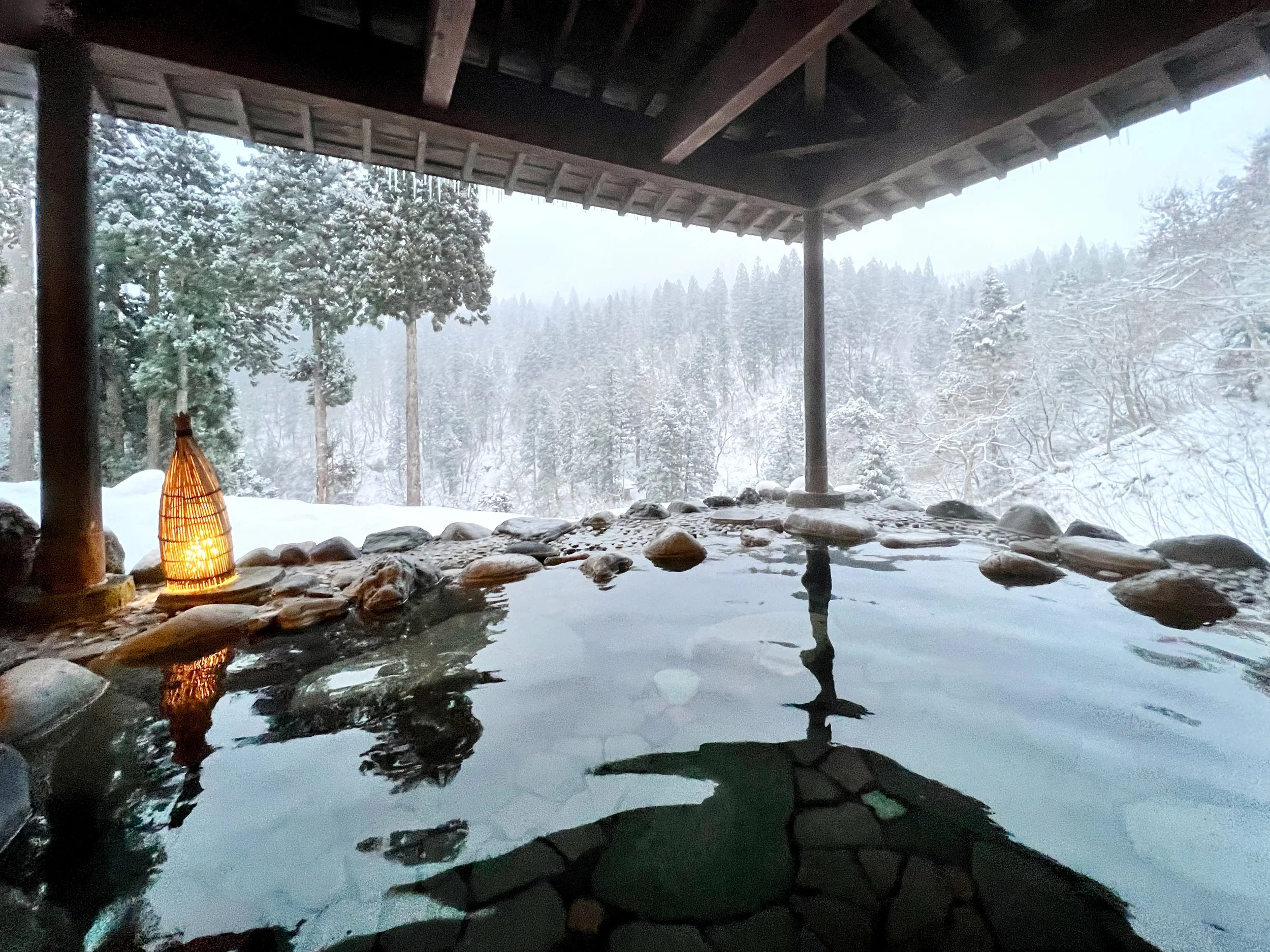
However for me this is the perfect time to head to the public onsen and soak for a little while before all the other guests enter.
Arriving that half an hour early for check in, gives enough time to get to your room, change into yukata and head straight to the public onsen.
An onsen ryokan’s public onsen generally opens at 3pm (when guests start checking in). Prior to that, it’s generally being cleaned and prepared by the staff for the next round of guests.
Over time I’ve noticed a lot of Japanese guests tend to arrive at 3/3.30pm and by the time they arrive at the public onsen - it’s around 4pm or after. So a lot of time, I’ve had the public onsen to myself from anywhere between 30mins - 1hr. A perfect amount of time to soak.
Of course, it hasn’t happened every time but it happens enough. It’s a great little way to ease yourself into the culture of public onsen bathing, especially if you’re shy.If you’re a little unsure of how exactly to onsen, have a read of the complete onsen etiquette guide. So you feel completely prepared.
9. Time for Dinner
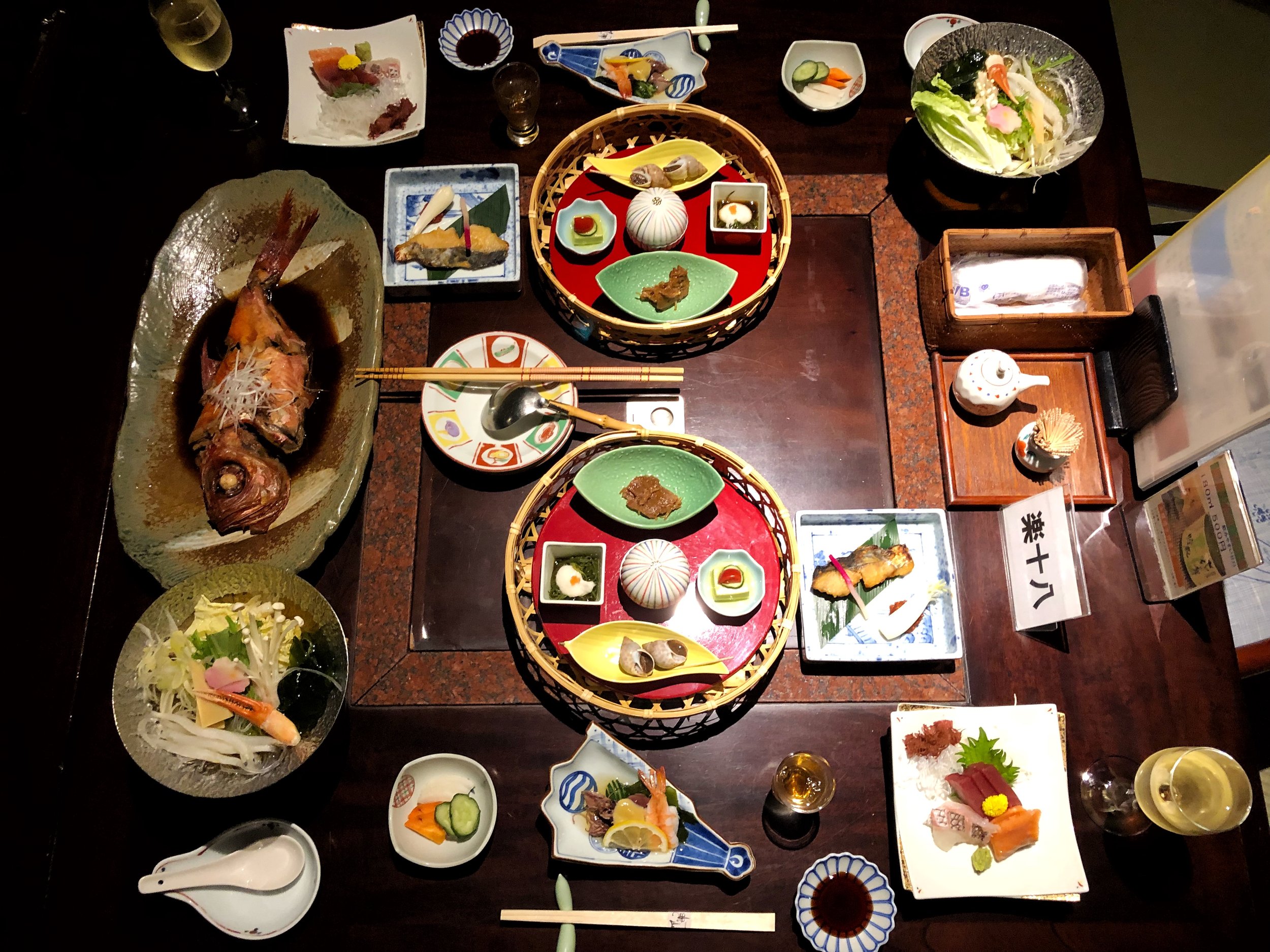
Your dinner time was chosen upon check in and generally falls between the time of 5pm - 7pm. A dinner at an onsen ryokan is typically early and it’s rare to find a starting time after 7/7.30pm (so have a light lunch).
Arrive on time (if it’s not being served in your room).
Wearing a yukata is perfectly fine and I would actually advise to do so, as part of your meal will probably be grilled/cooked in front of you - so your clothes can become imbued with cooking smells. This is why now I prefer to have it in a private dining area rather than one’s room - as the cooking smell can linger.
Unless it's a buffet dinner option (I rarely choose or stay at places that offer this) - your dinner will be a traditional Japanese kaiseki using local, regional and seasonal ingredients.
Read a more in-depth explanation of the potential dishes you will be served here.
Honestly, Japan is not so great at dealing with Western allergies and dietary concerns. The fancier, more expensive brand name onsen ryokans can cater to some severe allergies but will require significant advance notice.
Significant advance notice means informing them at time of booking,not on the day.
It’s also simply rude to be so inconsiderate. These exquisite meals are planned in great detail to ensure the finest, freshest of produce and require significant preparation.
If one’s eating preferences are simply a lifestyle choice rather than severe allergy , then perhaps for a night or two one can embrace a different culture and taste its flavours.
If the property is unable to cater to an allergy/dietary concern and one cannot be flexible - then definitely bring along some of your own snacks/easy meals to eat.
Remember a lot of onsen ryokan are in the remote countryside which means there may not be restaurants or even convenience stores available. Even if there are restaurants, some may only be open for lunch or close very early as traditionally many people have dinner included with their onsen ryokan stay.
TIP: I tend to always carry dried fruit and nuts on me for emergencies/pack a few cup/pot noodles.
If you haven’t chosen your breakfast time – generally during the dinner, a staff member will confirm the time with you and if you’re checking out – whether you require transfer/shuttle etc (if they provide such a service).
10. Head to the Onsen / Go Exploring / Relax / Sleep
After your dinner, how you spend your time is up to you. It could be another dip in the onsen (my favourite), exploring the onsen town at night (Kurokawa Onsen & Kinosaki Onsen are great for a picturesque night walk in your yukata).Or simply curling up in your futon with a good book ready for some restful shut eye.
11. Wake for Breakfast
Make sure you’ve set an alarm! An onsen ryokan breakfast is early!
It can start anywhere from 6am - 8.30am (this is the latest time I have ever had!)
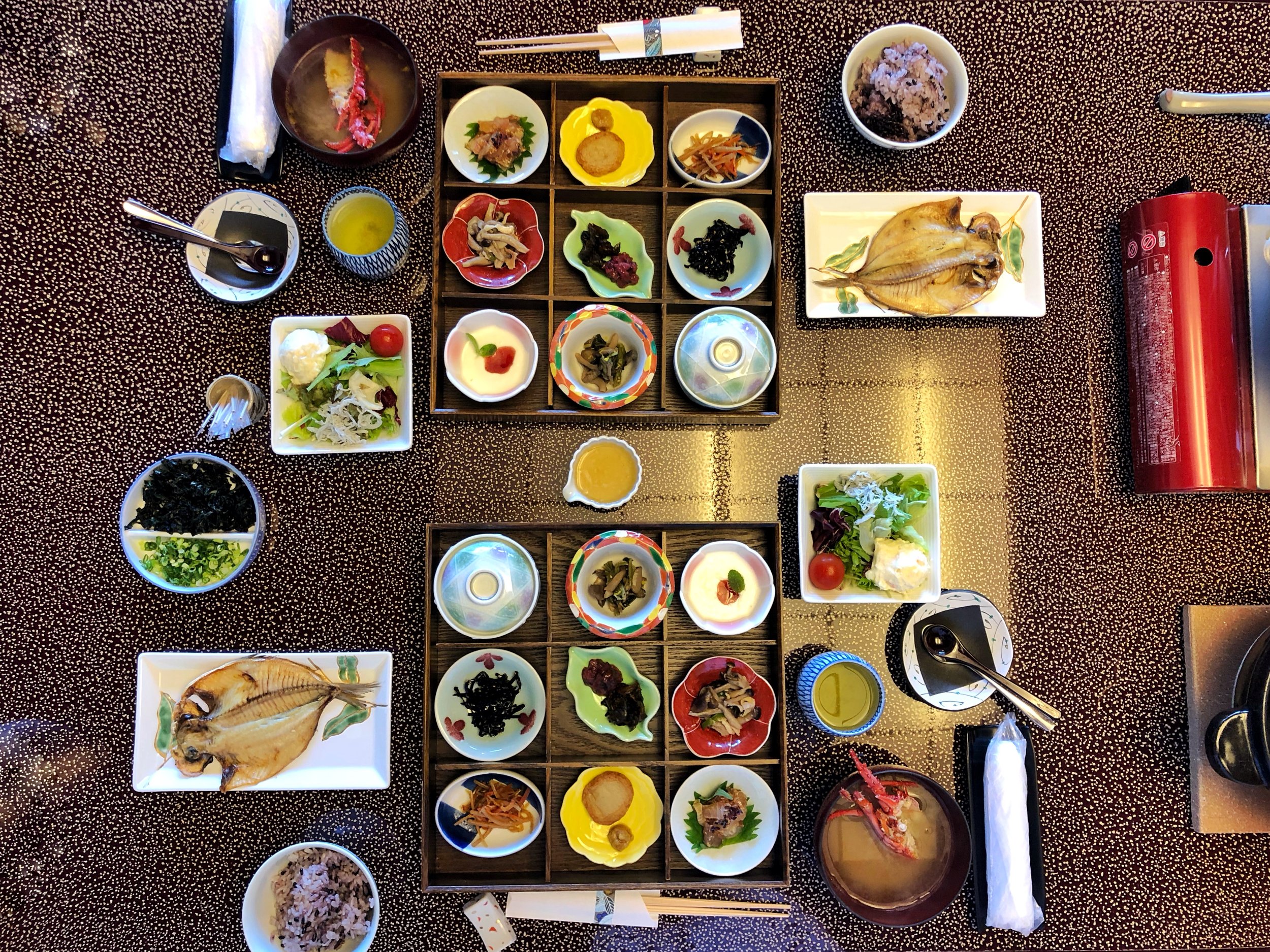
A traditional Japanese breakfast (if they offer Western, go for the Japanese - it’s just so much better) consists of several small dishes normally including rice, a seasonal grilled fish, miso soup and others (think of it like a smaller kaiseki all served at the same time).
Generally give about 30mins - 45mins to finish eating your breakfast.
I personally like to choose a breakfast time where after I finish eating – I still have an hour from checkout time so I can have another onsen soak, finish packing etc.
So I prefer an 8am/8.30am breakfast time when possible.
12. One Last Onsen Soak
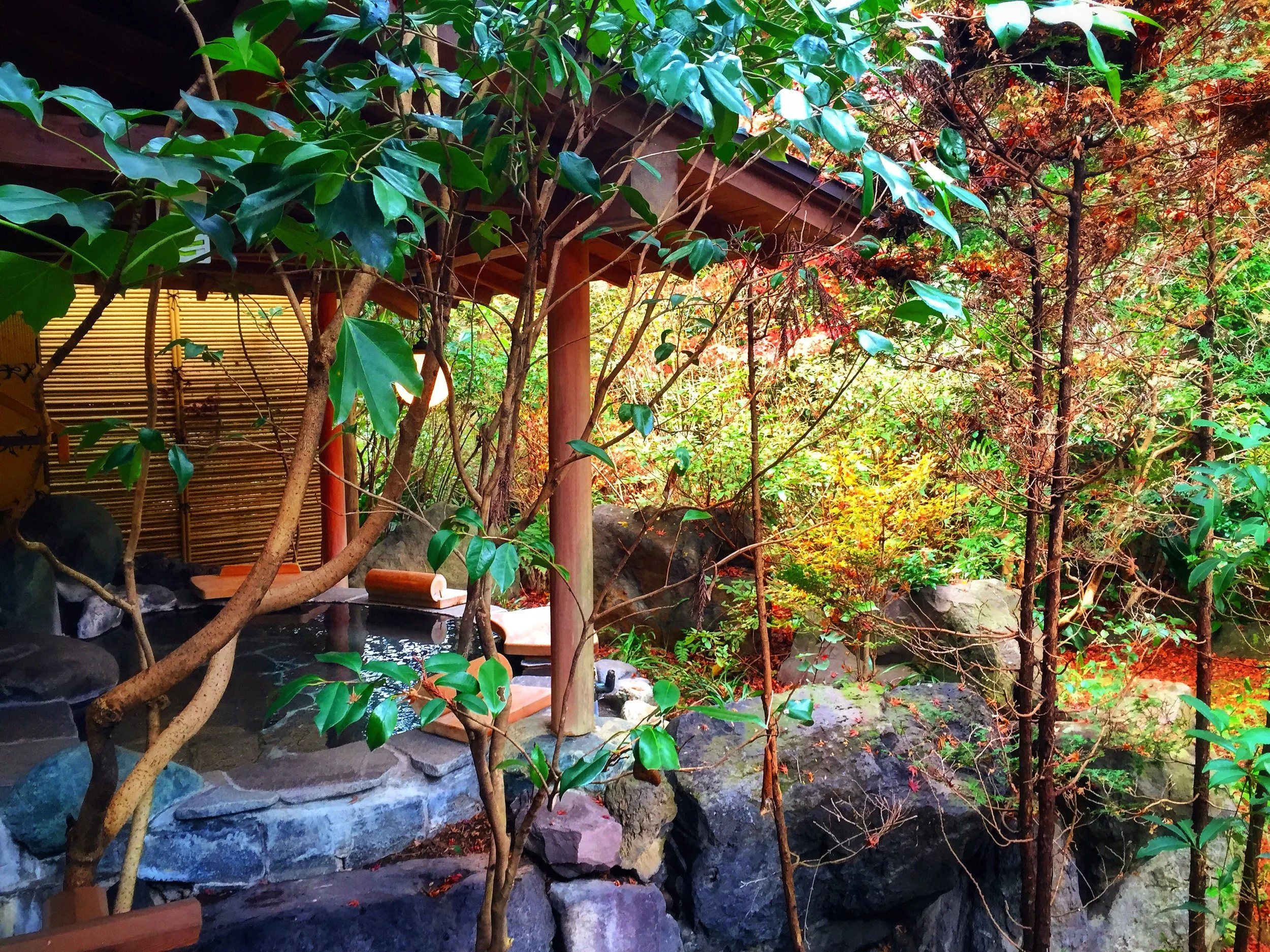
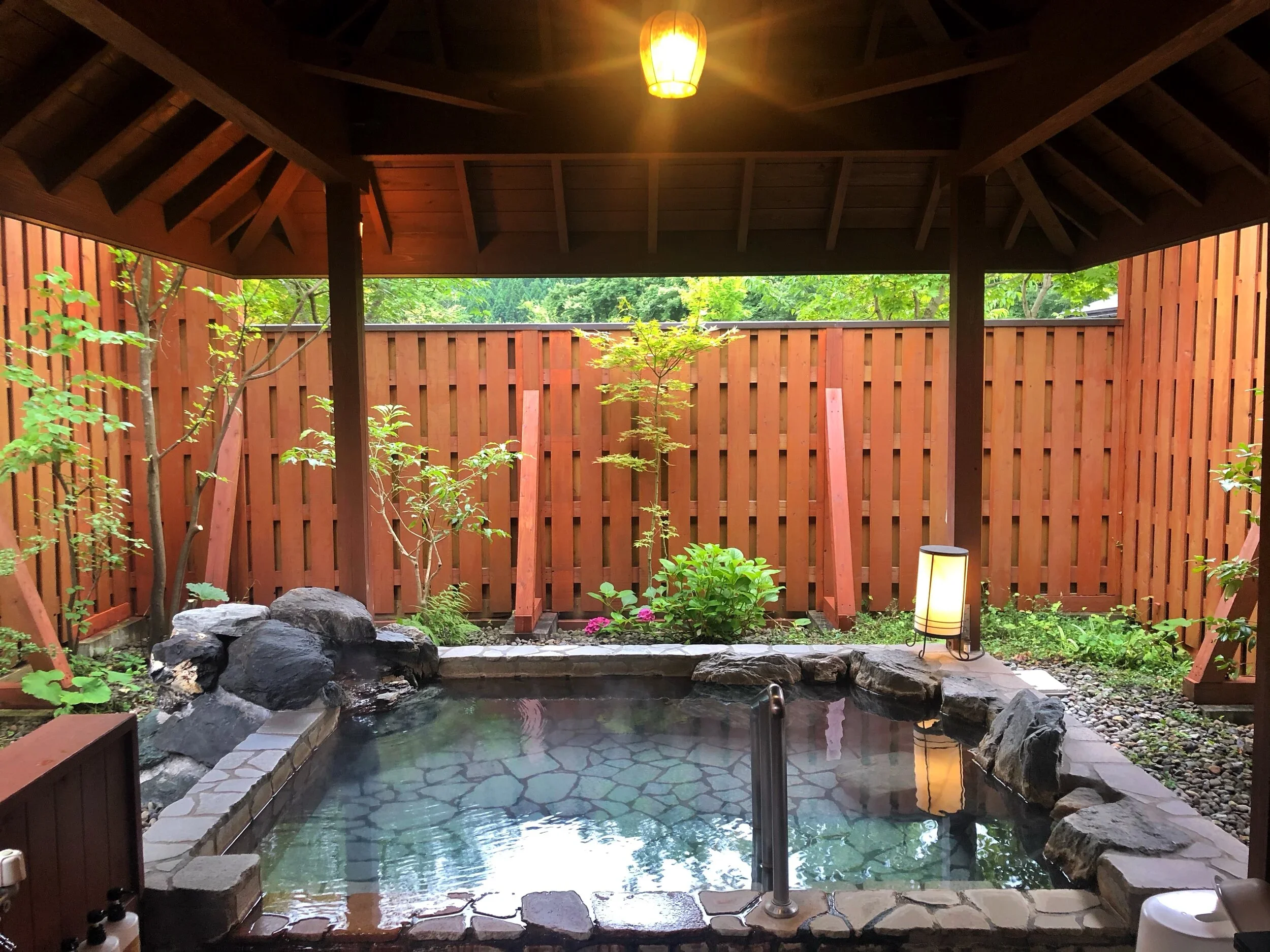
I’m the type of onsen traveller, that I will try and fit in as many onsen soaks as possible – so there’s definitely one after breakfast whether it be in the public onsen or if I have a private onsen.
It’s the perfect way to wake me up (I’m also not a morning person).
13. Time to Check Out & Pay
It’s still a tiny pet peeve of mine even after living in Japan for all these years… but
CHECK OUT TIME IS SO EARLY IN JAPAN!
Nearly all Japan accommodation (regardless of hotel or onsen ryokan etc) has check out time at 10am (silently cries)
11am is unusual. 12pm is a needle in a haystack rarity - that if you have it - indulge in it!
So at 10am fully packed and ready to go with your bags. Head back down to the lobby/front desk.
Generally you will always pay your bill upon check out.
Doublecheck before you stay with the property whether credit card is acceptable or only cash (yes some places are still only cash)
There will be a little additional charge to your bill known as 入湯税 | NYUUTOU-ZEI which is an onsen tax every individual must pay (regardless if you’re a tourist or a Japanese local).
It starts from 150JPY per person per night (but some places will be higher).
This is different to the standard accommodation tax. It is a tax entirely for onsen ryokan and onsen towns to help maintain their infrastructure and care of the onsen source and facilities.
A lot of smaller onsen ryokan will prefer this onsen tax to be paid in cash (so have some small notes and coins on you to be safe.) Bigger well known luxury properties may include it in your final bill so you can pay via credit card if accepted.
After check out is completed, it’s time to head on your way to the next Japan adventure!
If you’ve made it this far, thank you for reading through it all!
I hope it helps you plan and understand how your onsen ryokan stay may unfold. Have a relaxing time and enjoy soaking in the healing onsen waters!
If you’re still wondering if an onsen ryokan stay is worth it, have a little read (coming soon)
Curious to know the difference between onsen and sento baths and which one you’re experiencing - this will help (coming soon)
Looking for an onsen ryokan experience in one of the popular cities, Tokyo, Kyoto & Osaka — you need to read this